Presented by Mode Mobile
Apple just crossed a historic milestone.
The company reached a $5 trillion market value as shares climbed 25% this year.
New product launches, growing interest in foldable phones, and a leasing program built to drive more frequent upgrades.
One thing is clear:
The smartphone isn't going anywhere.
It's becoming even more valuable.
That's exactly why Mode Mobile has investors paying attention.
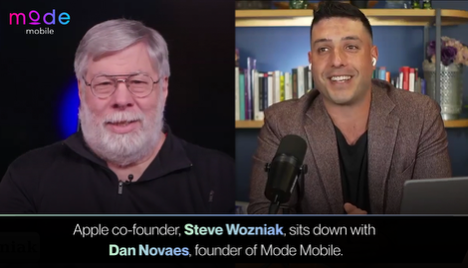
Instead of competing with Apple, Mode is building on top of the smartphone ecosystem.
Its EarnOS platform is designed to help users earn from the time they already spend on their phones, creating value from everyday mobile activity.
And unlike many pre-IPO companies, Mode has already built meaningful traction:
- 490M+ users
- $115M+ lifetime revenue
- $1B+ earned and saved by users
- 170+ countries served
- 60,000+ investors
Mode was also ranked North America’s #1 fastest-growing software company in 2023 by Deloitte after posting 32,481% growth.
Investors can still purchase pre-IPO shares for $0.52 per share before the price changes on August 14.
⏰Details here on how you can invest before the 8/14 deadline.
Disclosures
*Please read the offering circular and related risks at invest.modemobile.com.
*Mode cumulative revenue includes full year revenue of businesses acquired in 2025.
Mode Mobile recently received their ticker reservation with Nasdaq ($MODE), indicating an intent to IPO in the next 24 months. An intent to IPO is no guarantee that an actual IPO will occur.
The Deloitte rankings are based on submitted applications and public company database research, with winners selected based on their fiscal-year revenue growth percentage over a three-year period.
Exclusive Headlines
Apple Q3: Sold Out, Squeezed and Flattered
Apple posted its best demand in years and the stock fell about 6%. That is the whole point. Demand has stopped being Apple's problem. iPhone and Mac accelerated. Greater China grew more than 20%. Every region grew double digits. But Apple cannot make enough product to fill orders, and memory prices are climbing into margins.
Apple earned $2.02 versus $1.57 a year ago. Revenue rose 16.4% to $109.42 billion. Take out the tariff refund and EPS was roughly $1.91 against $1.89 consensus. The beat shrinks to two cents. Gross margin was 50.1% reported. Refunds contributed about two points. Underlying margin was near 48.1%, down from about 49.3% in March.
iPhone revenue rose 21.7% to $54.25 billion. Mac jumped 28.7% to $10.35 billion. Greater China rose 22.4% to $18.82 billion. Only iPad fell, down 5.9% against a hard A16 comparison. Active devices passed 2.5 billion.
Guidance disappointed. Apple expects September revenue up 9% to 11%, implying about $112.7 billion versus consensus near $114.9 billion. Currency costs 2.5 points. Supply limits will worsen significantly across iPhone, Mac, and iPad. Cook said Apple's own forecast was the cause, not supplier failure.
Two problems get merged constantly. Leading-edge chip node capacity caps revenue. Memory pricing caps gross profit. Ex-refund margin ran near 49.3% in March, 48.1% in June, and September guidance implies about 46.5% once the refund benefit is stripped. That is 280 basis points of underlying decline in two quarters.
Apple has already raised Mac and iPad prices. Services grew 12.1% to $30.74 billion, trailing estimates.
This was Cook's final earnings call. John Ternus takes over with node supply, memory costs, pricing, and App Store rules all unsettled. The June quarter proves a stronger franchise. It does not yet prove better earnings.
Inside Coca-Cola's 5% Volume Quarter: A Tournament, Six Extra Days and a Weaker Dollar
Coca-Cola finally gave investors the mix they had asked for. Volume grew 5%. Price stayed positive. Margins widened. Guidance went up. The stock rose as much as 7%, its best day since June 2009, and set a record high.
Management argued against its own headline. On a two-year basis, volume grew 2%, close to Coca-Cola's recent trend. Three temporary factors helped: an easy comparison, kind weather, and the FIFA World Cup running through the quarter. The first half also carried six extra reporting days that the fourth quarter gives back.
The volume was not free. Asia Pacific grew volume 8% but organic revenue only 2% with price/mix down 9%. EMEA grew volume 4% and organic revenue 3% while comparable currency-neutral operating income fell 5%. Latin America's 16% revenue growth was mostly currency. North America was the clean result: volume up 3%, price/mix up 4%, operating income up 12%.
Currency flattered group margin. Comparable operating income grew 9% but 6% currency-neutral. Roughly three points came from the dollar. The operational raise was the currency-neutral range, moved to 7% to 8% from 6% to 7%.
The peer contrast is the strongest evidence. PepsiCo's North American beverage volumes fell 4%. Coca-Cola's rose 3% with price/mix up 4%. That gap looks like pack architecture and distribution. Trademark Coca-Cola grew 5%, the best quarterly volume growth in 17 years outside the pandemic rebound. Zero Sugar grew 16% in every geographic segment.
Three things make H2 harder. A July 17 ransomware attack briefly halted fairlife production. Aluminum and PET costs have risen more than expected on Iran conflict energy prices. First-half organic revenue grew 8% but full-year guidance is about 5%, implying a slower H2.
Coca-Cola no longer needs price increases to carry organic revenue. Whether a 5% volume quarter repeats without the tournament, weather, and easy comparison is the next test.


Tidak ada komentar:
Posting Komentar