(NYSE American: VNRX) Lands Sole Biomarker Role In French Government Sepsis Program
*Get Our Updates Faster—Tap Here To Receive SMS Alerts*
October 26th Greetings, Friend!
Monday's profile popped at the get-go.
Surging $.75 from an open of $4.30 to a high of $5.05, it ran approx. 17% intraday.
As that move was unfolding, something else caught our attention...
Picture the emergency department at Ambroise Paré Hospital outside Paris.
A patient arrives with a suspected infection. Will they slide into sepsis, or can they safely go home?
Under a program that officially launched in September, that call may now be informed by a single blood marker supplied by VolitionRx Limited (NYSE American: VNRX).
The DETECSEPS project is funded with approx. €6.3Mn (~$7.3Mn) from the French government and was initiated by IHU SEPSIS, a center dedicated entirely to fighting sepsis.
Volition’s Nu.Q® NETs assay was selected as the program’s sole biomarker. It runs on the IDS i10® automated analyzer from IDS France, part of Revvity, with results available within one hour.
The stakes are hard to overstate. The consortium cites roughly 166Mn sepsis cases worldwide each year, plus nearly 57,000 sepsis deaths annually in France alone.
A peer-reviewed paper in Critical Care Medicine found Nu.Q® NETs H3.1 independently predicted 28-day mortality and the need for kidney replacement therapy in sepsis and septic shock patients. Volition spotlighted that study in its August corporate update, alongside an independent editorial in the same journal.
The balance sheet got attention too. Volition retired the outstanding balance of its $7.5Mn senior secured convertible note in cash, more than eight months ahead of its May 2027 maturity. Management said the move prevents further potential dilution tied to that note.
Then there is cancer.
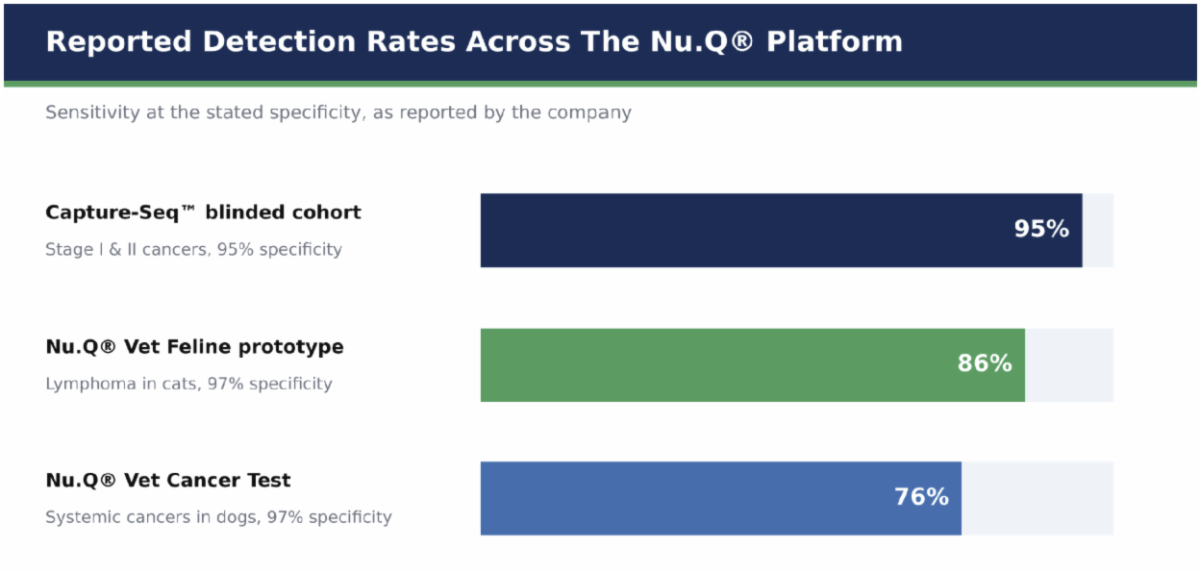
Presenting at the ESMO MAP conference in London, the company reported 49 of 49 cancers detected in a first Capture-Seq™ cohort with no false positives. A separate blinded validation cohort showed 95% detection of stage I and II cancers at 95% specificity. |




Tidak ada komentar:
Posting Komentar