Weakness May Be an Opportunity as Palantir Q3 Earnings Near
Posted On Oct 19, 2026 by Ian Cooper
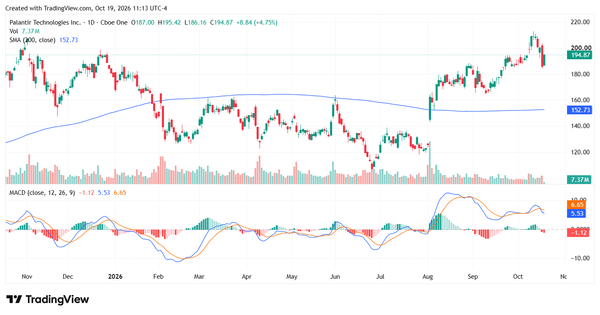
Palantir Technologies (NASDAQ: PLTR) will release its third-quarter results on November 2, after the market closes, followed by a conference call at 5 p.m. Eastern. For shareholders, the question is whether demand for its artificial intelligence software can support another strong quarter and an even better outlook.
Table of Contents
Estimates call for earnings of about 42 cents per share on revenue of $2.22 billion. That would represent roughly double the earnings and approximately 88% revenue growth compared with the same quarter last year. Palantir’s own third-quarter revenue forecast is between $2.160 billion and $2.164 billion. That puts both published revenue estimates above management’s outlook, suggesting analysts are already looking for the company to outperform its guidance.
Heading into its earnings call, analysts at Barclays have an overweight rating on the stock, noting that it has a competitive moat that allows for growth and respectable margins. The firm also has a price target of $265 a share on Palantir.
Goldman Sachs also has a buy rating on the stock, with a price target of $230.
According to the firm, as quoted by Seeking Alpha: “The two key debates we hear from investors at Palantir’s current $8B revenue run rate and ~100% growth rate are 1) has the best part of Palantir’s AI opportunity already been realized, or is the market deep enough for another set of higher revisions? And 2) how sustainable is the FDE model? Our primary takeaway from our most recent set of industry conversations is that the stock is setting up for another phase of outperformance into 2027.”
D.A. Davidson also lifted its price target from $200 to $250. The firm sees an opportunity as more customers seek greater control over their AI systems and data, pointing to the company’s ability to help businesses manage both.
“Palantir’s push into data sovereignty is resonating with customers,” said D.A. Davidson analyst Gil Luria, as quoted by Seeking Alpha. “Customers are getting savvier about what AI model they need and how to work with a range of models, and Palantir is capitalizing on that trend. Trust means Palantir is naturally positioned to become the control plane, orchestration layer, and harness provider for a wide range of customers. Palantir is creating those layers for customers and solving the problem of choosing models and managing token costs.”
Can Commercial Customers Keep Driving Palantir’s Growth?
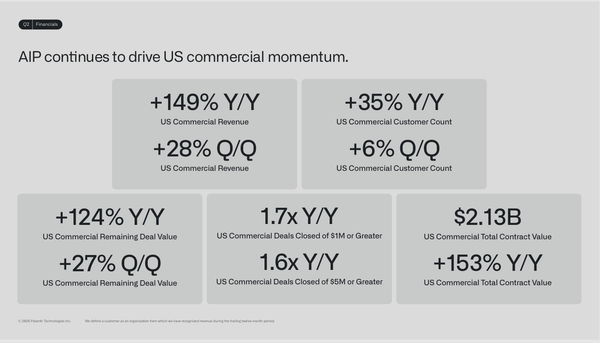
One of the biggest areas to watch is Palantir’s U.S. commercial business, which serves companies rather than government agencies. In the second quarter, U.S. commercial revenue increased 149% from a year earlier. Management raised its full-year forecast for that business to more than $3.424 billion, representing growth of at least 134%. Those figures set a demanding standard for the upcoming report.
The commercial business may attract much of the attention, but government customers remain important. Palantir’s U.S. government revenue increased 90% to $809 million in the second quarter, according to Reuters. That gives investors another substantial business to watch alongside corporate AI spending.
Profits and the Outlook Could Decide the Reaction
Palantir reported a 62% adjusted operating margin in the second quarter, compared with a 47% margin under standard accounting rules. Its third-quarter guidance calls for adjusted operating income of $1.292 billion to $1.296 billion.
The question is whether the company can maintain strong profitability while hiring, supporting customers, and expanding deployments.
Then comes guidance. Palantir’s existing full-year revenue forecast is $8.150 billion to $8.158 billion. Any revision will help investors judge management’s confidence heading into year-end.
My view is that the most persuasive report would combine a meaningful revenue beat, continued customer expansion, and a stronger outlook.
Today’s editorial pick for you
IBM Earnings Preview: 3 Catalysts That Could Fuel a Recovery
Posted On Oct 16, 2026 by Ian Cooper
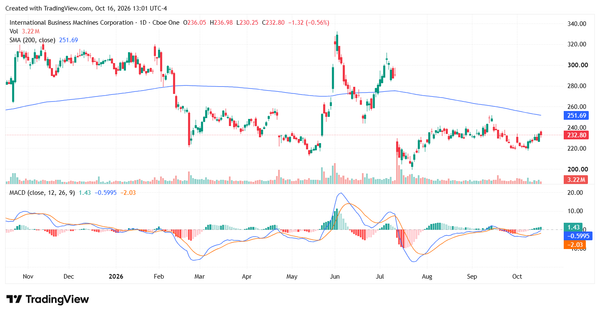
IBM (NYSE: IBM) is getting ready to report earnings. The upcoming report is about more than beating a profit estimate. It’s a chance for Big Blue to show investors that the problems behind its disappointing second quarter are easing and that its artificial intelligence ambitions can translate into more consistent growth.
Table of Contents
The company will report third-quarter results on October 21, with its earnings webcast scheduled for 5 p.m. Eastern. Shareholders will want to know if IBM is getting back on track.
Anthropic — the maker of Claude AI — is preparing to go public.
Reports suggest its highly anticipated IPO could happen as soon as November. And its potential valuation could reach into the trillions.
But here's what's really exciting…
Anthropic's rapid growth has investors watching closely for what could become one of the largest technology listings in history. And some investors are exploring ways to gain exposure before the public debut.
Analysts expect IBM to earn an adjusted $2.87 per share on revenue of $16.84 billion. That would represent earnings growth of about 8.3% and revenue growth of 3.1% from a year earlier. Those expectations suggest improvement, but hardly explosive growth.
Still, IBM does not necessarily need a spectacular quarter to make progress with investors. A solid report, evidence that delayed business is coming through, and a dependable outlook could help rebuild confidence. The quality of any earnings beat will matter, too. Higher profits supported by stronger customer demand would carry a different message than a beat driven mainly by lower expenses. Investors should look at revenue and earnings together before deciding how much has improved.
Did the Delayed Deals Finally Close?
One of the most important issues heading into this report is what happened to business IBM expected to complete earlier this year.
In July, CEO Arvind Krishna explained that customers had redirected some spending toward servers, storage, and memory to secure equipment ahead of anticipated price increases. The company also failed to close numerous large deals on schedule, contributing to its second-quarter shortfall. That creates a practical test for the upcoming results.
If those purchases were simply postponed, some of that business should eventually appear in revenue. If delays keep stretching out, investors may question whether the problem goes beyond timing.
There was an encouraging sign during July’s earnings call. Reuters reported that Krishna said approximately one-third of the delayed large capital-spending deals had already closed in the third quarter. Investors will now want to know how much additional progress followed.
A catch-up quarter would be welcome. But management also needs to explain whether new orders are arriving behind those delayed transactions. Collecting previously expected business helps today’s results; attracting additional demand supports tomorrow’s growth.
Software and Consulting Need to Show Progress
IBM’s software business will be another major focus.
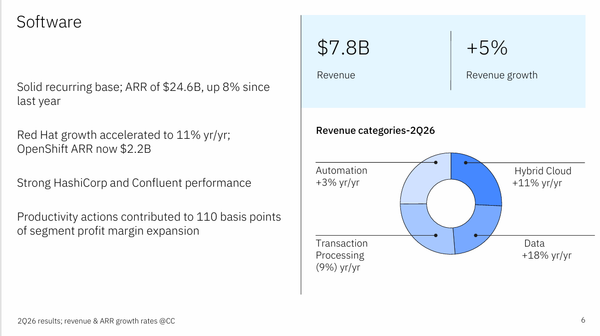
Second-quarter software revenue increased 5%, while Red Hat grew 11% and the data business expanded 19%. Those gains offered some encouragement during an otherwise difficult quarter. Consulting revenue, meanwhile, was essentially unchanged at $5.3 billion.
For investors, the next question is whether that software strength can become broader and more durable. Businesses experimenting with AI eventually have to make decisions about budgets, deployment, and ongoing support. IBM’s opportunity is to turn those decisions into paying relationships that last beyond an initial project.
That is why commentary about actual customer spending matters more than another round of enthusiasm about AI’s potential.
The Outlook Could Matter Most
Even if IBM beats quarterly estimates, management’s forecast could determine how investors interpret the report. In July, the company lowered its full-year revenue growth expectation to 4% to 5%. It maintained its expectation that annual free cash flow would increase by about $1 billion.
That cash outlook is worth watching closely.
Investors also want evidence that the business is producing cash. A maintained forecast would provide some reassurance. Strong results accompanied by greater confidence in demand would be more persuasive. Another reduction, however, would make it harder to argue that the earlier weakness was temporary.
For IBM shareholders, October 21 is an opportunity to get clearer answers.
Are delayed orders turning into sales? Is software growth strengthening? Can consulting contribute more? IBM does not need to solve every challenge in one quarter. But it does need to demonstrate progress that investors can measure. After July’s disappointment, a clear explanation backed by stronger execution could do more for confidence than another ambitious promise about the future.





Tidak ada komentar:
Posting Komentar