|
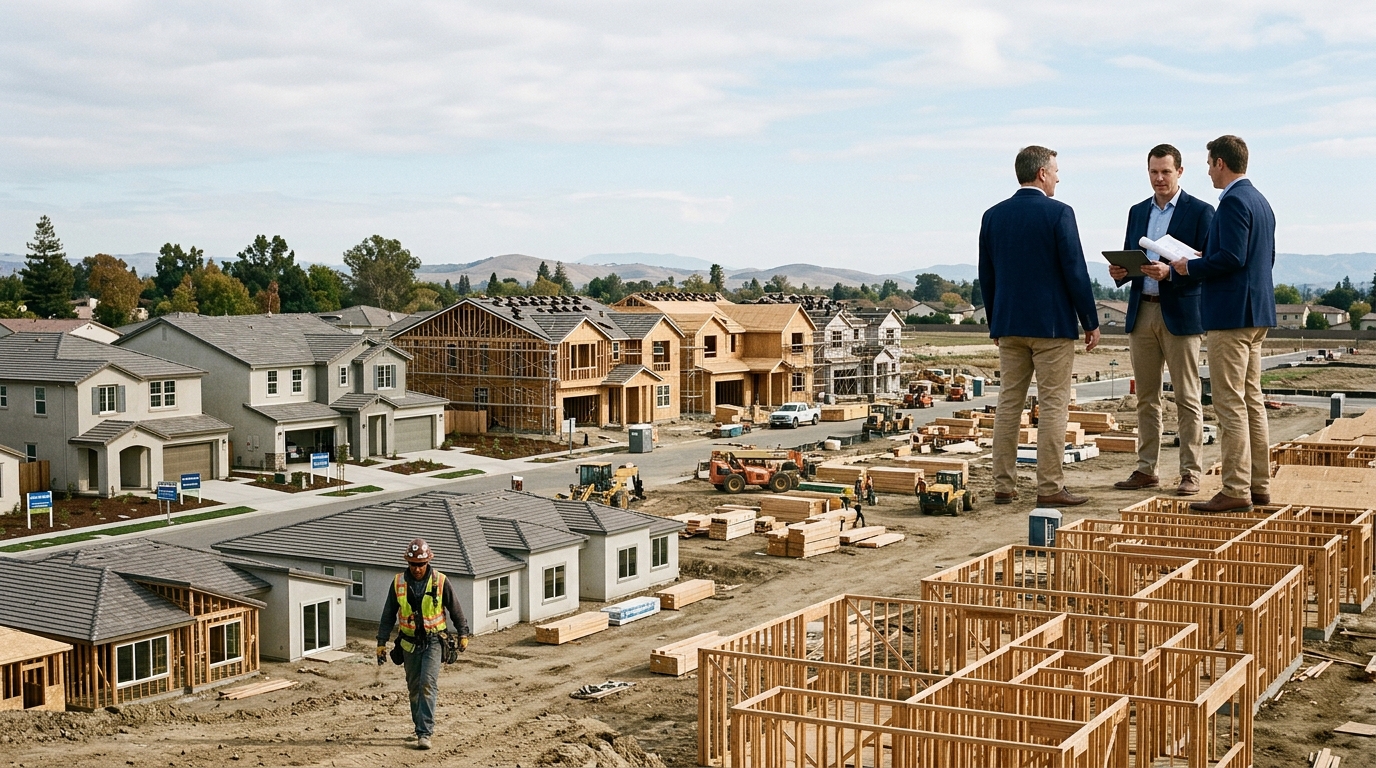
Hey there, bargain hunter. While Wall Street was busy writing Lennar's eulogy last week, Berkshire Hathaway was quietly writing checks.
|
|
Louis Navellier: My #1 AI stock for 2026 (name & ticker inside) "I want to give you a free stock pick today. This company's sales are up 28% year over year. It holds over 30,000 patents in wireless and video technology. And it just earned an A-rating in my proprietary Stock Grader system. That's the same system that helped me flag Nvidia back in 2005 – before its 82,000% run. In fact, this system has identified the top-performing S&P 500 stock for 12 years running. Over the years, it has cost me $9 million to build and maintain. And right now, it's flashing its highest possible rating on this AI play." – Louis Navellier Click here to see which AI stock my $9 million system is flagging right now, free. |
ScoreboardBerkshire purchased Lennar Class A and Class B shares between September 17 and September 21, covering about 2.74 million shares at weighted-average prices ranging from $74.80 to $79.41. That brought the total position to 23.7 million shares worth roughly $1.8 billion. A Form 3 disclosed that Berkshire crossed the 10% ownership threshold as of September 17. The market's reaction was immediate: shares jumped about 6% on the news. What Actually HappenedLennar reported Q3 net earnings of $284 million, or $1.19 per diluted share, down from $591 million a year earlier, on revenue of $8.0 billion versus $8.81 billion. Adjusted EPS of $1.23 missed the consensus of $1.29 by about 4.7% and fell 38.5% from $2.00 a year ago. Gross margin narrowed to 15.8% from 17.5% as the company leaned on incentives to move inventory. New orders fell 9% to 20,879 homes and the homebuilder lowered its 2026 delivery forecast to 80,000 to 81,000 homes. Berkshire started buying the very next morning. What the Market Is Really SayingLennar guided Q4 below expectations, citing affordability challenges, with the 30-year mortgage rate near 7% constraining the pool of qualified buyers. Shareholders have absorbed a one-year loss now exceeding 40%. That context is what made Berkshire's timing so pointed. This was not a bet on a clean quarter. It was a bet on a price. The Business, BrieflyLennar is the second-largest homebuilder in the U.S., operating across 26 states. The more important thing to understand right now is what the balance sheet actually looks like. The company said its construction cycle time improved to 116 days, down from 126 a year ago, and it owns about 2% of its homesites, controlling roughly 98% through third parties. Construction costs per square foot fell to approximately $80, down 6% year-over-year and 14% from the Q4 2023 baseline. This is not your father's land-heavy homebuilder. The company ended the quarter with $1.2 billion in cash and $3.6 billion in total liquidity.
Key Numbers
- Stockholders' equity: approximately $22 billion; book value per share approximately $90
- Price-to-book ratio: about 0.87x in mid-September
- Homebuilding debt to total capital: 16.6%, up from 13.5% a year ago
- Q3 capital returns: 3 million shares repurchased for $256 million, $400 million in senior debt retired
- Q4 guidance: 22,000 to 23,000 deliveries, average sales price $370,000 to $380,000, gross margin 15.5% to 16.0%, adjusted EPS $1.30 to $1.65
Is It Cheap?Berkshire paid $74.80 to $79.41 for a stock with book value around $90. That is not a complicated thesis. LEN is trading around 0.87x book value, well below recent levels, despite active share buybacks and the asset-light transformation. But before you follow the Omaha playbook blindly, check the neighbors. PulteGroup carries much higher gross margins than Lennar, with a cleaner balance sheet and a defensible niche in the active adult market. NVR has posted return on equity around the low 30% range in recent quarters, though it trades at one of the steepest book-value premiums in the group. D.R. Horton remains the volume leader. On raw price-to-book, LEN is the cheapest of the major builders. On margin quality and return on capital, PulteGroup and NVR have structural advantages Lennar is still working to match. Bull, Base, BearBull: Mortgage rates ease to 6% or below by mid-2027. Lennar's asset-light model generates improving returns on capital as the land headwind fades. The stock re-rates toward book value and Berkshire's implied cost basis looks prescient. Base: Rates stay sticky. Margins grind at 15.5% to 16% for another two or three quarters. LEN earns low single-digit EPS, trades around book, and produces modest total returns while buybacks slowly reduce share count.
|
|
Inside the Nuclear Revival Reshaping Energy Markets
Governments worldwide are investing billions to revive a proven energy source. Supply chains are tightening, demand is rising, and select companies stand to benefit. The Nuclear's Second Act report explains what's happening next.
Click here for your detailed brief |
Bear: Q4 guidance already came in below expectations. If cancellations accelerate and incentive costs rise further, gross margins crack below 15%. A stock near 0.87x book can become a stock near 0.65x book if earnings estimates keep falling. Action PlanBerkshire's cost basis is $74.80 to $79.41. With LEN having bounced to the low $80s on the filing news, you are now paying a modest premium to Berkshire's entry. That is not disqualifying, but it is worth sizing accordingly. For conservative accounts: watch for any pullback toward the $76 to $79 range to establish a first tranche. For more aggressive accounts: a small position at current levels, scaled into on weakness, is defensible given the book-value anchor and Berkshire's visible support. Do not ignore the peer comparison. If you want homebuilder exposure with less margin risk, PulteGroup is the cleaner business. LEN is the deeper value play, with more execution risk attached. Cheap Investor Checklist
- Price-to-book below 1.0x: confirmed around 0.87x
- Debt-to-capital below 20%: confirmed at 16.6%
- Cash and liquidity adequate: $1.2 billion cash, $3.6 billion total liquidity
- Active buybacks at a discount to book: 3 million shares repurchased in Q3 alone
- Gross margin trend: declining year-over-year, watch for stabilization at 15.5% to 16% in Q4
- Order trajectory: new orders fell 9% in Q3; Q4 guidance of 19,500 to 20,500 is the next test
- Mortgage rate direction: 30-year near 7%; any sustained move below 6.5% is the key catalyst
- Berkshire's 10% threshold triggers Section 16 reporting: future buys and sells now publicly disclosed on Form 4 within two business days
- Peer check: compare LEN's margin recovery against PulteGroup and D.R. Horton each quarter
Bottom LineIf mortgage rates fall meaningfully and Lennar's asset-light model delivers improving returns on capital, buying below book value with Berkshire alongside you will look like an obvious trade in hindsight. If rates stay above 7% and orders keep sliding, a cheap stock becomes a cheaper one. Watch the Q4 order number. That is the next honest signal. |


Tidak ada komentar:
Posting Komentar