Sponsored content from Mode Mobile
Tech star Mode Mobile won’t be “under-the-radar” much longer.
The barrier to get pre-IPO shares goes up soon.
It’s supply and demand.
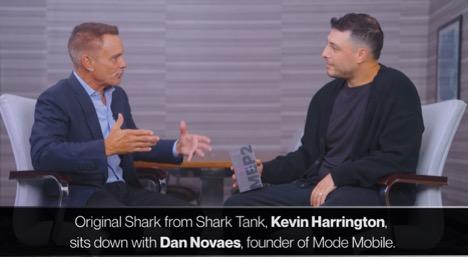
More than 60,000 investors have already invested over $100 million, including original Shark Tank investor Kevin Harrington.
Mode may still be private, but the company has already secured its Nasdaq ticker: $MODE.
And the coming price change could signal that they are getting closer to a public listing.
Unlike many pre-IPO companies, Mode has built meaningful traction.
The company reports:
●490M+ users
●$115M+ lifetime revenue
●$1B+ earned and saved by users
●170+ countries served
Mode was also ranked North America’s #1 fastest-growing software companyin 2023 by Deloitte after posting 32,481% growth.
All by turning everyday phone use into something that pays you back.
Just like Uber turned cars into taxis, and Airbnb turned homes into hotels.
This isn’t early-stage hype.
It’s about timing.
⏰ Invest at $0.55/share before the round closes.
*Mode Mobile recently received their ticker reservation with Nasdaq ($MODE), indicating an intent to IPO in the next 24 months. An intent to IPO is no guarantee that an actual IPO will occur. *The Deloitte rankings are based on submitted applications and public company database research, with winners selected based on their fiscal-year revenue growth percentage over a three-year period. *Please read the offering circular and related risks atinvest.modemobile.com. *Mode revenue and EBITDA numbers include full year revenue and EBITDA of businesses acquired by Mode Mobile in 2025.
Exclusive Headlines
Applied Materials' Rally Left No Room for Another Beat
Applied Materials just posted the highest sequential revenue growth in its history. Revenue reached $9.1 billion, up 25%. Non-GAAP EPS of $3.50 beat both major consensus estimates, and management raised its outlook for the current quarter above where analysts had it. Shares still fell about 5% after hours.
The reaction is worth sitting with, because on paper there is not much to complain about. CEO Gary Dickerson told analysts the company has made upward revisions to its full-year revenue forecast twice in the past three months. Largest customers are giving longer commitments and rolling eight-quarter forecasts. CFO Brice Hill pointed to a thirteenth consecutive quarter of year-over-year gross margin expansion.
Pre-earnings concerns did not hold up. Non-GAAP free cash flow was $2.33 billion, up 14%. Operating cash flow topped $3 billion for the first time in company history. On China, Hill said the region grew this year and should keep growing next year, led by investment in older 28-nanometer foundry and logic manufacturing, a segment less exposed to export restrictions.
Semiconductor Systems grew to $7 billion in revenue. Product mix is now roughly two-thirds foundry and logic, about a quarter DRAM, and the rest flash. Hill said growth in that segment is now running above the "30-plus percent" pace cited last quarter. Company-level gross margins have risen about 300 basis points over three years, partly attributable to value-based per-tool pricing changes rather than cost cuts alone. That is a different kind of margin story than one built purely on scale.
None of this points to a company whose growth story cracked. What it does point to is a stock that had already priced in a great deal of good news. Shares were up roughly 105% year to date and around 200% over the trailing twelve months heading into the print. A rally of that size raises the bar for what counts as good enough. A beat that lands above the midpoint of guidance but not above its ceiling may simply not clear that higher bar for a stock priced closer to perfection.
Applied Materials proved this quarter that demand, pricing power, and cash generation are all still moving in the right direction. What it has not yet proven is that a stock already up 200% has room left to reward being right again.
Super Micro's Backlog Is Outrunning Its Cash
Super Micro Computer closed fiscal 2026 with a number that should worry anyone tracking how fast the AI server maker is growing. Operating cash flow for the year was negative $6.8 billion. That is the cost of chasing a backlog management says now tops $60 billion in new orders.
The Q4 print capped a year of contradictions. Revenue of $11.12 billion, up 93%, landed near the bottom of the $11 to $12.5 billion guidance range. GAAP diluted EPS of $1.62 and non-GAAP EPS of $1.70 both blew past the top of their guided ranges. Non-GAAP gross margin of 17.6% more than doubled the 8.2 to 8.4% range management had set. CFO David Weigand attributed the revenue shortfall to "delays in customer readiness" and said the revenue will show up in coming quarters. Three-quarters of the margin gain came from favorable customer and product mix, with the rest from lower tariff costs and reduced inventory reserves.
The more concrete concern is working capital. The cash conversion cycle stretched to 149 days from 106 in Q3. Days inventory outstanding rose to 119 from 106. Full-year operating cash flow swung from positive $1.66 billion in fiscal 2025 to a $6.8 billion use of cash in fiscal 2026. Super Micro raised $5.6 billion in Q4 alone, split between common stock and a new mandatory convertible preferred paying a 7% coupon.
CEO Charles Liang told analysts that funding a revenue base of $80 billion or more, above the top of current guidance, could require additional cash. That is a notable admission from a company already guiding to 66 to 84% revenue growth.
The order book raises its own questions. One customer accounted for 28% of the year's revenue. Analyst Asiya Merchant asked directly whether large data center customers are increasingly buying components straight from ODMs instead of going through Super Micro. Liang's response focused on power and cooling readiness rather than a numbers-based rebuttal. A previously disclosed board investigation remains unresolved, with Weigand saying only an update would come "shortly."
Super Micro no longer has to prove demand exists. What it has not yet proven is that it can fund the growth without repeating fiscal 2026's cash drain or leaning further on capital markets.


Tidak ada komentar:
Posting Komentar