|
|
Dear Reader,
Something strange just happened in Washington...
And, according to research by tech visionary Ian King, "it could hand the world's richest man an unprecedented amount of power...
While making his backers a fortune."
To explain all the details, King just released a stunning new presentation.
If his research proves correct, a single move by Elon Musk could reshape the monetary system... beginning in a matter of weeks.
In other words, Elon is about to 'flip the switch.'
And investors who act today could see the single greatest wealth-building opportunity in decades.
We recently sat down with King – who's called just about every twist and turn of Musk's career... including an early bet on Tesla that returned up to 1,000% in a little over a year.
For the time being, you can get his take on Musk's latest innovation, free of charge, right here.
Regards,

Sarah Williams
Associate Editorial Manager, Banyan Hill Publishing
|
SpaceX Passed the Test. The Bill Comes Later.
SpaceX Passed the Test. The Bill Comes Later.
Hey there, bargain hunter. Wall Street spent the better part of two months constructing a very tidy bear case for SPCX. First earnings as a public company. Lock-up expiration two days later. More than 911 million insider shares flooding a market that had traded on a tight float since the June IPO. The supply math looked merciless on a whiteboard.
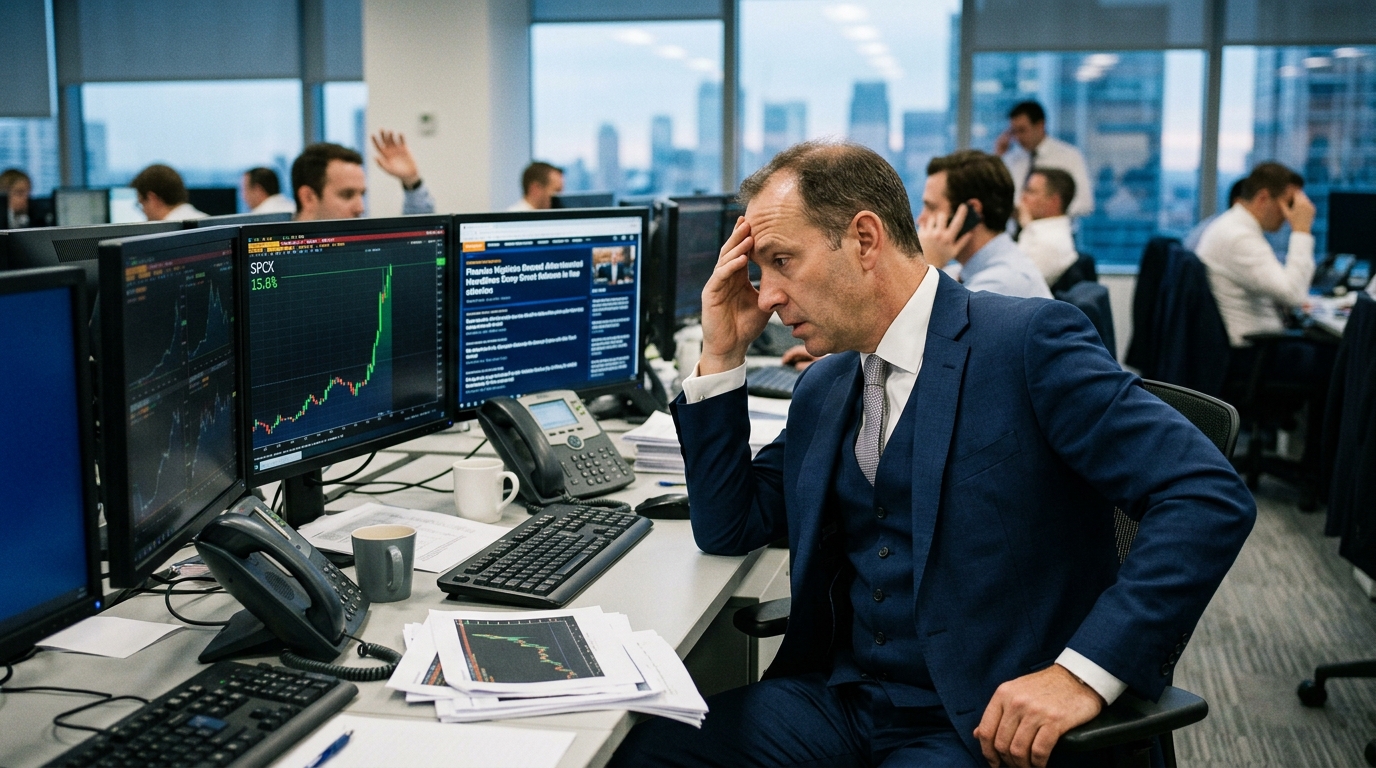
The stock finished the week higher. Not marginally. Significantly.
Scoreboard
Here is what actually happened across the five trading days ending August 8, 2026.
- SPCX closed Friday, August 8 at approximately $134, versus a Thursday close of $114.92 before the lock-up event
- The stock's 52-week range runs from $104.83 to $225.64, putting the current price well off the IPO price of $135
- Q2 2026 revenue: $7.81 billion, up 92% year-over-year, versus analyst consensus of $6.93 billion
- Net loss: $541 million, versus a $1 billion loss in Q2 2025 and analyst expectations of a loss of $1.9 billion
- Adjusted EBITDA: $3.5 billion, up 191% year-over-year
- Capital expenditures: $18.4 billion for the quarter, roughly $15.8 billion of that tied to AI infrastructure
- Lock-up shares eligible: 911.5 million, worth approximately $100 billion at Wednesday's prices
- Friday single-session gain: approximately 13% after Argus upgraded the stock to Buy with a $160 price target
The Real Reason Bears Got Wrecked
The bears had the supply side right. They missed the demand side entirely.
When 911.5 million shares became eligible for trading on August 6, the anticipated flood of selling simply did not materialize in the open market. Full-day trading volume hit 255 million shares on August 7 with roughly $28.2 billion in turnover, the highest since early July. Block trades, negotiated off-exchange, likely absorbed what could have otherwise been disorderly selling pressure. Institutional buyers were not waiting for a lower entry. Temasek Holdings disclosed ownership of 9.8 million Class A shares worth roughly $1.24 billion. Cathie Wood's ARK invested in SPCX that same week.
When the lock-up passed clean, the positioning story flipped. Short sellers who had built positions expecting supply to overwhelm demand were now covering into a stock that was moving against them. That is not a fundamental improvement. It is mechanical. But the price action was real.
Then Argus analyst Steven Silver upgraded SPCX to Buy from Hold with a $160 price target, pointing to what he described as rapid payback on AI compute spending. That call echoed CFO Bret Johnsen's comment on the earnings call that SpaceX is getting less than a one-year payback on AI infrastructure investment. Morgan Stanley held its Overweight rating and $300 price target. Bernstein raised its target to $248 from $239. The analyst consensus, per S&P Global, sits at Buy with an average target of $231.40 across 35 analysts.
What SpaceX Actually Is Now
The company that went public on June 12, 2026 at $135 per share, raising $85.7 billion in the largest IPO in history, is not primarily a rocket company. That is worth saying plainly, because the ticker and the brand still conjure images of Falcon 9 landings.
Rockets generated $962 million in Q2, up 29% year-over-year. That is less than 13% of total revenue. SpaceX completed 78 launches and deployed 1,041 metric tons of mass to orbit in the first half of 2026, primarily to expand the Starlink constellation. The space segment posted an operating loss of $542 million, with R&D for Starship continuing to consume cash at scale.
Starlink is the core business today. Connectivity revenue reached $4.29 billion in Q2, up 66% year-over-year, and was the only segment to generate an operating profit: $1.66 billion. Subscribers doubled year-over-year to 12 million. SpaceX added 1.7 million net subscribers in the quarter. The catch is that per-subscriber economics are compressing. Average revenue per user fell 22% year-over-year as the service expanded internationally and introduced lower-priced tiers. Volume is growing faster than ARPU, which is a workable dynamic for now but puts a ceiling on margin expansion from the Connectivity segment alone.
The AI segment is the bet. Revenue there hit $2.56 billion, up 247% year-over-year, as SpaceX scaled its xAI and cloud infrastructure. The segment still posted a $1.26 billion operating loss in Q2, with $15.83 billion in AI capital expenditures driving the spend. SpaceX expanded AI nameplate compute capacity from 0.4 gigawatts to 1.4 gigawatts year-over-year, a construction pace that has no direct peer outside of the hyperscalers.
Data Section: The Numbers That Matter
- Revenue: $7.81B in Q2 2026, +92% YoY. Full-year annualized run-rate target of $100B by year-end, per CFO Johnsen
- Net loss: $541M, vs. $1B in Q2 2025. Loss per share of $0.09, vs. consensus expectation of $0.26
- Adjusted EBITDA: $3.5B, +191% YoY. GAAP operating margin improved by 2,200 basis points to -1.8%
- Capex: $18.4B in Q2, up from $10.1B in Q1. Analysts had forecast roughly $13B. $15.83B was AI-specific
- Cash and equivalents: $100B at quarter-end, plus $47.5B in contract backlog
- AI Cloud Services Agreements: $14.1B in contracted bookings, plus $6.7B in new cloud services revenue contracted in early Q3
- Starlink subscribers: 12 million, doubled YoY, +1.7M net adds in the quarter
- Starlink ARPU: Down 22% YoY, approximately $66/month
- Starshield contracts: Over $6B in multi-year U.S. government contracts awarded in Q2
- Compute capacity: 1.4 gigawatts nameplate AI capacity, up from 0.4GW a year ago
|
|
SpaceX Targets Wireless, Mode Targets Earnings
SpaceX just put Big Telecom on notice, telling investors its plans to launch a U.S. mobile service for consumers. For most investors, that sounds like a shakeup for the $1.6T telecom industry.
For Mode Mobile, it could mean more revenue.
More connected phones could mean more places for EarnOS, the platform that turns everyday smartphone activity into earning potential.
Mode already reaches 490M+ users, helped users earn and save $1B+, and generated $115M+ in cumulative revenue. With $MODE secured, investors can still access pre-IPO shares at $0.52/share, plus up to 20% bonus shares.
Get the details before this window closes.Please read the offering circular at invest.modemobile.com. This is a paid advertisement for Mode Mobile's Regulation A+ Offering. |
Is It Cheap?
At roughly $134, SPCX trades at a market cap of approximately $1.77 trillion. That is 40% below its 52-week high of $225.64. It is also about 1% below the $135 IPO price. The stock raised $85.7 billion in the largest IPO in history and has gone essentially nowhere in price terms since the first day of trading.
Cheap in absolute terms? No. Cheap relative to the growth rate? That is the real question. On $7.81 billion in quarterly revenue, SpaceX is running at roughly $31 billion annualized currently, but management is targeting $100 billion in annualized recurring revenue by year-end 2026, with Cursor's contribution assumed. That implies the market is pricing roughly 17-18x forward revenue on the $100B target. For context, Palantir trades near 30x revenue. Snowflake trades near 14x. SpaceX falls somewhere between a hypergrowth SaaS multiple and a discounted one, depending on whether you believe the $100 billion run-rate is achievable in five months.
Musk told investors on the earnings call that he has moved the $1 trillion revenue target forward to 2030 from 2031. That is a bold projection on $31 billion in current annualized revenue. Morningstar has flagged that SpaceX's valuation implies investors will be waiting decades for earnings to grow into current multiples. That is not unusual for a company of this type. It is, however, a real risk to internalize.
Pending Catalysts
Two significant items are still unresolved and could move the stock in either direction.
Cursor close. The $60 billion all-stock acquisition of Anysphere, the company behind the Cursor AI coding editor, was announced June 16 and is expected to close in Q3 2026. Reports from The Information suggest the deal could finalize as soon as mid-August. At $60 billion, SpaceX is paying roughly 15 times Cursor's annualized revenue. Cursor's market share in AI coding tools had slipped from about 41% in mid-2025 to roughly 26% by May 2026, per Ramp spending data. SpaceX is betting it can halt that erosion and integrate Cursor's developer base into its broader AI stack. If the deal closes cleanly and the integration holds, it adds meaningful ARR toward the $100 billion target. If Cursor's market share deteriorates further post-close, the $60 billion looks expensive in retrospect.
Terafab. The joint semiconductor venture between SpaceX, Tesla, and xAI, unveiled in March, is planned for the North Campus of Giga Texas in Austin. Terafab targets 2-nanometer chip production aimed at Tesla FSD and Optimus hardware as well as space-hardened processors for orbital AI applications. Initial buildout costs are estimated at $20 to $25 billion, with Morgan Stanley projecting total investment could reach $35 to $45 billion. First chip output is not expected before mid-2028. This is a multi-year capital commitment on top of SpaceX's already elevated AI capex run-rate. The Grimes County site has been locked in, with a 100% property-tax abatement for 10 years from 2027 confirmed by local agreement documents. The financial return timeline is long. The strategic logic, eliminating dependence on TSMC for chips designed specifically for SpaceX and xAI systems, is clear.
Bull / Base / Bear
- Bull: Cursor closes on schedule and contributes materially to the $100B ARR target. AI Cloud Services agreements ramp in Q4. Capex begins to normalize below $15B per quarter as Colossus II build-out completes. Starlink subscriber growth continues at current pace. The lock-up calendar absorbs without incident. SPCX re-rates toward the $160 to $248 analyst target range.
- Base: Revenue tracks toward $80 to $90B annualized by year-end with Cursor in the mix. AI segment losses narrow but don't turn profitable until 2027. Remaining lock-up tranches create episodic selling pressure but no structural break. SPCX consolidates in the $120 to $160 range through year-end. Terafab remains a long-dated option, not a near-term driver.
- Bear: Capex stays elevated above $15B per quarter through 2027 with no visible inflection in AI segment profitability. Starlink ARPU compresses further as international expansion accelerates. Cursor market share erosion continues post-acquisition, making the $60B price look like a mistake. Additional lock-up tranches, with over 4 billion shares becoming tradable by year-end per analyst estimates, overwhelm buyer demand in a risk-off tape. SPCX revisits the $104 area or below.
Action Plan
The week's move changes the risk/reward calculus. SPCX at $134 is a different proposition from SPCX at $108. The short-squeeze component is largely exhausted. What remains is a fundamental investment decision in a company burning $18 billion a quarter in capex while growing revenue at 92% annually.
- Already long: Hold through the Cursor close. That is the next binary event. If it lands clean and management reiterates the $100B ARR target on Q3 earnings, the position looks better. If the deal slips or Q3 capex surprises to the upside again, trim into strength.
- Looking to initiate: Do not chase the Friday move. The next lock-up tranches create natural entry opportunities. Scale a first position in the $115 to $120 range if the stock pulls back, with a second tranche reserved for any broad market sell-off that brings SPCX below $110. Full position size should reflect that this is a high-volatility, pre-profitability name with an uncertain lock-up calendar running through year-end.
- Risk posture: This is not a conservative holding. The cash burn is real, the lock-up calendar is long, and the valuation assumes execution the company has not yet delivered in full. Size accordingly.
Cheap Investor Scorecard
- Revenue growth rate: 92% YoY in Q2. Track whether Q3 accelerates or decelerates from this base. Target: maintain above 60%.
- AI segment operating loss: $1.26B in Q2. Watch for narrowing. A break toward breakeven by Q2 2027 validates the payback thesis.
- Capex trajectory: $18.4B in Q2. CFO guided similar levels for Q3 and Q4. Any downside surprise here is a positive.
- Starlink ARPU: Down 22% YoY. Monitor whether the decline stabilizes as enterprise and government mix increases via Starshield.
- Cursor market share: Slipped from 41% to 26% in AI coding tools by May 2026. Post-close data will be the first real integration signal.
- Lock-up calendar: Over 4 billion additional shares becoming tradable by year-end. Track each unlock date and volume absorbed.
- AI Cloud Services bookings: $14.1B under agreement. Watch for incremental contract wins or any cancellations in quarterly filings.
- Analyst price target spread: Current range $62 to $800, average $231.40. Monitor for convergence upward or cuts following Q3 results.
- Cash position: $100B at quarter-end. The balance sheet is not the risk. Burn rate and return timeline are.
- $100B ARR target by year-end: The single most important near-term milestone. Q3 earnings will be the first real checkpoint.
Bottom Line
If SpaceX can close Cursor cleanly, hold AI segment capex near current levels without a third consecutive upside surprise, and deliver Q3 revenue that keeps the $100 billion annualized target credible, then the current price around $134 is a reasonable entry for patient capital. That is a lot of conditions. None of them are guaranteed.
The week ending August 8 proved that the lock-up overhang was survivable. It did not prove that $18 billion quarters of AI capex will generate returns fast enough to justify the current multiple. That verdict arrives over the next two to four quarters. The bargain hunter's job is to watch the AI segment operating loss, track the lock-up calendar carefully, and not pay up for certainty that does not yet exist.
The short case broke on supply. The bull case still needs to prove itself on returns.



Tidak ada komentar:
Posting Komentar