Palo Alto Networks Gets a $425 Price Target – Why BTIG Is Bullish
Posted On Sep 29, 2026 by Ian cooper
Companies are spending billions to bring artificial intelligence into their businesses, especially with the artificial intelligence story still gaining momentum. As that happens, it’s creating an opportunity for Palo Alto Networks (NASDAQ: PANW), which is why BTIG analyst Gray Powell raised his price target on PANW to $425 from $404 and maintained his Buy rating.
Table of Contents
Powell believes Palo Altocould deliver pro forma revenue growth of at least 17% in fiscal 2027, compared with Wall Street’s estimate of 14.6%. He also expects next-generation security annual recurring revenue, or NGS ARR, to grow at least 26%, ahead of the 24.5% consensus.
For investors, the appeal is straightforward: Faster recurring growth could suggest customers are making larger, ongoing commitments to Palo Alto’s products. Powell’s forecasts remain estimates, but they outline where he sees room for positive surprises.
Chronosphere Expands Palo Alto Networks’ AI Security Opportunity
One business attracting attention is Chronosphere, which Powell said has surpassed $500 million in annual recurring revenue.
Chronosphere operates in observability, a technical term with a practical purpose. It helps companies understand what is happening inside their applications and technology infrastructure. As businesses add cloud services and AI workloads, identifying the source of a slowdown or failure can become increasingly difficult. Think about an online business whose checkout suddenly stops working. Knowing there is a problem is only the beginning. Teams need to identify what caused it and where to focus their response.
Palo Alto completed its acquisition of Chronosphere in January 2026, adding capabilities that provide visibility into complex digital operations. That creates another potential reason for customers to do more business with the company.
Palo Alto Expands Its Identity Security Business
Another part of the story is CyberArk and the identity security platform Palo Alto introduced as Idira. Identity security focuses on who, or what, can access a company’s systems. That includes employees, software, and increasingly AI agents that can perform tasks with limited human involvement. Palo Alto says Idira extends privilege controls across human, machine, and AI identities. The goal is to manage access more precisely as businesses become more automated.
Prisma AIRS Strengthens Palo Alto’s AI Security Strategy
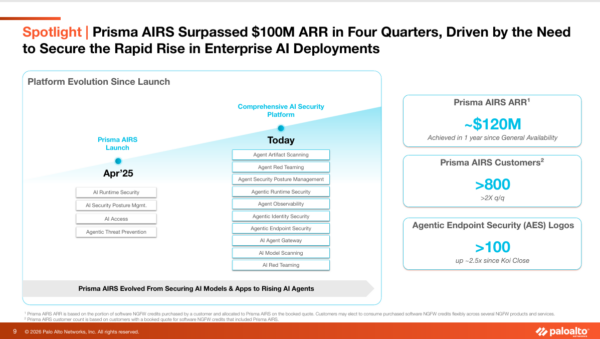
Palo Alto’s Prisma AIRS platform adds another piece to its growth strategy. The company is building broader protection around AI, with capabilities spanning areas such as identity, endpoint security, and observability. Its product portfolio brings together technologies intended to help customers secure AI systems as those systems become more capable and interconnected.
Going forward, investors should watch recurring revenue trends, adoption of newer products, and evidence that customers are buying across the portfolio. Acquisition spending and integration costs also matter, because faster growth does not automatically translate into stronger earnings. BTIG’s outlook offers a clear bullish argument.
PANW Stock Eyes $400 Resistance
PANW stock maintains a strong technical position despite falling 2.3% to $382.90 on Sept. 29. Shares are trading well above the 50-day moving average at $357.88, keeping the broader uptrend intact. The stock has also recovered from its September pullback and is again approaching the psychologically important $400 level.
Momentum is improving as well. The MACD remains above its signal line, while the positive histogram indicates that bullish momentum has returned. A sustained move above $400 could reinforce the recent uptrend and put the stock into new territory. On the downside, the 50-day moving average around $358 provides an important technical reference. A break below that level would weaken the bullish setup and could bring the September lows back into focus.
Palo Alto Networks Has Multiple AI Security Growth Drivers
As companies use more AI, they will also need to keep their systems and information safe. New AI tools can help businesses work faster, but they also create more things to protect.
Companies need to know who can access sensitive data, what their AI tools are doing, and when something goes wrong. That creates several opportunities for Palo Alto Networks. One, Chronosphere helps businesses monitor their technology. Two, Idira helps control access to important systems. And three, Prisma AIRS helps protect AI applications. Together, these products give Palo Alto more ways to meet customer needs as AI becomes a bigger part of everyday business.
The bullish case is easy to understand. Businesses want the benefits of AI, and protecting their operations is part of making that investment work. The company has several products that could help them do that. If the company continues to win business and expand customer relationships, it could have a meaningful opportunity for growth in the years ahead.
Today’s editorial pick for you
Deutsche Bank Sees a Buying Opportunity in Netflix
But Deutsche Bank believes the selloff has created an opportunity. Analyst Bryan Kraft upgraded NFLX to Buy from Hold, even as he lowered his price target to $95 from $100.
At first glance, Kraft’s decision might seem confusing. If he thinks the stock is worth less than he previously estimated, why recommend buying it now?
The answer comes down to price.
A company can have a slightly weaker outlook and still become a more attractive investment if its shares fall far enough. Think of it this way: Something you considered too expensive a few months ago might look appealing after a substantial discount.
That appears to be the thinking behind Deutsche Bank’s upgrade. Kraft’s lower target reflects a more cautious valuation, but the stock’s decline leaves considerable room between its recent trading price and his estimate of its value.
The biggest concern is engagement, or how much time people spend watching Netflix.
That matters because subscribers need a reason to keep paying. If viewers struggle to find something they want to watch, they may become more willing to cancel or switch to another service. Less viewing could also limit advertising opportunities. Advertisers generally want access to audiences that show up regularly and spend time on a platform.
Earlier this month, Wells Fargo downgraded Netflix to Underweight, pointing to troubling engagement trends. That offers a reminder that Wall Street is divided about what comes next.
Investors are trying to determine whether softer viewing reflects a temporary shortage of compelling releases or a more persistent problem. Those are very different situations, and the answer could shape the stock’s next move.
Netflix’s International Business Deserves Attention
Kraft believes investors are overlooking an important advantage: Netflix’s international production network. According to his analysis, more than 60% of the company’s production now takes place outside the United States. That gives Netflix access to a broad range of stories, creative talent, and audiences.
The investment argument is easy to understand. Netflix doesn’t have to depend entirely on Hollywood to keep its service appealing. Producing entertainment across different countries can help the company connect with local viewers. It also creates opportunities for a show developed in one market to attract fans elsewhere.
That doesn’t mean every international production will become a hit. Entertainment remains unpredictable, and spending heavily on content doesn’t guarantee success.
A Bigger Role in Entertainment
Kraft also sees Netflix becoming a broader entertainment platform.
In plain English, his argument is that Netflix’s value extends beyond the movies and television shows it produces. Its brand, subscriber base, and operating experience could help it expand the ways it connects audiences with entertainment.
Netflix still needs appealing content, whatever approach it takes. But Kraft’s view suggests its established audience and global reach could provide additional ways to grow over time.
The opportunity depends on execution. Expanding the service only creates shareholder value if it attracts customers, keeps them engaged, and produces worthwhile financial returns.
NFLX Stock Chart Signals More Downside Risk
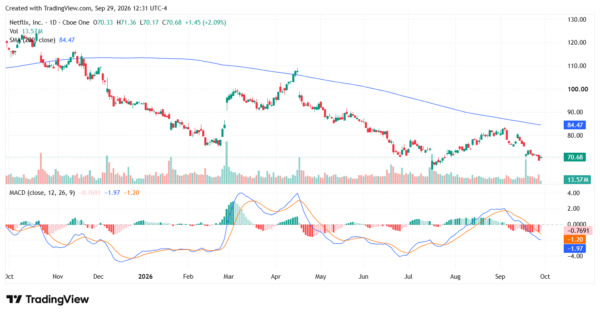
NFLX stock remains under technical pressure despite its 2% gain on Sept. 29. Shares closed at $70.68, well below the declining 200-day moving average at $84.47, indicating that the longer-term trend remains weak. The stock’s recent rebound toward the low-$80s was rejected, sending shares back toward the $70 area.
Momentum is also deteriorating. The MACD has moved below its signal line, while the histogram has turned increasingly negative, suggesting bearish momentum is building. The $70 area is an important near-term level to watch; a sustained break below it could put the recent lows around the upper-$60s back in focus.
On the upside, NFLX would first need to reclaim the $80-$84 area, including its 200-day moving average, to signal a meaningful improvement in its technical picture. Until then, the chart suggests investors are still dealing with a broader downtrend.
What Investors Should Watch Next
The upgrade gives investors a reason to reconsider Netflix, but its next results will matter more than one analyst’s recommendation.
Watch whether engagement improves, revenue continues growing, and management keeps content spending under control. Profitability and cash generation will help show whether Netflix is turning its global reach into a stronger business.
The bullish case is that recent disappointment has overshadowed advantages built over many years. If Netflix can improve viewing trends while maintaining financial discipline, the stock could regain support. For patient investors, the selloff may offer an opening.






Tidak ada komentar:
Posting Komentar