|
Reader,
Tesla has already signed a binding six-year supply agreement with one small American resource company.
That positioning is worth paying attention to.
This company produces nickel — a metal that now sits at the intersection of aerospace, AI infrastructure, data centers, electric vehicles, and defense-related manufacturing.
Yet domestic production covers only a fraction of U.S. demand.
Indonesia, Russia, and China currently control nearly 80% of global supply — a concentration that has drawn sustained attention from policymakers.
The federal government has already awarded this company more than $130 million in support.
See the full picture of who is already involved — and what the filing record shows.
Tesla is a partner. Rio Tinto is a partner. After reviewing the disclosures, I took a 10,000-share position myself.
If federal involvement expands, this stock's current profile may not reflect that for long.
Click here to review the full briefing before broader coverage picks up.
Yours for peace, prosperity, and liberty,
Dr. Mark Skousen
Macroeconomic Strategist, The Oxford Club
Tyson Cut Its Profit Forecast Twice in a Month. Is the Stock Finally Cheap?
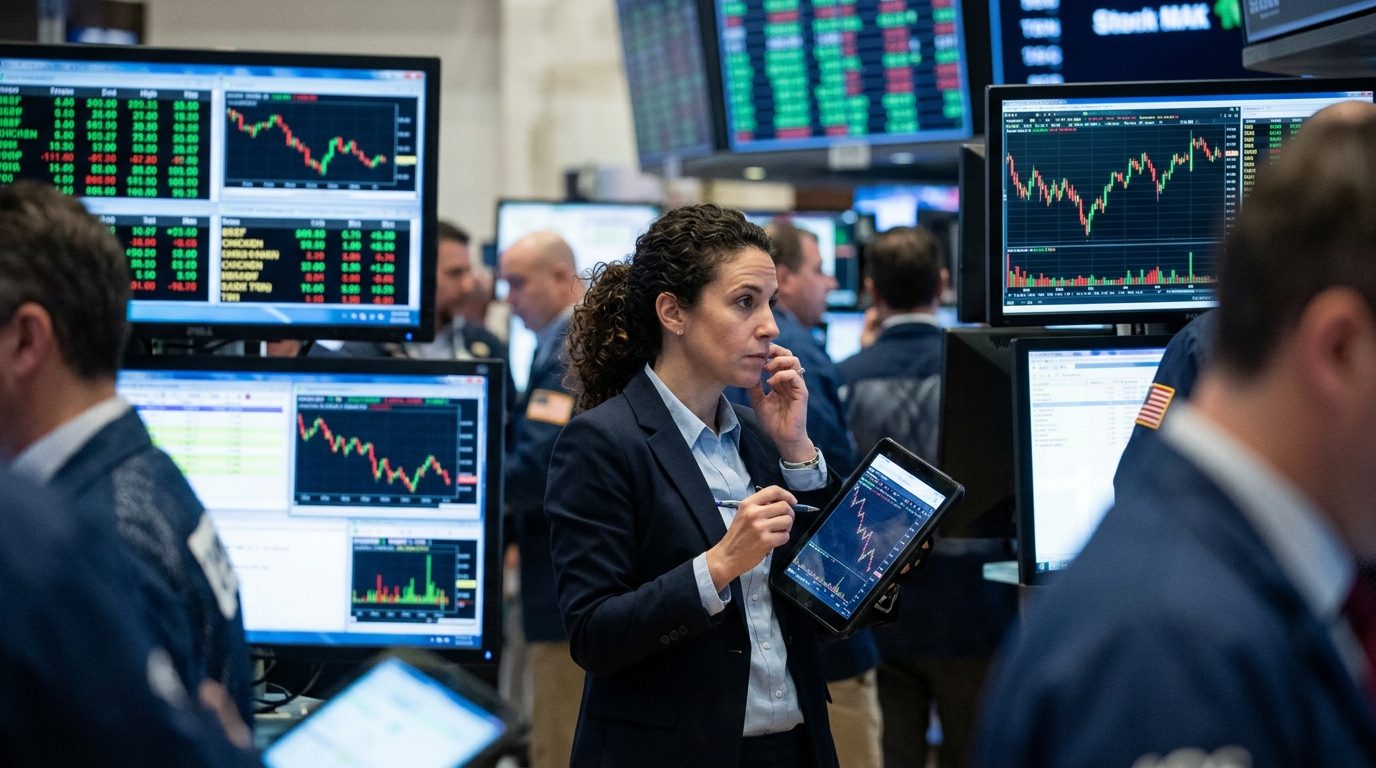
Hey there, bargain hunter. Tyson Foods just handed the market two guidance cuts in roughly 30 days, and the stock fell about 7% on September 3, 2026 alone. TSN has now declined about 6% year-to-date in 2026. The question sitting in front of you is not whether the beef business hurts. It does. The question is whether the pain is already priced in. ScoreboardTyson now expects adjusted operating income of $1.85 billion to $2.05 billion for fiscal 2026, down from a prior forecast of $2.1 billion to $2.3 billion, and cut its revenue growth outlook to 1.5%-2.0% from 2.5%-3.5%. The beef segment is expected to post an adjusted operating loss of $625 million to $775 million, versus the earlier estimate of $500 million to $650 million. That is the number that is doing the damage. What Actually HappenedThe revised outlook is primarily driven by significant margin compression amid volatile cattle prices and one of the most severe cattle shortages in U.S. history, as well as the expected impact of lower cattle prices on the value of live cattle inventories. That last piece is the sneaky part. When cattle prices fall, the live inventory Tyson already owns marks down in value. So Tyson loses on the procurement side when cattle are expensive, then takes an inventory write-down when prices soften. The cycle bites both ways. USDA data shows the U.S. entered 2026 with about 86.2 million cattle and calves, the smallest herd since the early 1950s, down from roughly 94.7 million in 2019. Experts believe the cattle shortage will likely keep beef prices elevated well into 2027. Cattle inventory will likely not expand until at least 2028. That is not a quarter-to-quarter problem. It is a multi-year structural constraint. Analysts at Stephens Inc. noted that Tyson's beef plant closures have already cut its slaughter capacity by 50%. Management is shrinking into the shortage rather than waiting for it to ease. Data: What the Rest of the Business Looks Like
- Chicken: Chicken and Prepared Foods provided some offset, with the company raising its chicken segment adjusted operating income outlook to $1.85 billion to $1.95 billion for the fiscal year.
- Pork: Pork segment guidance stands at $200 million to $250 million adjusted operating income.
- Beef: Operating loss of $625 million to $775 million, with Q4 conditions still deteriorating.
- Nine-month cash from operations: $1.47 billion through the first nine months of fiscal 2026.
- Q3 revenue: About $13.9 billion, roughly flat year-over-year.
Is It Cheap?TSN was trading around $52 after the drop. A historically tight U.S. cattle supply has pushed livestock costs higher, while Tyson and other meatpackers have struggled to fully pass those costs through. The chicken operation alone is guiding to roughly $1.9 billion in segment profit. That is a business worth real money. The beef drag is obscuring it. Pork is dealing with increased hog supplies and weaker product values, meaning beef is not the company's only commodity-related challenge. And consumer caution is adding pressure, with Tyson noting that pullback in discretionary spending has created a more challenging foodservice environment. Kroger, McDonald's, and their peers are all feeling the same squeeze from cautious consumers reluctant to trade up on proteins. Bull / Base / BearBull: Cattle inventory eventually recovers by 2028, beef margins normalize, and Tyson's streamlined three-plant beef network earns operating leverage it could not capture before. Chicken carries the company through the trough. The stock re-rates toward $78-plus analyst targets. Base: Beef losses stabilize near the low end of guidance. Chicken holds its $1.9 billion run rate. Full-year adjusted operating income lands around $1.95 billion. The stock grinds sideways for two to three quarters. Bear: The beef weakness persists longer than investors expect. Tyson itself described the current cattle shortage as one of the most severe in U.S. history, while supply constraints remain tight heading into early 2027. A quick recovery in beef margins is difficult to assume. A third guidance cut would reset sentiment entirely. Action PlanThis is not a slam-dunk. Two guidance cuts in a month is a visibility problem, not just a commodity problem. The repeated cuts are a warning sign. Tyson has reduced its profit outlook twice in roughly a month while simultaneously lowering its revenue-growth forecast, suggesting the deterioration in beef margins is occurring faster than management anticipated. If you want exposure, keep initial sizing small. A scale-in at current levels with a second tranche only after Q4 earnings confirm beef losses are not widening further makes more sense than a full position today. The dividend yield around the mid-3% range offers some cushion while you wait. Cheap Investor Checklist
- Beef segment operating loss: watch for stabilization at the low end of $625M-$775M range
- Chicken adjusted operating income: hold above $1.85 billion for fiscal year
- Q4 cattle inventory write-downs: any additional surprises reset the thesis
- US cattle herd data from USDA: first sign of herd expansion is a catalyst
- Slaughter capacity utilization at the three remaining beef plants
- Pork margins: watch for deterioration beyond current guidance
- CEO transition risk: CEO Donnie King is scheduled to step down on October 4, 2026, with Jeff Schomburger set to succeed him
Bottom LineIf beef losses stop widening and chicken holds its $1.9 billion trajectory, TSN near $52 is a reasonable entry for a patient buyer willing to sit through 2027. If Q4 earnings deliver a third surprise, this is a value trap with more downside. The cattle math does not fix itself until at least 2028. Size accordingly. |


Tidak ada komentar:
Posting Komentar