|
|
First a note from The Oxford Club
Dear Reader,
A few months ago, Trump quietly signed Executive Order 14330.
No fanfare. No headlines. The media barely noticed.
But it could be the most important financial decision of his presidency.
With one signature, he opened up an entire class of investments that were off-limits to regular Americans for decades.
These are the same investments that turned Mitt Romney's $450,000 into as much as $100 million in 15 years.
The same investments Peter Thiel used to grow $2,000 into $5 billion between 1999 and 2021.
Now, for the first time, you can access them too.
My colleague Alexander Green has found one fund at the center of it all.
Trump has up to $25 million of his own money in it.
But you can get in for less than $20.
Click here to find out more.
Good investing,
Rachel Gearhart
Publisher,The Oxford Club
|
FEATURED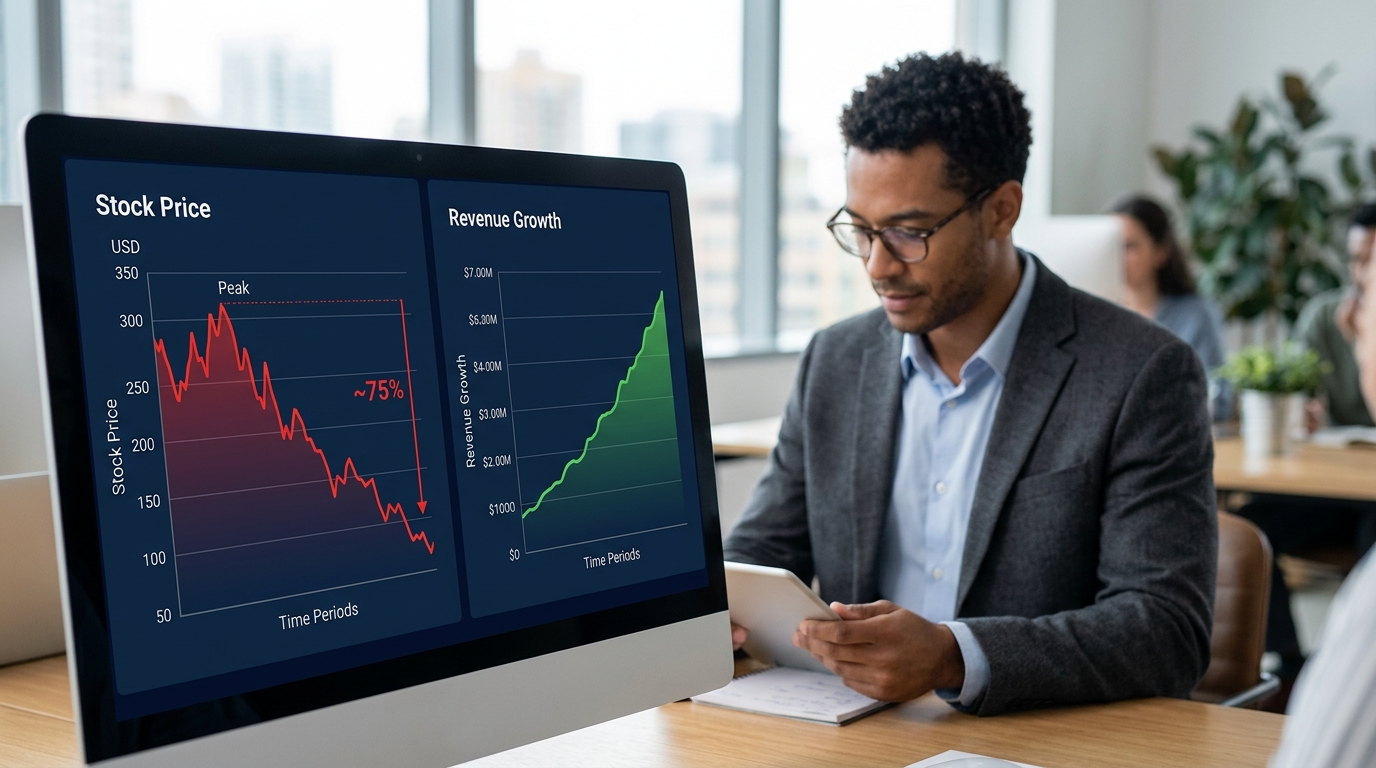
Costco Is Down 13% From Its High
There are two ways to read The Trade Desk (NASDAQ: TTD) right now. One version is a cautionary tale about what happens when a high-multiple tech stock meets slowing growth, agency conflict, and a macro environment that has gotten genuinely complicated. The other version is a profitable, cash-generating platform trading near its lowest valuation in years, with most of the bad news now public and at least partially resolved.
Both versions are true at the same time. That is the interesting part.
What Happened to the Stock
TTD hit an all-time closing high of approximately $139 in December 2024. As of early July 2026, shares are trading near $19. That is roughly an 86% decline in about 18 months. The 52-week range runs from around $17 to $91. The stock is near the bottom of that range and below its 200-day moving average.
The drop did not happen because the business collapsed. It happened because the stock was priced for perfection, growth decelerated, guidance disappointed, a major agency partner went public with a fee dispute, and executive turnover created noise at the worst possible time. One thing after another.
Worth noting: the stock is up over 700% since its 2016 IPO. Early investors are still sitting on massive gains. Everyone who bought in the last five years is underwater. That context matters for understanding why sentiment is this broken.
What the Business Actually Does
The Trade Desk is the largest independent demand-side platform (DSP) in programmatic advertising. It is the technology layer that lets advertisers buy digital ad inventory across connected TV, streaming, mobile, audio, and display without going through Google or Meta. The independence is the pitch: no conflicts of interest, no walled garden, objective and transparent data-driven buying across the open internet.
Revenue comes from a percentage of ad spend flowing through the platform. The more advertisers spend, the more TTD earns. That model scales well. It also means revenue is directly tied to overall advertiser budget cycles, which creates cyclical exposure.
Video including CTV now represents the low-50s percent of revenue, and audio was the fastest-growing channel in Q1, coming in at roughly 6% of the mix. US revenue accounts for about 82% of the total, with international at 18%.
The Numbers
Q1 2026 results, reported May 7:
- Revenue: $689 million, up 12% year over year. Beat the $679M Wall Street estimate by about 1.4%.
- Adjusted EBITDA: $206 million at a 30% margin. Down from 34% a year ago, reflecting higher platform investment spending.
- Non-GAAP EPS: $0.28, which missed the $0.32 consensus by about 12.5% due to higher taxes and platform costs.
- GAAP net income: $40 million. Diluted EPS of $0.08.
- Free cash flow: $276 million in Q1 alone.
- Operating cash flow: $392 million.
- Cash and short-term investments: approximately $1.4 billion at quarter end. Cash on hand was $878 million against roughly $346 million in long-term debt.
- Share repurchases: $164 million in Q1.
- Customer retention: above 95%, as it has been for over a decade straight.
- Joint business partnership signings: grew 55% year over year in Q1. March was the biggest month on record with 45 JBP deals closed.
- Gross margin: approximately 78%, showing how scalable the platform model is.
Full-year 2026 revenue was $2.9 billion in 2025, up about 18% from 2024's $2.4 billion. Growth has been decelerating: from 25%-plus year-over-year clips in 2024 down to the 12% posted in Q1 2026. Q2 guidance calls for at least $750 million in revenue, which implies around 8% growth year over year. That is a meaningful step down.
Management reiterated the full-year 2026 adjusted EBITDA margin target of at least 40%, roughly in line with 2025. Q1's 30% margin is well below that, so execution in the back half of the year carries real weight.
Is It Cheap?
This is where it gets genuinely interesting. For years, TTD traded at valuations that made it impossible to build a straightforward value case. A P/E above 100 is not a valuation. It is a hope multiple. That era is over.
Here is where the multiples sit today:
- Trailing P/E: approximately 22x. That is down from a 5-year average closer to 95-211x depending on the source, and roughly 86% below the 10-year median multiple.
- Forward P/E: approximately 10-11x based on current analyst estimates.
- EV/EBITDA: approximately 12.5x on a trailing basis.
- EV/FCF: approximately 10.5x.
- Price-to-Sales: under 4x, well below many high-growth software peers and also below the broader technology sector P/E of roughly 37x.
- PEG ratio: approximately 0.50, which typically signals that growth is not fully reflected in the price.
- Debt-to-equity: 0.17. The balance sheet is not a concern.
By almost any traditional metric, TTD is trading at the cheapest level in its public company history. That does not automatically make it a buy. Cheap can get cheaper, especially when growth is decelerating and analyst coverage is moving toward caution. Arete Research just downgraded TTD to Sell with an $11.60 price target in late June, citing structural competitive pressure and a shift toward a more capital-intensive model. Rothschild Redburn also initiated with a Sell. Not everyone thinks this is a bargain.
The 12-month average analyst price target sits around $24-25, implying roughly 25-30% upside from current levels. The spread between the most bullish ($47) and most bearish ($11) targets on Wall Street is enormous. When the range is that wide, the market is not pricing a known outcome. It is pricing genuine uncertainty.
The counterargument to cheap is this: the business grew revenue at 28% in Q1 2024. It is growing at 12% now. If that rate continues to decelerate toward single digits, the multiple still has room to compress even at these levels. A business growing 6% does not deserve a 22x P/E. That math matters.
Why the Stock Got Crushed
The short answer is guidance disappointment stacked on top of agency conflict stacked on top of executive turnover. Each one would have been manageable alone. Together they created a wall of concern that is hard to dismiss quickly.
On the Q2 guidance: TTD guided at least $750 million. Consensus was around $771-772 million. That gap versus expectations drove a sharp selloff on the May 7 earnings report. The company flagged geopolitical tensions, tariffs, and softness in CPG and automotive advertising as real headwinds.
On the Publicis situation: in March 2026, Publicis Groupe directed clients to stop using TTD after an independent audit alleged fee-stacking and enrollment of clients into features without explicit consent. TTD disputed the findings. The stock dropped roughly 13% on the news. Here is the update most coverage has not caught up to: on June 12, 2026, Publicis and TTD issued a joint statement saying they have resolved their differences and that Publicis is again recommending TTD to clients. Neither side disclosed the financial terms. Omnicom, which had launched its own separate audit, has not yet publicly resolved its review.
On executive turnover: the company went through an interim CFO period following leadership changes. On June 1, 2026, TTD announced that Nate Olmstead will become permanent CFO effective July 9, 2026. Olmstead brings prior CFO experience from Penguin Solutions and Logitech, plus 16 years in finance roles at Hewlett Packard. The chief strategy officer also departed for OpenAI during the same stretch, though she retained a board seat.
What the Bulls Are Watching
The structural drivers that made TTD worth 100x earnings a few years ago have not disappeared. CTV advertising in the US is projected to grow at roughly 14% annually, more than double the pace of overall digital advertising. That is the market TTD is most exposed to, and it is a real market with real growth behind it.
On the product side, Koa Agents is TTD's new agentic AI suite for media planning and campaign management. Audience Unlimited, their retail data product, posted early test results showing 30% lower CPMs, 38% lower data costs, and 75% more efficient cost-per-acquisition in a live brand test. LinkedIn selected TTD as its first DSP partner for activating B2B data for CTV campaigns. OpenAds has been adopted by a first wave of publishers including The Guardian, Hearst, and others. These are product catalysts, not just aspirational roadmap items.
Slight tangent, but it matters: the Fox-Roku deal announced June 15 is worth tracking for what it signals about CTV consolidation. Fox agreed to acquire Roku at $160 per share, valuing the deal at roughly $22 billion. Whether that ultimately helps or hurts open-internet programmatic buying is genuinely unclear. But it suggests the streaming TV ecosystem is not standing still, and TTD has existing partnerships throughout it.
Also worth noting: by the end of 2025, JBPs accounted for over half of TTD's business, with the pipeline more than doubling over the prior year. In Q1, the pharma advertiser win that TTD took back from Amazon committed to a 114% year-over-year increase in spend. That is not a shrinking platform. That is a platform fighting for share and, in some categories, winning.
The Real Risks
- Growth deceleration: Q1 was 12% growth. Q2 guidance implies roughly 8%. If that rate keeps falling, the valuation picture changes fast. A decelerating business is not the same as a cheap business.
- Competition: Google (DV360) and Amazon's DSP both have enormous proprietary first-party data advantages. Amazon in particular grew ad revenue roughly 24% year over year in its most recent report. TTD's open-internet positioning is the pitch, but walled gardens have pricing power that is hard to compete with purely on principle.
- Agency structural tension: the Publicis dispute resolved, but Omnicom's audit is ongoing. The underlying tension between DSPs building direct advertiser relationships and agencies protecting their role in the buying chain is structural, not situational. That tension does not disappear with one joint statement.
- Capital intensity shift: Arete's downgrade specifically flagged a shift toward a more capital-intensive model as a concern. Higher capex upfront can squeeze near-term profitability, and management's full-year EBITDA margin target of at least 40% requires a significant back-half improvement from Q1's 30%.
- Macro sensitivity: digital ad spending is cyclical. Tariffs, CPG softness, auto pullbacks, and geopolitical instability were all cited on the Q1 call as real headwinds. If the broader economy worsens, advertiser budgets get cut before almost anything else.
The Numbers That Do Not Fit a Broken Story
CEO Jeff Green bought approximately $148 million of TTD stock in the open market in early March 2026, according to a Form 4 filing cited in a company press release. The company repurchased $164 million in shares during Q1. Free cash flow was $276 million in a single quarter.
That is not a management team acting like the company is in trouble. That is a management team buying aggressively at prices they believe are wrong. They may be wrong about being wrong. But $148 million of personal capital has a way of focusing attention.
Customer retention above 95% for over a decade. JBP signings up 55% year over year. A new permanent CFO starting July 9. The Publicis situation resolved. Q2 earnings scheduled for August 6, 2026 (confirmed). These are the data points the bears have to account for.
The Cheap Investor Scorecard
- Revenue growth rate: 12% in Q1, guidance implies ~8% in Q2. Watch for stabilization or reacceleration.
- Adjusted EBITDA margin: 30% in Q1. Full-year target is at least 40%. The gap is the key risk to watch into Q3 and Q4.
- Free cash flow: $276 million in Q1. Strong. Track whether this holds through a seasonally slower Q2.
- Customer retention: above 95% for over a decade. Has not moved despite the agency conflict. That is a moat signal.
- JBP momentum: 55% year-over-year growth in Q1. Nearly 100 JBPs in the pipeline per recent filings. This is the leading indicator of future committed spend.
- Agency relationships: Publicis resolved June 12. Omnicom audit still pending. Watch for Omnicom resolution before August 6 earnings.
- Valuation: trailing P/E around 22x, forward P/E around 10-11x, EV/EBITDA around 12.5x. Cheapest in the company's public history on most metrics.
- Insider buying: CEO bought ~$148 million in March. Company repurchased $164 million in Q1. Alignment with shareholders is as high as it has ever been.
- New leadership: permanent CFO Nate Olmstead starts July 9. Watch for any guidance update at Q2 earnings on August 6.
- Macro environment: tariffs, CPG softness, auto pullbacks are real headwinds. Track Q2 actual revenue versus the $750 million floor guidance.
Bottom Line
If TTD can stabilize growth in the 10-15% range, sustain free cash flow above $1 billion annually, and demonstrate by Q3 or Q4 that EBITDA margins are tracking back toward 40%, then the current valuation looks genuinely disconnected from the business reality.
If growth continues decelerating into the low single digits and margin expansion fails to materialize, then the bear case gets harder to argue against, even at these prices.
August 6 is the next real data point. Q2 actual revenue versus that $750 million floor. EBITDA margins. Any update from management on the Omnicom situation. That is the moment the thesis gets tested or validated.
Worth watching closely before then.
The Cheap Investor


Tidak ada komentar:
Posting Komentar