| | | | There is a sound before a structural break. It is not a crash. It is a quiet groan — like steel bending under weight it was never built to hold. That is the sound the global silver market makes right now. | Silver closed near $87 per ounce in mid-March 2026. That is up roughly 161% from a year ago. In January, it briefly hit $121.69 before a sharp pullback wiped a quarter of its value in one session. The metal has since settled in the $82–$96 range — volatile, but held up by forces that set this move apart from past spikes. This is not a replay of the Hunt Brothers. This is plumbing under pressure. | What follows is a map of the forces at work beneath the surface — export controls, delivery strain, rigid supply, and the quiet shift in how the world sees a metal most investors still call gold's cheaper cousin. |
| |
| | |
| | | | | The Chokepoint: China Locks the Gates | On January 1, 2026, China moved silver from a normal commodity to a strategic material. It now sits under the same strict export rules as rare earths and antimony. The Ministry of Commerce cut exports to a whitelist of just 44 approved firms. Early data points to a 60–70% drop in refined silver sent abroad versus 2024 levels. | The motive is plain. China's own solar and EV factories use nearly 30% of global silver supply. By choking the outflow, Beijing gives its own makers first access — and gains leverage over Western firms that rely on Chinese refined metal. The Shanghai Gold Exchange now carries a steady $10–$12 premium over London and New York prices. It works like a vacuum for physical metal. | Here is where the first signal shows up. This is not a trade dispute. It is supply wiring being rebuilt in real time. The Shanghai Futures Exchange has posted record premiums on prompt delivery contracts. Short sellers on the Shanghai Gold Exchange pay fees to delay deliveries they cannot fill. Warehouse stocks at SHFE and SGE sites have dropped to levels not seen in over ten years. | At the same time, the United States acted. In November 2025, the U.S. Geological Survey added silver to the Critical Minerals List. That label unlocks federal permit support and opens the door for Defense Department stockpiling. When two great powers reclassify the same metal in the same quarter, the signal is not subtle. It is structural. | |
| |
| | |
| | | | | The Deficit That Won't Close | The silver market has now logged its sixth straight year of structural deficit. The total shortfall since 2021 has passed 800 million ounces. The year 2026 alone may add another 67–95 million ounces to that gap. Global mine output sits near 820–850 million ounces per year — and it is not growing fast enough to matter. | The reason is simple mechanics. Roughly 70–75% of the world's silver comes as a byproduct of copper, lead, zinc, and gold mines. Silver is not the main target. You cannot flip a switch and get more. Higher prices do not spark quick supply growth the way they would for a metal mined on its own. This is supply rigidity in its purest form — and it is the key limit of this market. | Recycling has finally crossed 200 million ounces for the first time since 2012, pushed by high prices and scrap recovery. But even that barely shrinks the gap. COMEX registered stock — the metal ready for delivery — has fallen to about 86–98 million ounces. Analysts call that level critical. During the March 2026 delivery cycle, notices topped 52 million ounces. That is over 60% of all stock on hand. | The paper market is grinding against physical reality. Several circuit-breaker halts hit COMEX in recent weeks of wild swings. The question is no longer what silver costs. It is whether you can get it. | | Sponsored by Anchor Point Research
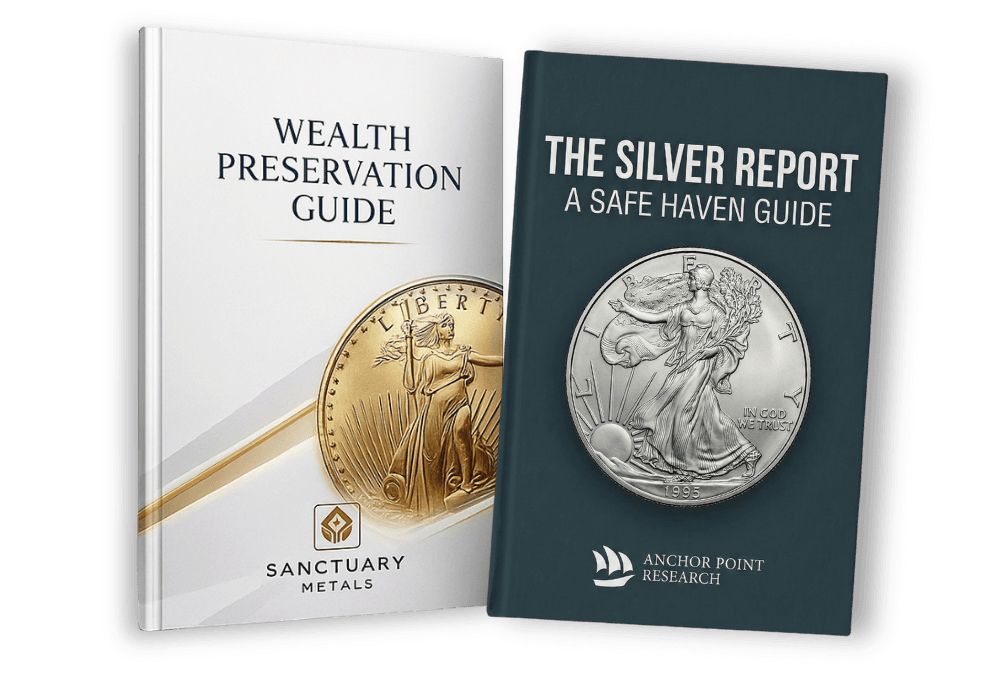
Silver jumped 160% in 2025. | Now it's up 16% in 2026. It's only January. | China just banned silver exports. They control 70% of global supply. | American companies that produce AI chips, EVs, and military tech are scrambling to secure silver. | It is the most conductive metal on Earth and there is no substitute. | Analysts say this could trigger the biggest silver boom in decades. | Anchor Point Research just released The Silver Report , a free special report that breaks this all down in plain English: | ✅ Why many experts call silver the most undervalued metal today | ✅ Why analysts see silver with far greater upside than gold | ✅ How industrial demand is creating a structural shortage | ✅ How to invest in physical silver using your retirement account — without taxes or early withdrawal penalties | | |
| |
| | |
| | | | | The Industrial Triple Threat: Solar, EVs, and AI | Industrial use now makes up nearly 60% of total global silver demand. That ratio has pulled the metal away from gold's price moves for good. Silver is no longer just a hedge. It is the invisible wiring inside the tech that defines this decade. | Solar panels alone eat over 190–230 million ounces per year. Makers have tried "thrifting" — using less silver per cell — but the sheer volume of new installs keeps demand high. Newer cell designs like TOPCon actually need more silver per unit for better output. At $85+ silver, swapping in copper fails because the drop in performance is too steep. | Electric vehicles add another 75 million ounces of demand in 2026. Global EV output is on track for 14–15 million units. A typical EV uses about 25–50 grams of silver — nearly double that of a gas engine — for power systems, contacts, and battery controls. Then comes the newest driver: artificial intelligence. Data centers and AI servers need high-purity silver for contacts and chips. This "AI floor" for silver demand did not exist two years ago. | The overlap is what matters. Solar, EVs, and AI are not taking turns. They pull from the same tight pool at the same time. Some makers now explore direct stakes in silver mines to lock in future supply — much like automakers chased lithium earlier this decade. The scramble has moved from trading desks to boardrooms. | The New Regime: Availability Over Price | The Gold-to-Silver Ratio has fallen to about 50–60:1, down from 80:1 just two years ago. That shift is a signal. It does not mean silver is pricey. It means the market is finally weighing silver's industrial role alongside its monetary one. Citigroup has called it "gold on steroids." If gold holds near its 2026 highs around $5,000+ and the ratio drops to its 2011 low of 32:1, silver math points toward $150+. | Forecasts for 2026 span a wide band. J.P. Morgan sees a cautious yearly average of $81/oz. Bank of America targets $135/oz, citing the tighter ratio and rising factory demand. Some independent analysts flag $100 as a mental barrier where a clean break could force short-covering across futures desks. The range itself is telling: the market has not found agreement because the key variables are still moving. | Here is the mental model for those watching this space. The era of cheap silver is over. The question has moved from "what does it cost?" to "can we get it?" When access — not price — becomes the binding limit, you are no longer in a commodity cycle. You are in a regime change. | The plumbing beneath solar panels, EV drivetrains, AI servers, and defense systems all runs on the same metal. Both Washington and Beijing now call that metal strategic. The warehouses are draining. The paper markets are straining. And the deficit enters its sixth year with no fix in sight. | This is not hype. It is basic math. Act on it. | | |
| |
| | |
| | | | |  | | | Anchor Point Research | |
|
|
|
|
|
|
| |
| | |
| |
|


Tidak ada komentar:
Posting Komentar