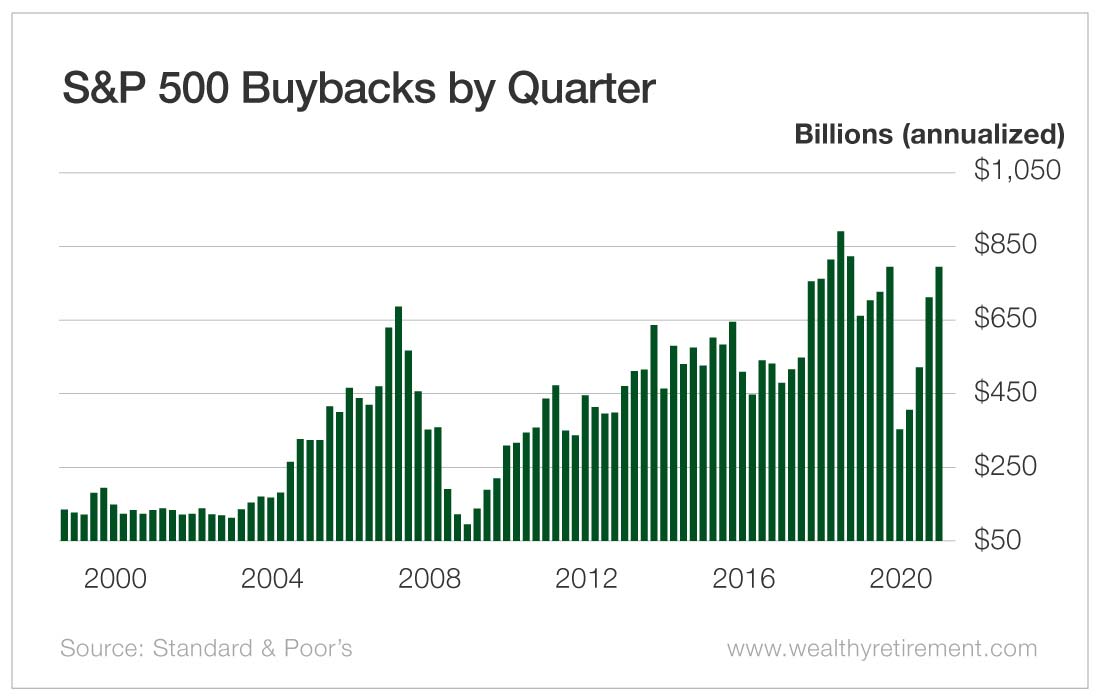
| There's a common comparison that equates stock buybacks to dating and dividends to marriage. I think that's unfair to dating. Some people date hoping for a little action. But many people date looking for love and a long-term relationship. I'd compare buybacks to Tinder, the dating app that is mostly used for one-night stands or casual hookups. See something you like? Swipe right, and you could have Barry White playing in the background in a few hours (though I doubt most people who use Tinder own any Barry White albums). While buybacks are popular, they're often a terrible use of cash. Share buybacks are a short-term catalyst to get investors interested in a company's stock. It's like putting on a tight-fitting outfit before a date. A stock buyback is exactly what it sounds like. A company buys shares of its own stock in the open market. The purpose of this is to reduce the number of shares, thereby increasing the earnings per share. If a company earns $10 million and has 10 million shares outstanding, it earns $1 per share. If it buys back 1 million shares, it now has 9 million shares, and the $10 million in earnings is divided by 9 million shares, which comes out to $1.11. The company's earnings per share jumped 11% even though its actual profits stayed flat. That's management putting tight jeans on earnings. Dividends, on the other hand, are usually a long-term commitment. When management pays a dividend, it is setting expectations that investors will continue to get paid well into the future, even when things aren't perfect. Management knows that if it cuts the dividend, the stock will likely get punished. Your beloved may leave the seat up or squeeze the toothpaste the wrong way, but you know they'll be there for you in sickness and in health. Same with dividends. A company may hit a rough patch and have some weak quarters, but if it's managed correctly, investors will still receive a dividend regardless of what the stock price is doing. And get this: Stock buyback announcements aren't even binding. It's like setting up a date and then deciding later whether or not to show up. When a company announces a buyback, it is not under any obligation to actually buy back the shares. It can do it at management's discretion. And managers have a track record of buying back shares at the absolute worst times - typically when stocks are high. | 







Tidak ada komentar:
Posting Komentar