$5,000, a Torn ACL, and a Million in Lost Incentives: Inside Alex Bars’ Search for Purpose After the NFLThe former NFL offensive lineman learned that making it to the league and making it in life are two completely different games.
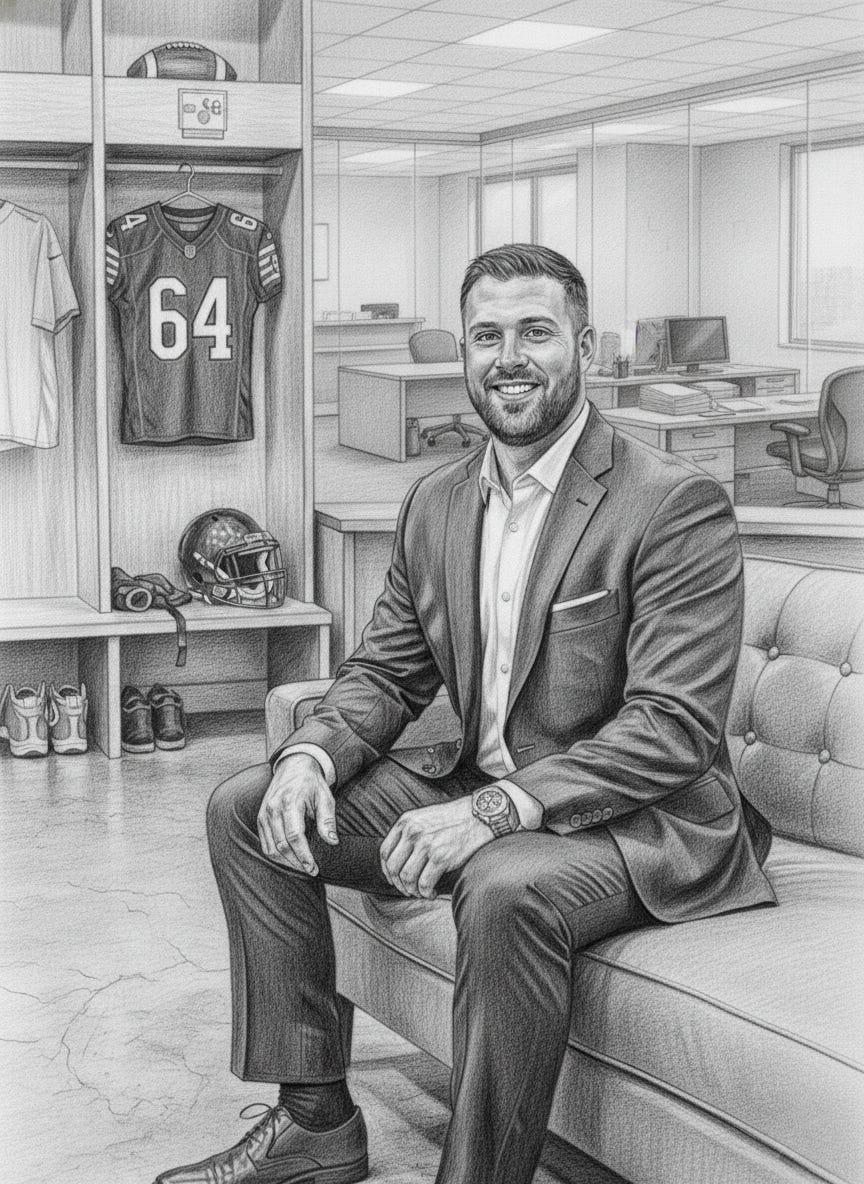
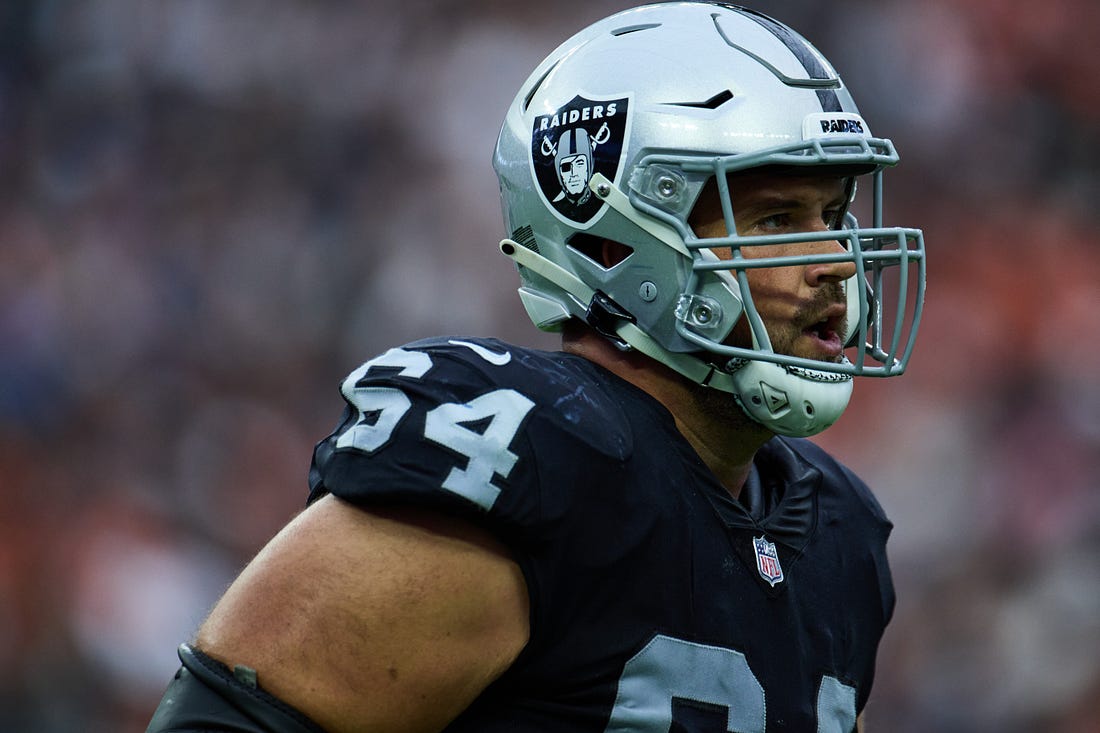
$5,000. That was Alex Bars’ signing bonus with the Chicago Bears. No ESPN headline. No champagne-soaked celebration. Just an undrafted rookie signing a contract that barely covered rent. Back at Notre Dame, he was the captain, an All-American, the kind of player scouts circled in their notebooks. Then, just before the draft, a devastating knee injury, a torn ACL and MCL, almost ended everything before it even began. Nine months later, he was back on the field - limping, aching, chasing a dream most assumed came with millions on day one. It didn’t. For Alex, the physical grind was tough, but the financial uncertainty was tougher. “People see the jersey and think you’re making millions,” he says. “They don’t realize most guys aren’t making that kind of money.” In the public eye, he’d “made it.” In reality, he was clinging to a roster spot. “I still remember the coach telling me, ‘If you’re not on the field, I can’t keep you on the roster,’” he recalls. In the NFL, hardship is often hidden behind highlight reels. Fans see the stars, the fame, the money. What they don’t see are the players fighting to last another week, earning far less than the headlines suggest. Some mornings, he’d sit in the locker room after practice, tape still wrapped around his knees, wondering how long his body would hold up. Looking back, he realizes that the $5,000 signing bonus taught him a harsh truth: making it to the league and making it in life are two completely different games. One demands talent, training, and toughness. The other demands knowledge the league doesn’t teach. “By the time most players realize it,” he says, “it’s already too late.” The Illusion
In the NFL, financial security is an illusion. Most players think they have it once the contracts are signed, until one roster move proves otherwise. For Alex, the reality hit sooner than he expected. He’d seen teammates get cut before, but now he was living it - one clause in the contract fine print had erased seven figures overnight. During his fourth year with the Las Vegas Raiders, Alex had signed a contract with incentives worth around a million dollars. Then they cut him, only to re-sign him to the practice squad a few days later - a roster maneuver that wiped out his incentives entirely. “I hit all of the milestones in the original contract,” Alex explains. “I had a pretty solid season, starting 15 out of 17 games, playing 87% of snaps… But I didn’t get the million because they had cut me and signed me back.” Just like that, a million dollars evaporated. “Nothing’s guaranteed. Your income can change immediately after just one roster move, one GM change.” Beyond that, Alex learned that most NFL careers last around three years - just long enough for players to think they’re secure, but rarely long enough to qualify for benefits like health insurance or a 401(k). He barely qualified himself. Four seasons in, Alex had already beaten the odds. But the longer he stayed, the clearer it became: the league rewarded what players produced on the field, not how well they prepared for life off it. The EducationIn the NFL, financial education is often treated like offseason conditioning. Everyone knows it’s important, but few take it seriously. Alex sat through countless presentations, the ones the NFL requires and the NFLPA endorses. Almost universally, they missed the mark. One session stood out. A financial advisor pitched the players on real estate, and recommended they prioritize purchasing a house with a fence for the dog they’d eventually want. “I’m thinking, this applies to maybe two or three guys on the team and no one else,” Alex recalls. “These sessions weren’t about real financial education. It felt like they were just checking a box.” To make matters worse, most of these sessions were scheduled after practices or midweek during game prep. “Guys were too tired to focus, let alone absorb anything,” he says. No one covered tax strategies designed for careers with short earning windows. No one explained the fundamentals of investing in the stock market. No one broke down how to evaluate equity stakes in companies. And most importantly, no one taught them how to spot predatory pitches disguised as opportunity. “The players didn’t know what they didn’t know, so they couldn’t even ask the right questions.” For Alex, the real education came from watching teammates make costly mistakes. A teammate invested $100K into a fund to buy a professional sports team. The pitch? He was “first in line” when it went up for sale. “Are they selling?” Alex asked. “No. But when they do, we’re first in line.” Alex walked him through the reality: capital locked up indefinitely, management fees compounding annually, and no timeline for deployment. “If you don’t make another dime in the NFL, you might need that money,” he told him. And the pitches just kept coming - cannabis drinks, sports beverages, the next breakthrough supplement. Flashy, tempting, and all aimed at players who had no way of doing proper due diligence. “Without knowledge of how to evaluate a deal or understand if it fits your financial goals, guys were investing just so they could tell people they were invested,” Alex recalls. He’d seen too many cautionary tales in the locker room to ignore the pattern. “You see stories about former athletes suing their advisors because they got scammed? That stereotype… the suits with greasy hair and their feet up on the table, just trying to squeeze every dollar out of athletes? It’s real.” He knew there had to be a better way. And he knew he and his teammates deserved better. The Transition“If your heart’s not in it, it’s hard to perform.” At 28, Alex faced the question every athlete wrestles with at some point: one more year? Jacksonville, Miami, Denver, Arizona. Four teams. Four practice squad offers. “I told my agent, ‘Hey, I’m not sure I want to keep doing this,’” Alex says. It wasn’t just about the paycheck anymore. It was about passion. “I was starting to lose love for the game,” he admits. “And I knew that it was time to find something else I was passionate about.” That something turned out to be wealth management. For Alex, the decision had been quietly forming for years. His studies in finance at Notre Dame planted the seeds, but it wasn’t until he saw teammates make costly mistakes that the purpose became clear: he wanted to help others make smarter financial decisions. And when it came to finding a place to start, the choice was personal. His brother Brad had left Merrill Lynch to start Creative Investment Group, a boutique wealth management firm built on independence from banks and complete transparency for clients. “When I saw how Brad was doing things, it just clicked,” Alex says. “It was everything I wanted the advisors from the league to be - honest, transparent, and client-centric.” Those weren’t just slogans on a website. They became the foundation of how he approaches every client today.
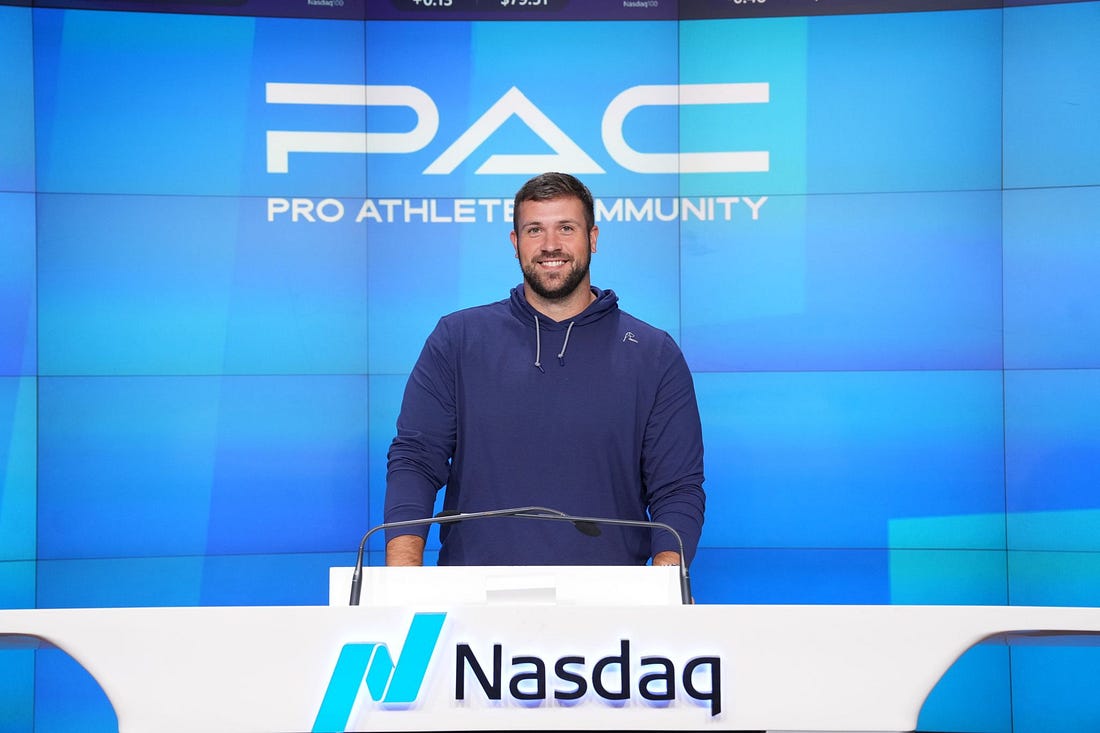
Alex refuses to sell products or push opportunities just to boost commissions. Every financial plan he builds is tailored to the client’s specific goals. “We’re not lazy. It would be easy to pop everybody’s money into mutual funds or ETFs. But that’s not who we are,” he says. “We build each portfolio from scratch. It’s more work, but it’s better for the client.” And education isn’t optional. Many of Alex’s clients are NFL players planning for life after retirement. Others are young professionals and business owners planning for major life events. No matter who they are, his goal is the same: he wants them to understand the why behind the what. “If you’re trusting me with your money, you’re going to understand every move we make,” he explains. “You’re going to know what you’re in, why you’re in it, how it’s doing.” Alex approaches every client meeting like a coach reviewing game tape with his players - breaking down risks, mapping out opportunities, and making sure his clients understand the rationale behind every move he makes. Because for him, success isn’t just about returns. It’s about helping clients understand their choices and feel in control of their financial future. The MissionFor Alex, wealth management isn’t just about beating the market. “We obviously want to be the number one firm in the country, but we want to do it the right way,” he says. The litmus test for success, he adds, isn’t rankings or press - it’s the feedback he gets from his clients. One client recently told him the firm had delivered better returns in a single year than his previous advisor had in four or five. “Hearing my clients happy that they made the switch is incredibly fulfilling,” he says. Another client, a doctor, offered to look out for Alex’s family’s health needs - a gesture that speaks to the kind of trust he builds.
Drawing on lessons from his playing days, Alex’s advice to athletes is simple: spend thoughtfully, budget early according to your lifestyle, and never assume the next contract will always be there. “The lifestyle you can afford now isn’t the one that will sustain you once it all ends.” $5,000 taught him patience. Injuries taught him urgency. A million-dollar loss taught him resilience. Two years removed from the league, Alex doesn’t miss the roar of the crowd. What drives him now is quieter but far more lasting. Whether it’s teaching players about investing, helping young professionals access off-market opportunities, or guiding business owners through retirement, he’s not just helping his clients grow wealth - he’s empowering others with knowledge and confidence. “Football gave me a platform,” he says. “Finance gave me a purpose.” Want to see how Alex brings the lessons he’s learned from the NFL to investing? Follow him on LinkedIn or Instagram, or visit his firm’s website to learn more. Subscribe to mainstreet media to join 4500+ athlete-investors, founders, and operators for stories on how athletes are building wealth, influence, and legacy after the game. Follow us on LinkedIn and Instagram. Want to be featured on mainstreet media or know someone we should feature? Let’s connect. More stories like this dropping soon. Stay tuned. Check out more stories here: for your eyes only.
|
Rabu, 04 Februari 2026
$5,000, a Torn ACL, and a Million in Lost Incentives: Inside Alex Bars’ Search for Purpose After the NFL





Langganan:
Posting Komentar (Atom)
Tidak ada komentar:
Posting Komentar