Key Market News: |
Futures pointed higher after Trump tariff U-Turn Trump's 'solution' to Greenland, cancels tariff threat over Greenland, says NATO agreed to 'framework' of future Arctic Deal Mark Rutte says allies must step up Arctic security in Greenland deal with Trump Denmark open to 'Golden Dome' talks Jensen Huang said AI robotics is a "once-in-a-generation" opportunity for Europe at Davos. Intel $INTC ( ▼ 1.53% ) jumped 11.72% after a series of analyst upgrades and price target raises. 3 Moves to Protect From Trump's Tariff War*
|
|
Trump just pulled off a stunning reversal at Davos.
After threatening 10% tariffs on eight European nations, he announced a "framework deal" on Greenland with NATO chief Mark Rutte and back off the tariffs. |
But don't be fooled. This isn't about backing down. It's proof the strategy is working exactly as planned. |
Here's what just happened in Switzerland and what it reveals about the real battle over the dollar's future. |
|
The Threat Nobody's Talking About |
|
Forget China. Forget Russia. |
The real challenge to U.S. dollar supremacy could come from Europe. |
Not Europe as it exists today–fragmented, bureaucratic, militarily dependent. But a unified "United States of Europe" that consolidates 27 nations into a single economic and military superpower. |
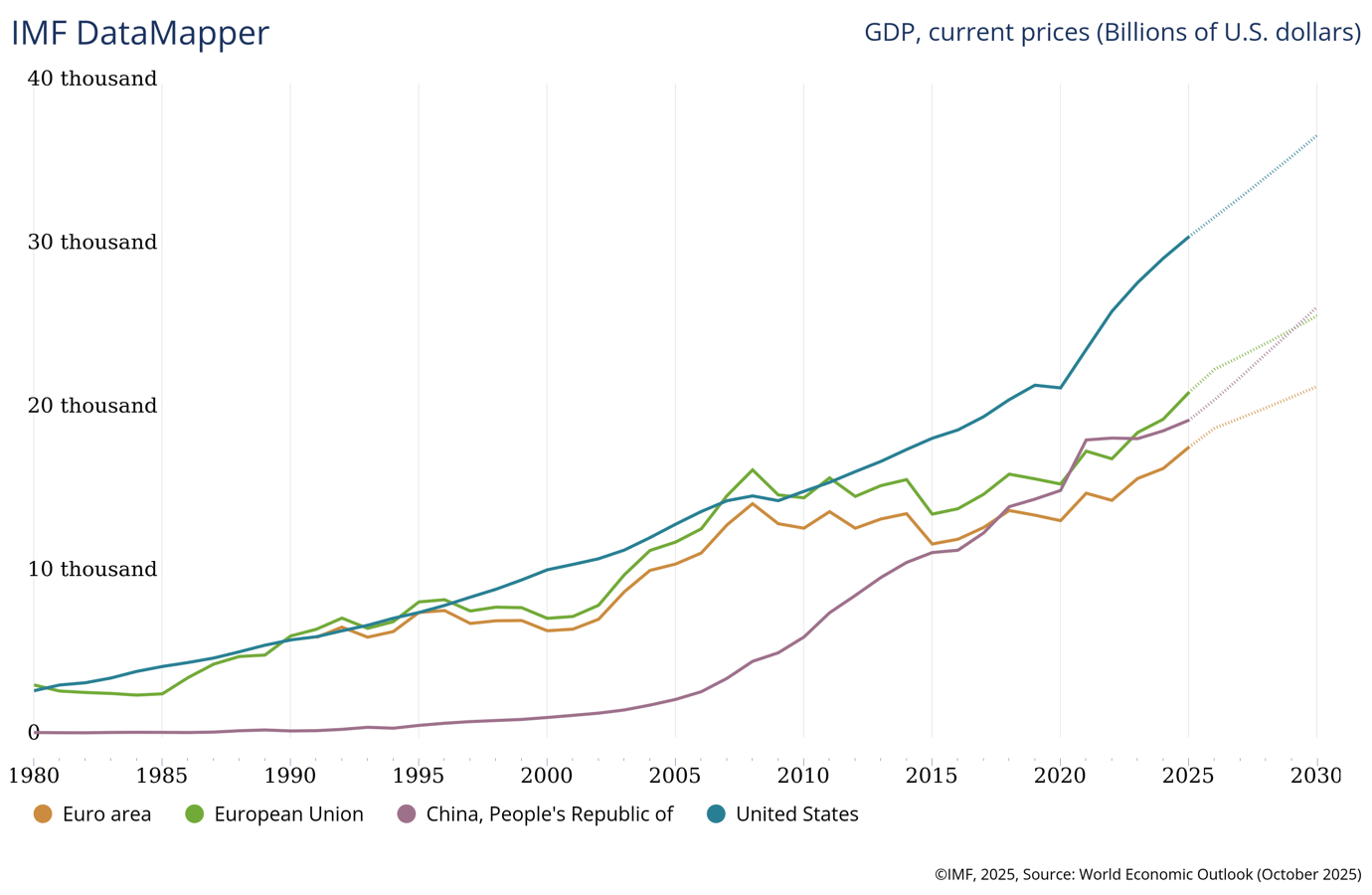
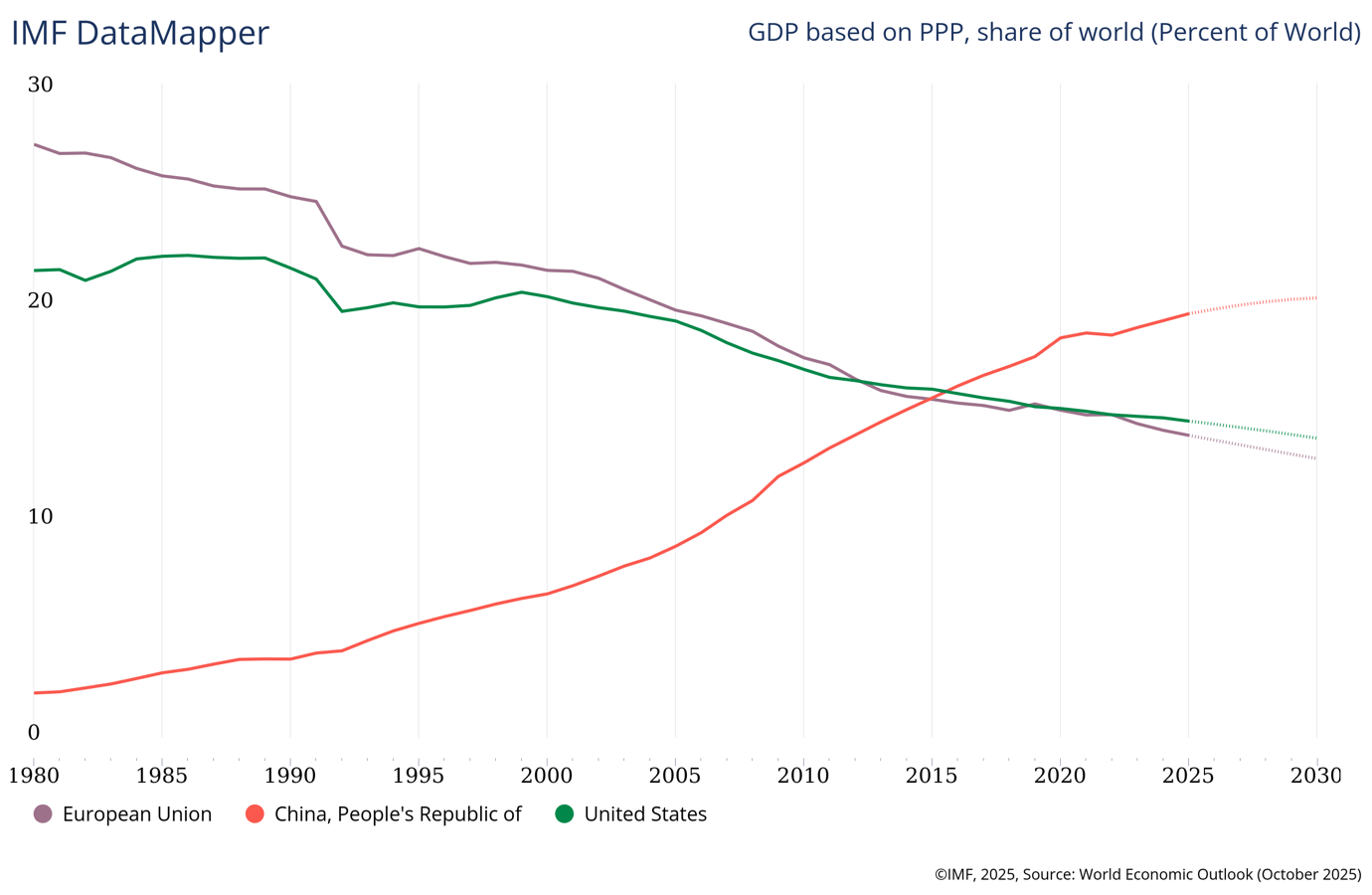
The numbers are staggering. If the European Union operated as one country, it would rival both the U.S. and China in almost every metric that matters. |
We're talking about a $22.5 trillion economy, 450 million people, and 1.5 million active military personnel. |
European households are sitting on €12.08 trillion ($14.18 trillion) in cash and bank deposits. That's dry powder. Real money that could finance a unified federal government, compete with U.S. Treasury bonds, and fundamentally reshape global capital flows. |
|
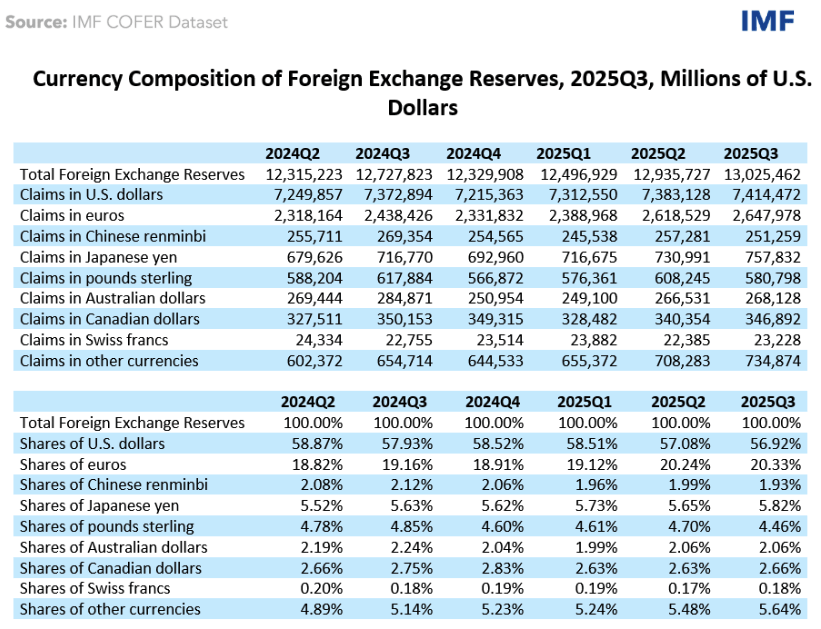
And unlike China's yuan, which nobody wants to hold, the euro already commands over 20% of global currency reserves. It's the only currency on Earth with the scale and liquidity to actually replace the dollar's dominance. |
That should terrify Washington. |
| | | | If Europe actually unified… what happens to the U.S.? | |
| |
| | |
|
|
|
Why the Dollar Needs Europe Weak |
The dollar's reserve currency status is the foundation of American economic power. |
When foreign countries hold trillions in dollar reserves, they need somewhere safe to park that money. They buy U.S. Treasury bonds. That systematic demand keeps bond prices high and yields low, which means the U.S. government pays less interest on its massive debt. |
|
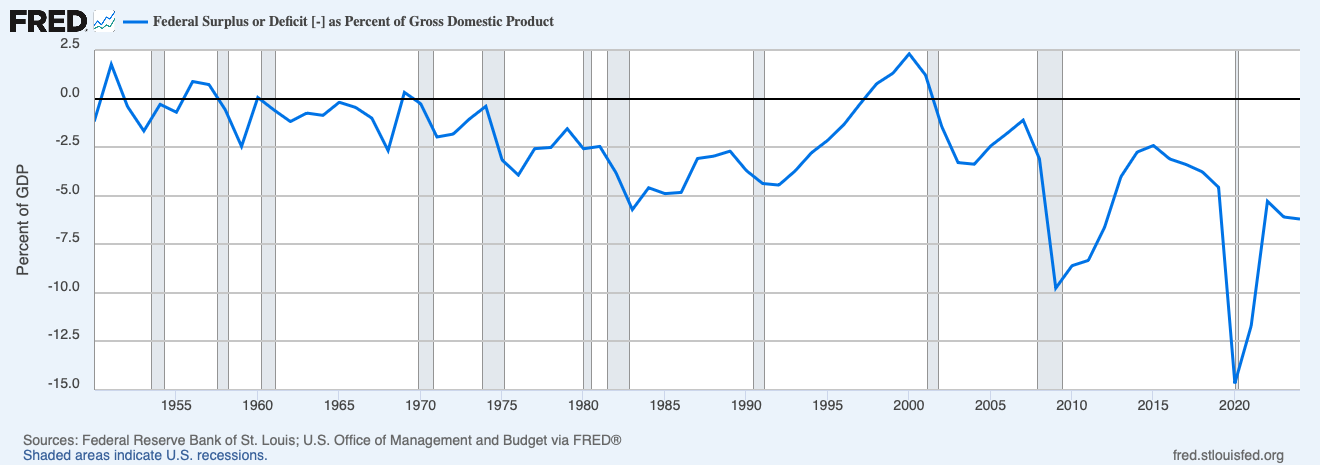
Look at the numbers. The U.S. federal deficit hit record levels in 2023, sitting at levels we usually only see during financial crises. Without foreign demand for Treasury bonds keeping interest rates manageable, those deficit numbers would be catastrophic. |
Now imagine the euro takes the lead. That systematic demand for U.S. debt vanishes. Interest rates spike. The cost of servicing America's debt explodes. |
That's the nightmare scenario keeping strategists in Washington awake at night. |
|
Trump's Real Strategy in Greenland |
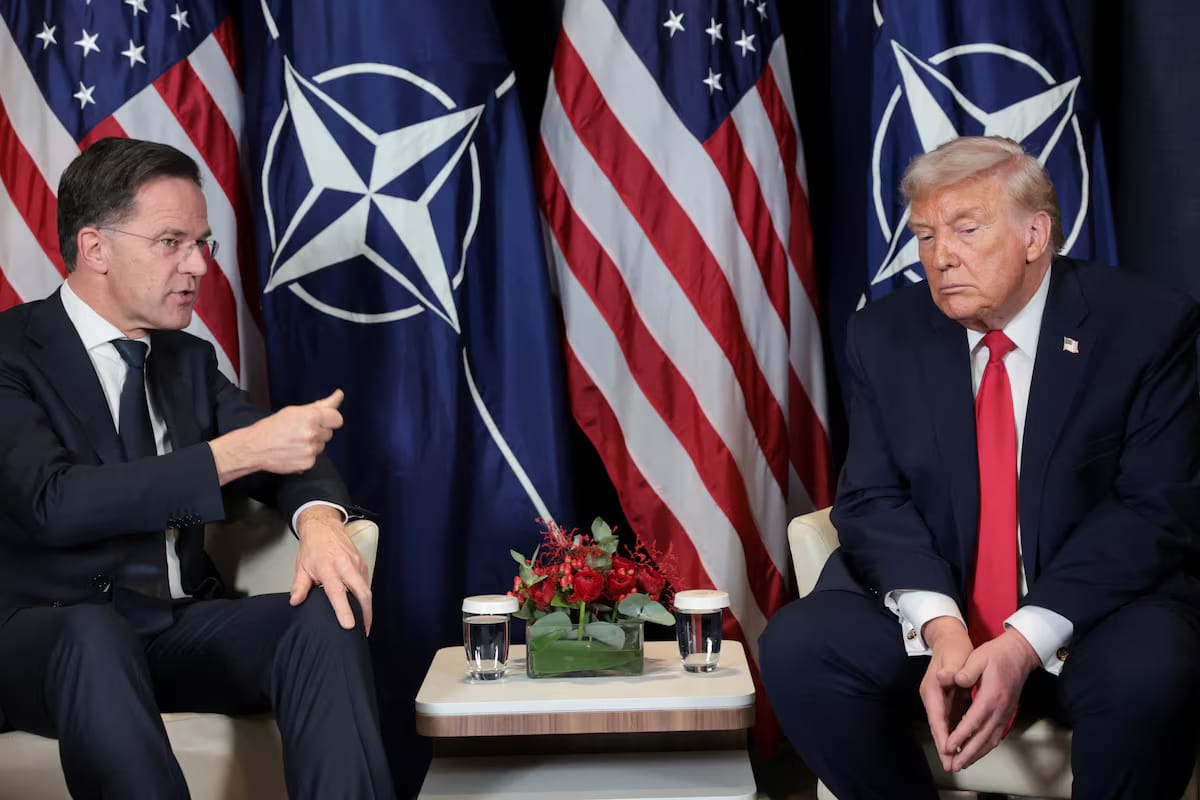 | President Donald Trump and NATO chief Mark Rutte (REUTERS/Jonathan Ernst) |
|
The Greenland situation isn't what it appears to be. |
Trump's threats to annex Greenland, and his hints about using military force, aren't seriously about acquiring territory. They're about testing and exploiting fractures in European unity. |
And it's working. |
When Trump first made his Greenland comments, six EU nations sent troops to show solidarity with Denmark: Sweden, France, Germany, the Netherlands, and Finland joined Danish forces. It looked like a unified response. |
Then Trump threatened double-digit tariffs. Germany's military team left Greenland. |
That's the strategy right there. Apply pressure, offer individual deals, watch the cracks widen. |
The November 2025 National Security Strategy document spells it out:
"We should be headed from our present $30 trillion economy in 2025 to $40 trillion in the 2030s, putting our country in an enviable position to maintain our status as the world's leading economy. Our ultimate goal is to lay the foundation for long-term economic vitality." |
The U.S. wants Europe functioning as "aligned sovereign nations," not a unified bloc. The document explicitly supports "patriotic European parties" and celebrates the "individual character" of European nations. |
Washington wants nationalism. |
According to Defense One, an unpublished version of that strategy was even more direct, listing Austria, Hungary, Italy, and Poland as countries the U.S. should work to "pull out of the EU." |
The White House denied it. But notice: none of those four countries sent troops to Greenland. |
|
The Euro's Track Record |
|
This isn't theoretical. We've already seen what happens when the dollar gets challenged. |
Back in 2000, the dollar held over 70% of global currency reserves. Two major crises hit, the dot-com bubble and the 2008 financial crisis, and suddenly the dollar's reliability was questioned. |
It dropped to around 57% by 2010. Guess where that lost share went? Almost entirely to the euro. |
Even after the European sovereign debt crisis knocked the euro back down, it never fell below 20% of reserves. And remember, this is a currency backed by a union with no common army, no unified fiscal policy, and 24 official languages across 27 countries. |
A true "United States of Europe" with centralized military and fiscal authority? That could command 30%, 40%, maybe even 50% of global reserves. |
The implications for U.S. borrowing costs would be massive. |
|
|
What This Means |
The push and pull between U.S. interests and European unity creates specific opportunities and risks: |
Dollar strength depends on European division. Every sign of EU fracture, whether it's Hungary blocking sanctions, Italy pursuing independent China deals, or Germany hesitating on defense commitments, reinforces dollar dominance. That's paradoxically bullish for U.S. assets in the short term. |
European assets are undervalued. If Europe does move toward greater integration despite U.S. pressure, European equities and euro-denominated bonds would likely surge. Right now, the market prices in continued fragmentation. |
Defense spending benefits American contractors regardless. Whether Europe unifies or stays divided, the pressure to increase military spending is real. U.S. defense companies with significant NATO exposure win either way. |
Treasury yields are the tell. Watch the 10-year yield closely. If foreign demand for Treasuries weakens, particularly from European central banks and institutions, that's your early warning signal that the dollar's privileged position is eroding. |
|
The Real Question |
Can Europe actually unify in the face of American pressure to divide? |
That's the trillion-dollar question. Literally. |
The EU is at a crossroads. Trump's tariff threats hit different member states differently. Some economies depend heavily on U.S. exports; others don't. That creates natural incentives to cut individual deals rather than stand together. |
But there's also a counter-pressure. The threat itself might force Europe's hand. Nothing unifies like a common adversary. If member states perceive Trump's strategy as explicitly hostile to European integration, they might accelerate the very process Washington is trying to prevent. |
The Greenland crisis is the test case. If all 27 EU members maintain a unified stance despite economic pressure and tariff threats, that signals real resilience. If more countries follow Germany's lead and back down, fragmentation accelerates. |
Right now, it's going Washington's way. But the game isn't over. |
|
|
What Investors Should Watch |
Three indicators will tell you which way this plays out: |
EU defense integration. If Europe creates a unified military command structure and joint procurement system, that's a major step toward political federation. It also reduces dependence on U.S. security guarantees, which weakens Washington's leverage. Eurobond issuance. Watch for moves toward common EU debt instruments. Right now, individual member states issue their own bonds. A unified "eurobond" backed by the full EU would be the clearest signal that a federal Europe is emerging. German policy shifts. If Berlin chooses long-term European integration over short-term accommodation with Washington, the whole trajectory changes. But if Germany keeps cutting individual deals and backing down under pressure, fragmentation accelerates.
|
The Greenland withdrawal was a bad sign for EU unity. But it's early. One data point doesn't make a trend. |
|
Bottom Line |
The dollar's dominance is maintained by political strategy. |
A fragmented Europe serves American interests. A unified Europe threatens them. The current administration understands this clearly, and they're acting accordingly. |
For investors, the key is recognizing that currency markets and geopolitics are inseparable. The euro's future isn't determined by interest rate differentials or economic growth rates. It's determined by whether 27 nations can stay unified under pressure from the world's most powerful country actively working to divide them. |
That's the real story behind the Greenland drama. |
And it matters a lot more than most market participants realize. |
|
| | | | Quick ratingHow was this one? | |
| |
| | |
|
Disclaimer: This analysis is for educational purposes only and should not be considered investment advice. Always do your own research before making investment decisions. |
Items marked with an asterisk (*) are promotional and help support this newsletter at no cost to readers. |




Tidak ada komentar:
Posting Komentar