That Was Fast… Did You Catch The Move?How the tariff shock played out exactly as expected and why positioning mattered more than politics
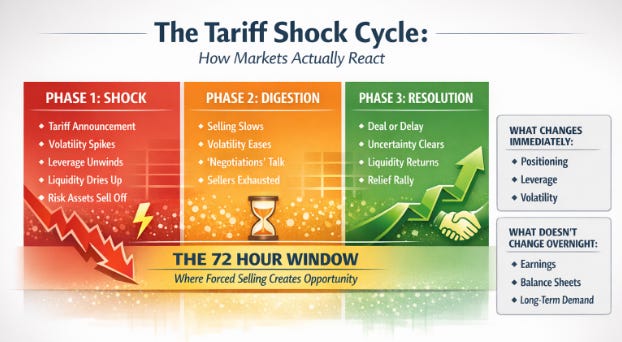
A few days ago, markets were rattled by another tariff threat from Donald Trump. Futures sold off. Volatility spiked. Crypto bled first. Headlines warned of escalating geopolitical risk and a new transatlantic trade war tied to Greenland. And as usual, most commentary focused on what tariffs might do to the economy months from now. That missed the point. Because once again, tariffs did not change fundamentals overnight. And that difference is exactly why the market behaved the way it did and why the opportunity appeared when it did. A Quick Reset for Anyone Who Missed the Original ThesisThe core idea behind The 72 Hour Window is simple. When tariff threats hit the tape, markets do not reprice earnings or balance sheets first. They reprice uncertainty. Uncertainty forces risk systems to act:
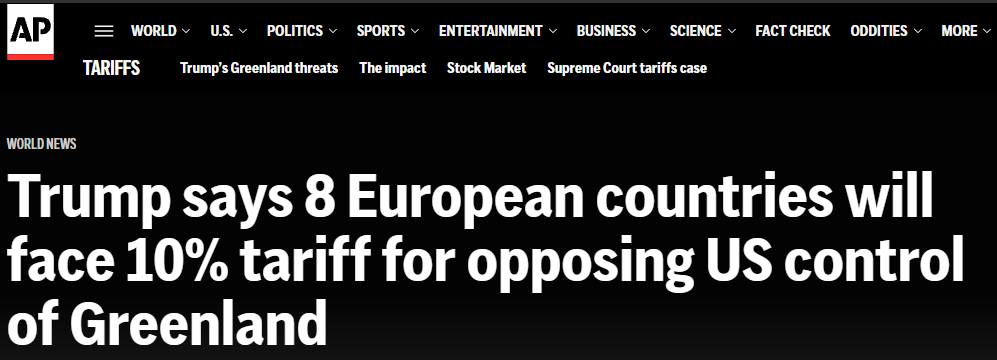
That first move often looks emotional or irrational, but it is mostly mechanical. Prices fall faster than fundamentals change. That creates a temporary gap. And inside that gap is where disciplined investors operate. What Happened This TimeOn January 17, President Trump announced a 10% tariff on goods from eight European countries, set to begin February 1, with a threat to raise tariffs to 25% by June if a broader deal around Greenland was not reached.
The announcement came over the weekend. Markets did exactly what they usually do when uncertainty is injected suddenly and price discovery is delayed.
By the time cash markets reopened:
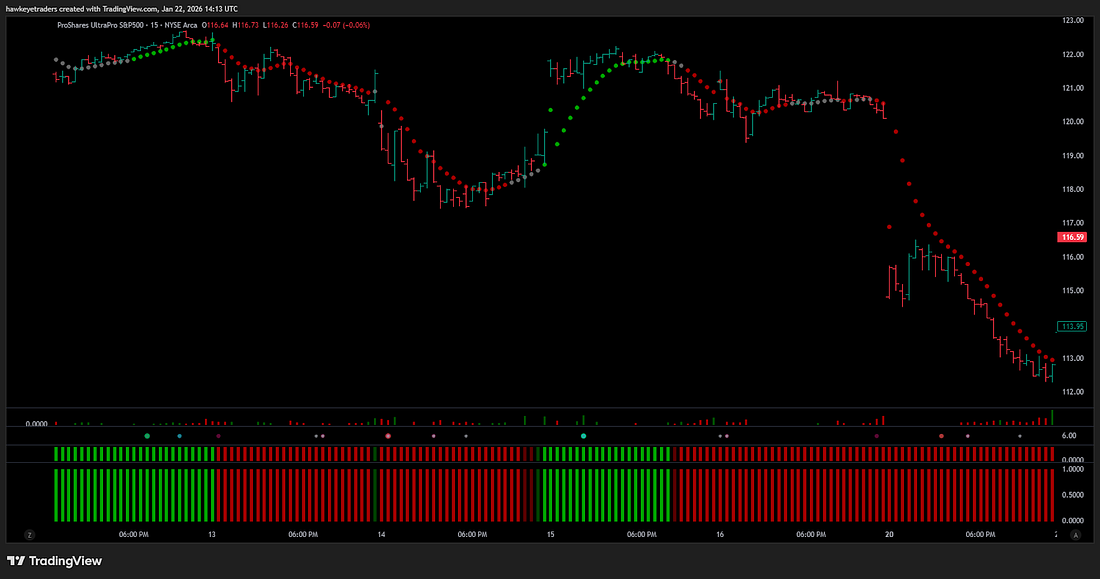
Nothing about earnings changed between Friday and Tuesday. Positioning did. Phase One Played Out in Real TimeThe initial selloff was a textbook example of Phase One in the tariff cycle. It was fast, broad, and mechanical. The S&P 500 dropped more than 2% on January 20. The Nasdaq fell even harder. European indices slid in tandem. Crypto absorbed pressure immediately, as it tends to do during global risk resets. This was not a verdict on long-term growth. It was capital reacting to uncertainty. And importantly, it happened quickly. Where the Market TurnedAs outlined in the original framework, Phase One rarely lasts long once forced sellers have acted. Within days, headlines shifted. European leaders condemned the move, emergency meetings were held, and language moved away from escalation toward process. The focus turned to negotiations, frameworks, and avoiding a broader trade war. Volatility peaked. Selling pressure slowed. Then came Phase Three. On January 21, during and after remarks at the World Economic Forum, Trump ruled out the use of force in Greenland and announced a “framework of a future deal” on Arctic security after meeting with NATO leadership. Crucially, the February 1 tariffs were taken off the table. Uncertainty collapsed. Markets responded immediately. U.S. equities rallied sharply. European stocks recovered a large portion of their losses. Volatility compressed almost as fast as it had expanded. Not because everything was suddenly “fixed”, but because unknowns became known. Why This Validated the Thesis
This episode followed the exact structure outlined in The 72 Hour Window:
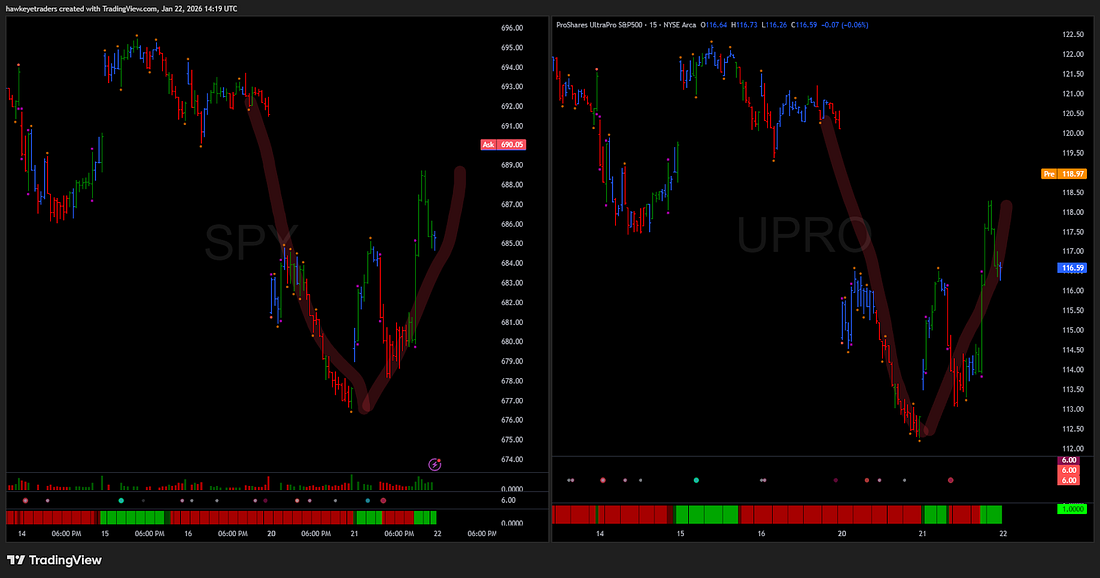
The entire cycle played out in under a week. That compressed timeline is not a coincidence. Modern markets amplify uncertainty faster than they absorb information. And that is precisely why positioning matters more than opinions in the early stages. The Trade That Came With ItFor premium members, this was not just an observation. It was a trade setup. As the market sold off into Phase One, we outlined specific SPY-based levels where risk could be reintroduced with discipline. One of those vehicles was UPRO. Entries in the 112–114 zone provided a clear framework:
When the tariff cycle moved into the relief stage, the lift was almost immediate.
That is not because the trade predicted Trump’s decision. It is because it respected how markets behave when positioning resets. The Most Important LessonThe takeaway here is not that every tariff threat will reverse quickly. Sometimes they escalate. Sometimes they drag on. Sometimes they evolve into real economic repricing. The lesson is this: Markets consistently overshoot during the uncertainty phase because capital is forced to act before information settles. That overshoot creates opportunity for those who distinguish between:
This episode was the former. Why This Still Matters Going ForwardSome commentators labeled this outcome “Trump Always Chickens Out.” That framing misses the structural insight. Whether tariffs stick or not, the process creates repeatable market behavior. Tariff threats inject uncertainty. Those dislocations are tradable if you understand the cycle. Final ThoughtThis was not a lucky call. It was a framework playing out in real time. Tariffs didn’t change the economy in a weekend. And once that positioning reset was complete, markets did what they almost always do next. The 72 hour window closed. Until the next time uncertainty forces it open again. Want This Level of Clarity Before the Market Moves?Most investors read about opportunities after they’ve passed. Our premium members are positioned while uncertainty is still being priced. Inside Market Traders Daily Premium, you get:
This tariff cycle wasn’t about predicting headlines. It was about understanding how markets behave when leverage is forced out — and having a plan ready when it happens. If you want access to the next setup before the relief stage begins, join us now. 👉 Get full access to Market Traders Daily Premium + Insider Alerts here The next 72 hour window won’t announce itself in advance. Our members will be ready anyway. You’re currently a free subscriber to Market Traders Daily. For the full experience, upgrade your subscription. DISCLAIMER: FOR INFORMATION PURPOSES ONLY. The materials presented from Global Profit Systems International are for your informational purposes only. Neither Global Profit Systems International nor its employees offer investment, legal or tax advice of any kind, and the analysis displayed with various tools does not constitute investment, legal or tax advice and should not be interpreted as such. Using the data and analysis contained in the materials for reasons other than the informational purposes intended is at the user’s own risk.
|
Jumat, 23 Januari 2026
That Was Fast… Did You Catch The Move?





Langganan:
Posting Komentar (Atom)
Tidak ada komentar:
Posting Komentar