Sponsored content from Behind The Markets Dear Friend, Google is paying Elon $920 million a month. Anthropic is paying him $1.25 billion a month. The richest companies on Earth are renting his computer because they can't build what he has. Together, about $26 billion a year. Now the Pentagon, the biggest buyer on Earth, wants its own. Every dollar of it rides on one tiny company Elon couldn't build around. I call it the X-Grid stock. I expect it to be the biggest winner of the entire AI buildout. Get the name of the company collecting underneath Elon >> The Buck Stops Here, Dylan Jovine Founder, Behind the Markets
Also on the Desk
CLOUD WATCH
All Three Cloud Giants Have Reported. Their Stocks Split, and So Did Their Cash Flow.
Demand was not the problem for any of the three largest cloud providers. Amazon Web Services grew 39% in the third quarter to about $46 billion. Microsoft's (MSFT) Azure grew 48%. What separated the stocks was how each is paying for its data centers.
Alphabet (GOOGL) reported negative free cash flow on Wednesday and fell 12.64% on Thursday to $283.82. It had covered last quarter's shortfall with about $41 billion of new bonds and stock. Amazon (AMZN) said its free cash flow over the past 12 months was an outflow of $42.4 billion, against an inflow of $14.8 billion a year earlier. It is holding its 2026 cash capital spending plan at about $220 billion.
Microsoft, which is still generating cash, ended Thursday almost flat. It spent $45.2 billion on capital projects in its latest quarter and generated $18.6 billion of free cash flow. It also priced $25 billion of bonds on Thursday, its first U.S. investment-grade sale since 2017.
Other factors played a part. Amazon narrowly missed revenue and earnings estimates, and Alphabet's ad revenue fell short. On Friday, all three fell, by about 1.3% to 1.5%. The spending also shows up in the wider economy. Third-quarter GDP grew at a 3.4% annual rate, with equipment investment led by information-processing equipment.
Investor Signal
With 10-year Treasury yields near 5%, the cost of funding the build-out has become part of the valuation. The company with positive free cash flow held steady even while borrowing. The two that reported outflows were sold hard. If cloud growth stays above 40%, those outflows look like capacity customers asked for. Treasury's borrowing estimates on Nov. 2 are the next test.
Read more →
AI FINANCING WATCH
Anthropic's $63 Billion Chip Deal Puts the Hardware in a Separate Company. Blackstone Took the Riskier Debt.
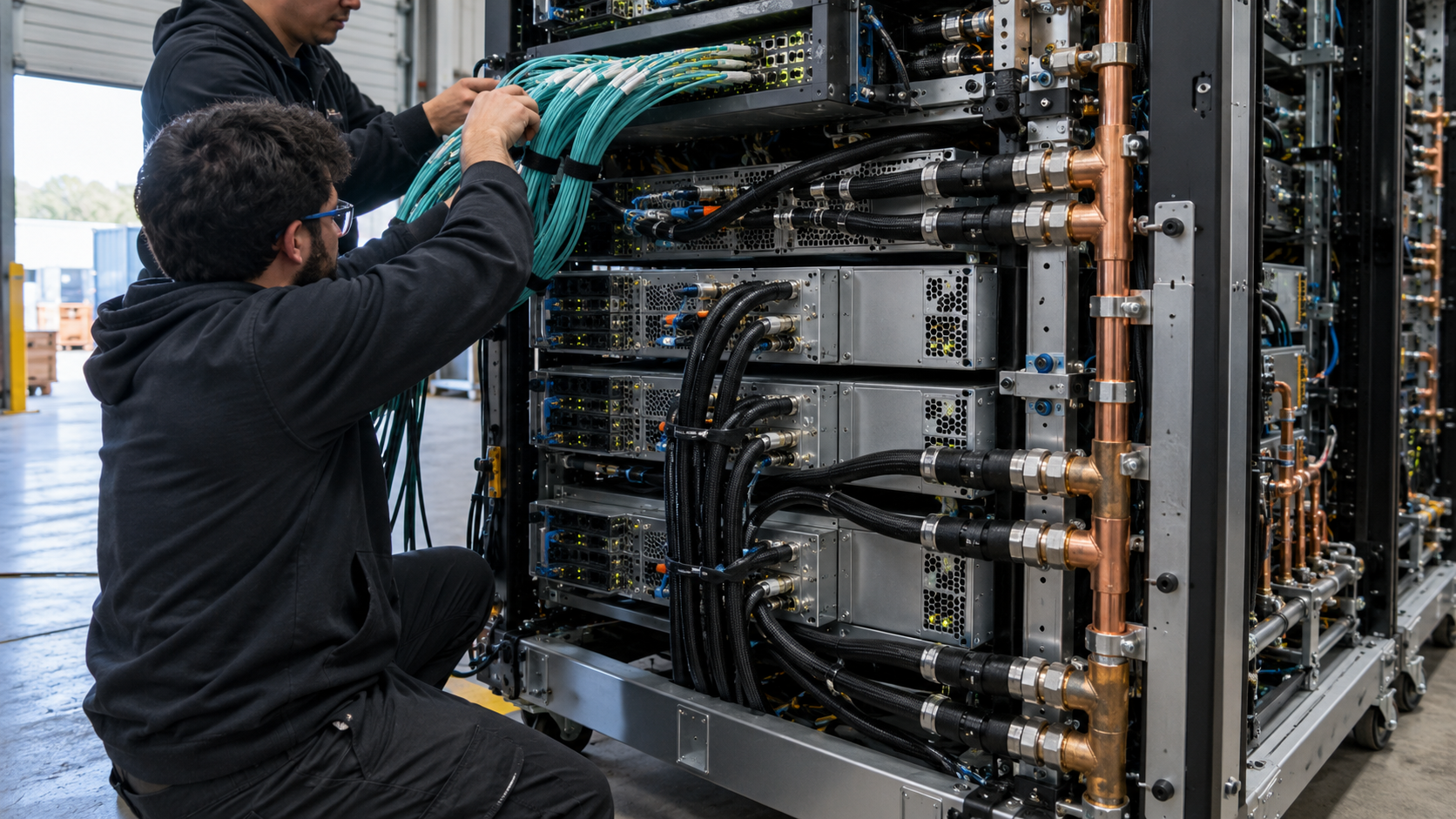
Four lenders and Broadcom (AVGO) announced a $63 billion financing structure after the close on Oct. 26. The lenders are Bank of America, Blackstone (BX), Citi and Morgan Stanley. A newly formed special purpose vehicle will buy Broadcom's AI accelerators and networking gear and lease them to Anthropic. Deliveries are expected to begin in 2027. HSBC analysts estimated the vehicle will support about 1.7 to 1.8 gigawatts of computing capacity.
The structure has three layers of risk. Bank of America, Citi and Morgan Stanley are arranging the first-lien debt, which is repaid first. Blackstone is the sole provider of the committed part of the second lien, which ranks behind it. Broadcom is providing residual-value support equal to the first-lien amount. That is a promise about what the equipment will be worth later.
AI accelerators can lose value quickly as newer generations arrive. On the announced terms, Broadcom's support sits against the senior debt. That leaves Blackstone's junior layer more exposed to how fast the chips depreciate and to Anthropic's ability to pay rent. Anthropic guarantees the lease obligations and held about $131.7 billion of cash and short-term investments at June 30. The tranche sizes, Blackstone's commitment and the pricing were not disclosed.
Investor Signal
The cost of AI computing is moving off company balance sheets and into layered debt. One lessee, one vendor and one junior lender carry most of the exposure to a fast-depreciating asset. Supporters point to vendor-backed senior debt and a lessee with a large cash pile. If chip values fall faster than lease payments, the second lien takes the first hit. Tranche sizes and lease detail in Anthropic's amended S-1 are the next test.
Read more →
Rates Just Reset. Who Feels It First?
On January 2, the 10-year Treasury yielded 4.19%. By September 30, it was 5.29%. Most of that move landed in a single quarter.
The bond market repriced and companies are starting to report it.
Some companies earn from higher rates. Some pay for them. And each one runs on a different clock.
We traced three of them, IBKR, WRB and FIS, in a new FREE Special Report:
Rates Just Reset. Who Feels It First?
Who earns it fast. Who earns it slowly. Who pays. One has already reported. The other two report next, and the report tells you the exact line to check.
We'll text the report straight to your phone.
Get the Free Report by Text →
|



Tidak ada komentar:
Posting Komentar