Artificial intelligence is rapidly accelerating nuclear energy demand, transforming the energy landscape alongside its impact on tech stocks. Behind the scenes of every AI breakthrough is an enormous and growing demand for electricity. Data centers—the backbone of AI infrastructure—consume staggering amounts of power, and that demand is only accelerating. As a result, energy markets are being reshaped in real time, with nuclear power emerging as one of the biggest beneficiaries.
Table of Contents
According to Reuters, utilities across the U.S. are now projecting electricity sales growth far beyond what analysts expected just months ago.
Data centers are a key driver of nuclear energy demand. In fact, nine of the top ten U.S. electric utilities have identified data centers as a primary source of customer growth, forcing them to revise both capital expenditure plans and long-term demand forecasts upward.
Meta's strategy reflects a broader reality: renewable sources like solar and wind, while essential, can't always provide the consistent, around-the-clock power that AI infrastructure requires. Nuclear energy, on the other hand, offers reliability, scalability, and zero-carbon output—making it uniquely suited for this new era of demand.
Meta isn't stopping there. It's also partnering with Oklo to help develop a 1.2-gigawatt power campus in Ohio. The agreement includes a mechanism for Meta to prepay for energy, helping fund development and accelerate the deployment of Oklo's next-generation nuclear technology.
Why Nuclear Energy is Back in Focus
For years, nuclear energy was largely sidelined due to high costs, regulatory hurdles, and public perception concerns. But the AI boom is changing that narrative.
Today, nuclear checks several critical boxes:
Reliability: Unlike intermittent renewables, nuclear provides consistent baseload power
Scalability: New reactor designs promise faster and more flexible deployment
Clean Energy Goals: Nuclear produces virtually no carbon emissions
Energy Security: Domestic nuclear power reduces reliance on foreign energy sources
As governments and companies race to secure stable power for AI, nuclear power is quickly becoming a priority.
How Investors Can Gain Exposure
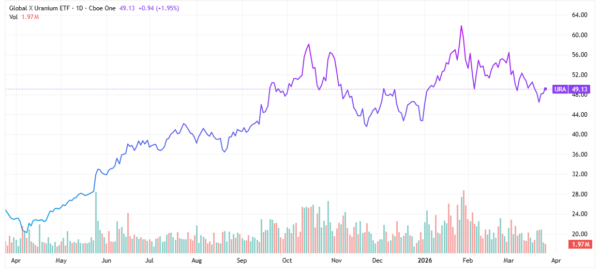
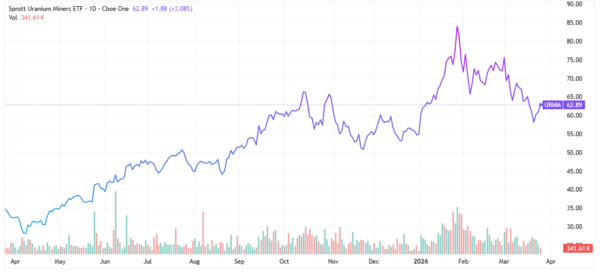
For investors looking to capitalize on this trend, exchange-traded funds (ETFs) offer a diversified and accessible entry point into the nuclear energy space.
Another strong option is the VanEck Uranium and Nuclear ETF, which carries a slightly lower expense ratio of 0.56%. This ETF tracks an index focused on companies involved in uranium mining, nuclear facility construction, reactor engineering, and nuclear-based electricity generation. Its holdings include Cameco, Constellation Energy (NASDAQ: CEG), Oklo (NYSE: OKLO), Denison Mines, Uranium Energy Corp, and PG&E (NYSE: PCG).
With the metal surging past $5,000/oz, the headlines are only telling half the story. While most investors chase bullion, one tiny company is sitting on more gold reserves than France, Italy, and China combined. This play moves 10x faster than the physical metal and currently trades at a 99% discount to its true book value.
In short, what we're witnessing these days is the early stage of a major shift in how power is generated, distributed, and consumed. As hyperscalers like Meta lock in nuclear supply and utilities scramble to meet growing demand, we're seeing a multi-year growth opportunity.
As the world leans further into AI and electrification, invest in nuclear energy with well-diversified, lower-cost exchange-traded funds.


Tidak ada komentar:
Posting Komentar