 Hi, Tim Plaehn here. Silver just shattered prices records last year. And I've found a way to play this surge.... It's a simple silver fund that's been quietly delivering up to 20% in yearly distributions… Paid monthly. That means while others wait for silver to go higher… You could already be collecting $1,170 a month. Click here to discover how this silver income fund works. The next payout is just days away. To your income, Tim Plaehn
Lead Income Strategist
Monday's Exclusive News
Domino's Pizza: Outlook for the Berkshire Holding After Q1 DropWritten by Leo Miller. Article Posted: 4/29/2026. 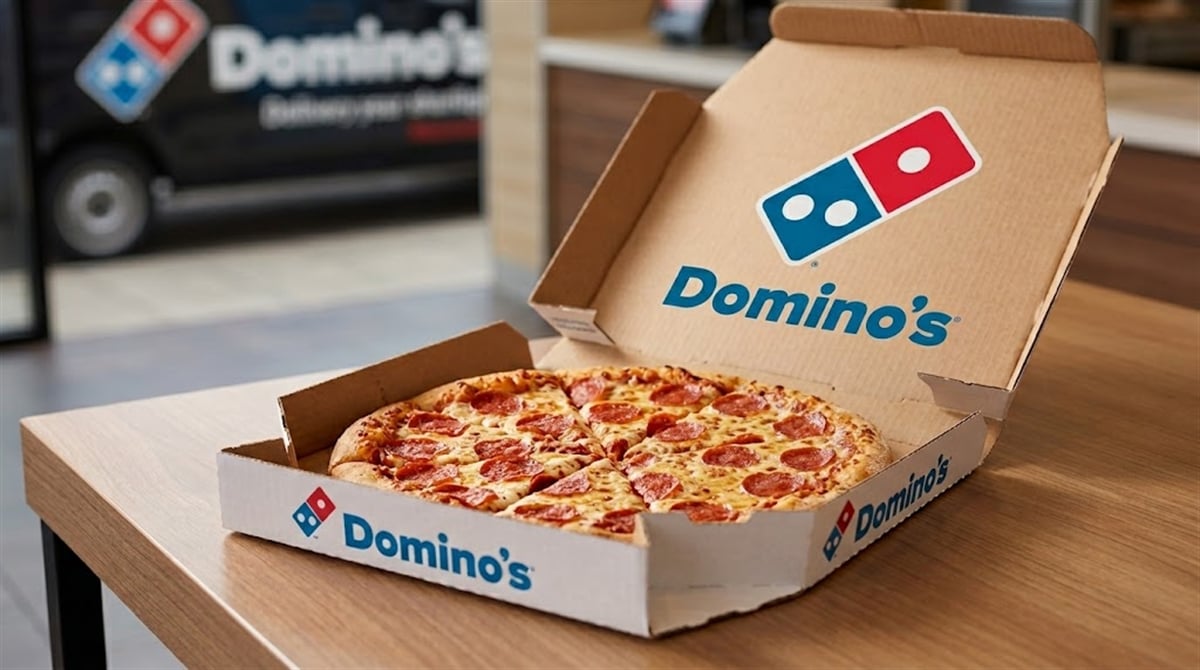
Key Points
- Berkshire Hathaway has stood by its position in Domino's Pizza for more than a year amid the stock's weak performance.
- Domino's shares took a significant tumble after the company's latest earnings report, as macro factors and competition hurt sales.
- Domino's is expanding while customers close down stores, but it is questionable whether the juice in this stock is worth the squeeze.
- Special Report: The $7 stock Nvidia needs to finish the job
Warren Buffett's Berkshire Hathaway (NYSE: BRK.B) isn’t afraid to take stakes in companies the market has turned against. One of those names is Domino’s Pizza (NASDAQ: DPZ). Berkshire initiated a position in Domino’s during Q3 2024, purchasing 1.3 million shares. Despite the stock being essentially flat from then through the end of 2025, Berkshire has more than doubled its position to over 3.4 million shares.
This is consistent with Berkshire’s long-term investment style, as the company continues to buy a stock it sees value in despite the market voting against it. Notably, Domino’s is starting 2026 on a rough note, with shares down nearly 20%. Much of that decline is tied to the company’s latest earnings report, which caused the stock to fall nearly 9% in a single day. After a difficult quarter, here’s where Domino’s stands going forward. Domino’s Misses, Lowers Guidance for 2026In Q1 2026, Domino's reported revenue of $1.15 billion, slightly below expectations of $1.16 billion. Overall, sales increased by 3.5% year over year. However, the company’s adjusted earnings per share miss was more significant. The figure fell by nearly 5% year over year to $4.13. Analysts had expected $4.29, which would have represented a decline of just 1%. Notably, U.S. same-store sales increased by just 0.9%. This suggests that new store openings drove the vast majority of Domino’s growth. While new stores are a legitimate growth driver, they do not provide an apples-to-apples comparison and say less about the health of a business. A company can boost sales simply by opening stores, but that doesn’t mean existing locations are performing well. Adding insult to injury, Domino’s lowered its full-year guidance. The company now expects same-store sales to grow by “low single digits” in both the U.S. and international markets. This compares with prior expectations of 3% in the U.S. and 1% to 2% internationally. While “low single digits” overlaps with that range, it still reads as a downgrade, since anything above 0% would fall within the new guidance. Weak Consumer, Elevated Competition Hit Domino'sDomino’s attributed its poor performance to multiple factors. As the company noted, consumer sentiment hit lows not seen since the COVID pandemic. Even with Domino’s focus on affordability, weak consumer sentiment is a headwind for restaurant companies. That lines up with Domino’s low same-store sales growth, suggesting customers made fewer repeat purchases. Still, since the beginning of 2023, the figure has averaged around 2.3%, which suggests a recovery remains possible. Additionally, competitors offered better deals to consumers, targeting an area where Domino's has historically led. However, Domino’s top rivals are also under pressure as they try to compete on price. Pizza Hut (a Yum! Brands (NYSE: YUM) subsidiary) plans to close 250 stores in 2026. Meanwhile, Papa John's International (NASDAQ: PZZA) is looking to close 300 stores in North America during 2026 and 2027 combined. By contrast, Domino’s plans to open more than 175 stores in the U.S. in 2026. Lower prices favor scale. Companies must offset lower sales per order with higher order volume to generate more revenue. Among this group, Domino’s is the only one increasing its scale. That raises questions about Pizza Hut and Papa John’s ability to sustainably match Domino’s prices while reducing store counts. Domino's: Long-Term Value Doesn’t Equal Long-Term OutperformanceDomino's has grown its free cash flow at a compound annual rate of nearly 16% since Q1 2023. Currently, its valuation implies long-term free cash flow growth of less than half that pace. Strong free cash flow growth has come despite revenue declining in 2023 and rising by only about 5% in both 2024 and 2025. Because Domino's has delivered significant margin improvements, free cash flow has grown much faster than sales. Notably, the firm’s free cash flow margin is up around 400 basis points since Q1 2023. Domino's is a leader in the mature pizza market. As a result, it is difficult to argue that the company should expect growth materially higher than it has seen in recent years. That makes continued margin expansion vital to the stock’s outlook. Domino’s affordable pricing and its ability to keep opening new stores support the case for further margin expansion. The MarketBeat consensus price target on Domino’s sits near $421, implying more than 20% upside in shares. However, targets moved down considerably after the company’s latest report, with the average of immediately updated targets sitting near $407. Ultimately, there is likely some value in Domino's shares. However, it seems unlikely that this name in a mature industry would deliver better long-term performance than the S&P 500 Index at current levels. It will be interesting to see what Berkshire Hathaway does with its Domino’s position over the coming quarters, now that Warren Buffett is retired. . |


Tidak ada komentar:
Posting Komentar