|
|
Will Trump let Iran control the Hormuz Strait?... The Fed's worst nightmare… President Trump has been quietly collecting up to $250,000 a month from a single fund. And you can now get in for less than $20. Click here to discover more.
|
Dear reader, |
Attempt to tie down President Trump's policy position on Iran, one day to the next. |
What will you discover? |
You will discover that you are pursuing a fellow as fickle as a fox… and as slippery as an eel. |
You will discover that you are pursuing the wind. |
In brief, you will discover a mystery. |
Strategic Flexibility |
For example: The one day the president announces the Hormuz Strait is an irrelevancy to the United States. |
The next day the Hormuz Strait so central to the security interests of the United States… he threatens the destruction of Iran's electrical generation should Iran menace navigation therethrough. |
He establishes absolute deadlines one day, their extension the next. |
Thus the president blows into an "uncertain trumpet." |
What I offer is not criticism, but observation. And perhaps an uncertain trumpet is the proper instrument to wield at this point. |
You may label it — if you wish — strategic flexibility. |
Yet you may be forgiven should you adopt a less charitable interpretation of events. |
Shifting Positions |
Now — as reports The Wall Street Journal — the president is willing to abandon military operations against Iran, even if Iran maintains the navigational chokehold: |
President Trump told aides he's willing to end the U.S. military campaign against Iran even if the Strait of Hormuz remains largely closed, administration officials said, likely extending Tehran's firm grip on the waterway and leaving a complex operation to reopen it for a later date. |
|
|
In recent days, Trump and his aides assessed that a mission to pry open the chokepoint would push the conflict beyond his timeline of four to six weeks. He decided that the U.S. should achieve its main goals of hobbling Iran's navy and its missile stocks and wind down current hostilities while pressuring Tehran diplomatically to resume the free flow of trade. |
|
|
If that fails, Washington would press allies in Europe and the Gulf to take the lead on reopening the strait, the officials said. |
|
|
After advancing previously, the oil price tumbled on news of the report. Meantime, United States stock futures jumped on the news. |
It is as if the president calculates his comments to sway the markets. |
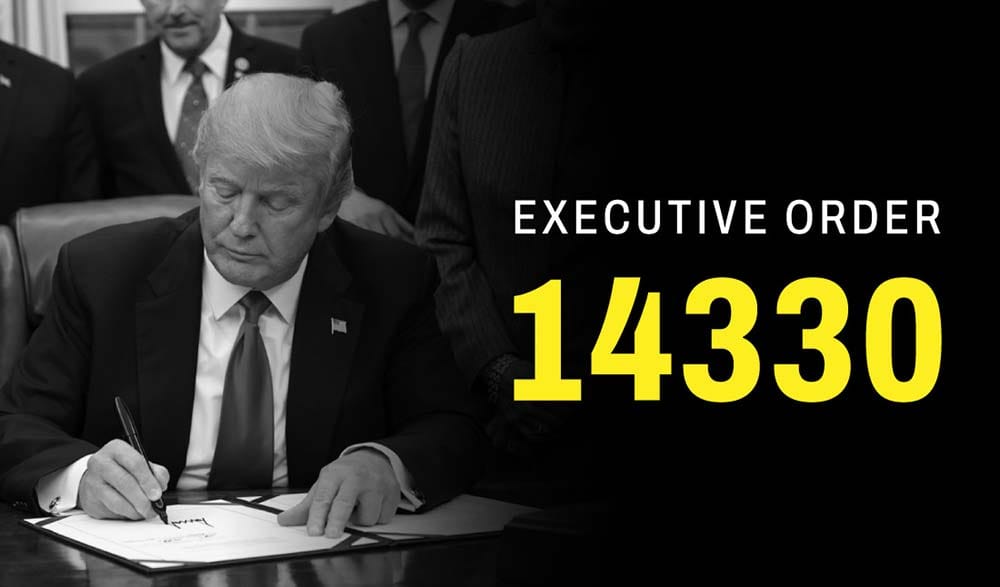
| | SPONSORED: THE OXFORD CLUB | | | When Trump signed Executive Order 14330, he quietly opened a $216 trillion opportunity to regular Americans. | And Trump collects up to $250,000 a month through a little known fund directly tied to this boom. | Now you can access it for less than $20. | |
| | |
|
It's so Bizarre, Iran Is Now Offering Stock Advice |
Iran's news media has taken note of the pattern — yet suggests its limits: |
They've spammed so much fake news trying to push energy prices down that the market is just numb now. Keep going, nobody is buying it anymore. The real prices will show up anyway. Powerful? Maybe. But Smart? Not even close. Burned that fake news card way too early. |
|
|
Iran's Speaker of the Parliament has likewise taken note of the pattern. Here he offers advice to investors trading the United States markets: |
Pre-market so-called 'news' or 'Truth' is often just a setup for profit-taking. Basically, it is a reverse indicator. Do the opposite: If they pump it, short it. If they dump it, go long. See something tomorrow? You know the drill. |
|
|
Sage advice perhaps? I am half-tempted to take it aboard. |
Yet here is a question: Why have oil prices remained in a range? Though higher, why not stratospherically higher? |
Don't Listen to Wall Street |
Freedom Financial News contributor Jim Rickards: |
|
|
Why isn't it worse already? Weeks of oil were already underway outside the Persian Gulf when the war started, so the impact was delayed. Now, a month later, shortages hit. South Korea, an industrial powerhouse, could be at risk. Far worse than Wall Street expects. |
|
|
And why, Mr. Rickards, has the stock market not plunged into the bearish depths? |
Markets have not discounted what's happening. Wall Street sells narratives to get you to buy stocks. "War will be over soon, oil comes down, Trump's got a plan." None of that is true. This war's going to go on much longer… Get cash and trim exposure. |
|
|
Just so. Yet perhaps the stock market is less enthusiastic than appearances suggest. |
Cracks Are Forming Beneath the Surface |
Morgan Stanley reports that some 42% of S&P 500 stocks presently trade 20% or more beneath their 52-week highs. |
That is, some 42% of the S&P 500 — over 200 stocks — presently wallow in bear markets. |
The market's outsized wagon-pullers conceal the bovine breakout. |
Yet what if they tire under the strain? Who will take up the reins? |
What of the Federal Reserve? |
The central bank is not projected to reduce interest rates until December 2027. |
There is in fact a 51% chance it will elevate interest rates by March 2027. |
That is, rate elevations are presently more likely than rate reductions… to Wall Street's harrowed dismay. |
The Fed's Worst Nightmare |
Meantime, Mr. Adam Kobeissi of the eponymous Kobeissi Letter claims the Federal Reserve's "worst nightmare is materializing in front of our eyes." |
It is wedged between a very hard rock and a very hard place: |
The Fed's worst nightmare is materializing in front of our eyes. |
|
|
What is often overlooked is that the Fed primarily controls demand-side inflation, not supply-side inflation. In other words, it can influence how much people borrow and spend, but it cannot directly increase supply, like producing more oil. |
|
|
This means that in the case of a supply-shock, as we are seeing now with energy prices, the Fed often has to overcompensate on the demand-side to contain inflation, and vice-versa. |
|
|
During the pandemic in 2020, this meant effectively cutting interest rates to zero, as lockdowns triggered a sharp collapse in demand alongside widespread supply disruptions. |
|
|
With oil and gas prices skyrocketing, our models suggest US CPI inflation is set to rise toward 3.5%, or 150 basis points above the Fed's long-run target. In a vacuum chamber, this means the Fed should tighten policy and theoretically hike rates. |
|
|
The Fed's in a "Very Bad Spot" |
And so you have the rock. Here you have the hard place: |
However, the issue becomes the fact that the US labor market is objectively at its weakest point in years, and it has not improved despite recent Fed easing. Therefore, if the Fed hikes interest rates now, the US is positioning itself for a full-blown labor market crisis. |
|
|
On the flip side, if the Fed does not tighten its policy stance, US CPI inflation could potentially even exceed 4.0%, depending on how long the Iran War persists, and how long the post-war recovery takes. |
|
|
In a sudden turn of events, the Fed is now forced to pick between 3.5%+ inflation or 5.0%+ unemployment. |
|
|
The Fed is in a very bad spot. |
|
|
That is, the Federal Reserve must select its particular poison — a potential labor market crisis — or galloping inflation. |
Which poison will it gulp, if forced to choose between the toxins? |
I do not know. |
Yet I am confident, based on history, that it will select the deadlier poison. |
Regardless… this poison or that poison… poison it will be. |
Brian Maher |
for Freedom Financial News |
P.S. President Trump is pouring trillions into a new kind of infrastructure. And there's one fund positioned to profit from every dollar that flows through it – the same way McDonald's profited from every care on the highway… |
In fact, Trump put up to $25 million of his own money into this fund… and it pays him as much as $250,000 a month. Click here to discover how you could get in for less than $20. |
|
|
|



Tidak ada komentar:
Posting Komentar