Dear Reader,
Good morning.
This is Dylan Jovine with Behind the Markets.
Happy Tuesday.
Today is Tuesday, March 3rd.
After everything that unfolded this weekend, a lot of readers have been asking me the same question:
What happens to the stock market in the 12 months following a war in the Middle East?
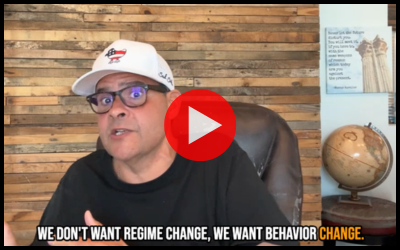
So I spent some time looking back at the data.
Let's start with two major conflicts.
During the Gulf War in January 1991, under President George H. W. Bush, the stock market rose 29.1% in the 12 months following the start of the war.
Then again in March 2003, when the United States launched Operation Iraqi Freedom under President George W. Bush, the market rose 27% in the 12 months following the start of that conflict.
At first glance, it looks like markets do extremely well after Middle East wars begin.
But that's actually a little misleading.
Because in both cases, the markets sold off in the months leading up to the war.
Those presidents spent nearly a year preparing the public for what was coming — going to Congress, speaking on television, building support internationally.
Remember Colin Powell presenting evidence at the United Nations about Iraq's weapons of mass destruction.
Markets hate uncertainty.
So during that build-up period, stocks sold off.
Then once the conflict actually began and the situation became clearer, markets recovered and moved higher.
In other words:
Uncertainty causes markets to fall.
Clarity causes markets to rise.
The situation today is slightly different.
President Trump did not spend a year preparing the country for a conflict with Iran.
So in my view, we may still be in the uncertainty phase right now.
And that means investors should be cautious and thoughtful in the short term.
The key question now is whether this conflict remains contained — or widens.
Another important issue is messaging.
Right now the administration keeps talking about "regime change."
Personally, I think the better message would be "behavior change."
Because at the end of the day, the real objective isn't necessarily replacing Iran's government.
It's changing the policies that have created instability in the region.
That means ending support for groups like Hezbollah and the Houthis.
It means abandoning the pursuit of nuclear weapons.
And it means ending policies aimed at exporting revolution throughout the Middle East.
How that happens inside Iran is complicated.
For real change to occur, it usually requires someone inside the power structure — often within the military — to step forward and lead a different path.
That's not easy.
Many of Iran's top commanders are deeply loyal to the current regime.
And historically, transitions like this often happen only after multiple layers of leadership are removed and younger commanders begin to emerge.
We'll have to see how that unfolds.
Now let's talk about the markets again — specifically sectors that tend to move during conflicts like this.
Energy stocks have historically been unpredictable.
During the Gulf War in 1991, the energy sector actually fell 31%, largely because oil supply disruptions were resolved faster than expected.
During the Iraq War in 2003, energy stocks rose 23%.
So performance really depends on how severe and prolonged the supply disruption becomes.
Defense stocks also vary.
During the Gulf War, aerospace stocks initially fell about 7.5% in the first month.
During the Iraq War, the sector ultimately rose 16.4% over the following year.
That's because defense contracts take time.
The real financial impact often appears six to twelve months later, once production ramps up for equipment, munitions, and aircraft.
Across multiple conflicts since 1990, the aerospace and defense sector has averaged about a 9% return in the 12 months following the start of a conflict.
And one area within defense that I've been watching very closely is missile defense systems.
Because if conflicts like this widen — especially in an era of drones, cruise missiles, and long-range weapons — countries are going to spend heavily on systems that can intercept incoming threats before they reach cities or military bases.
Israel already has one of the most effective systems in the world with its Iron Dome.
Now the United States is working on something similar — a large-scale missile defense shield designed to protect the country from incoming attacks.
This could trigger one of the largest defense spending programs we've seen in decades.
I recently updated a report on it, telling you the 3 stocks I think are set to benefit most from this new government push.
Make sure to read it here.
Then there's gold.
Gold tends to be the immediate responder in geopolitical crises.
During the Gulf War, gold rose 6.3% over the following year.
After the Iraq War began in 2003, gold rose 15.7%.
Following the Libya intervention, gold surged 23.4%.
In the ISIS conflict it declined slightly, about 2%, but even then gold initially spiked during the early stages.
What we typically see is that gold jumps in the first 7 to 30 days of a Middle East conflict as investors look for safety.
In 1991, gold jumped about 4% in a single week.
In 2003, it rose roughly 2% shortly after the conflict began.
But again, the longer-term performance depends on whether the war expands or stays contained.
Right now, we're watching several key factors.
One of the most important is the Strait of Hormuz, a critical shipping route for global oil supplies.
If Iran turns to asymmetric tactics — such as attacking tanker ships or disrupting shipping lanes — oil prices could move sharply higher.
And that would ripple through energy markets around the world.
So we're in a delicate moment.
History shows markets eventually recover once clarity returns.
But until we know how wide this conflict becomes, volatility is likely to remain.
And one thing remains absolutely clear.
A nuclear-armed Iran has never been an acceptable outcome for the United States.
When a regime openly chants "death to America" and simultaneously pursues nuclear weapons, that's something policymakers simply cannot ignore.
Anyway, that's what's on my mind today.
Have a great day.
I'll see you tomorrow.




Tidak ada komentar:
Posting Komentar