|  | (Source : CNN) |
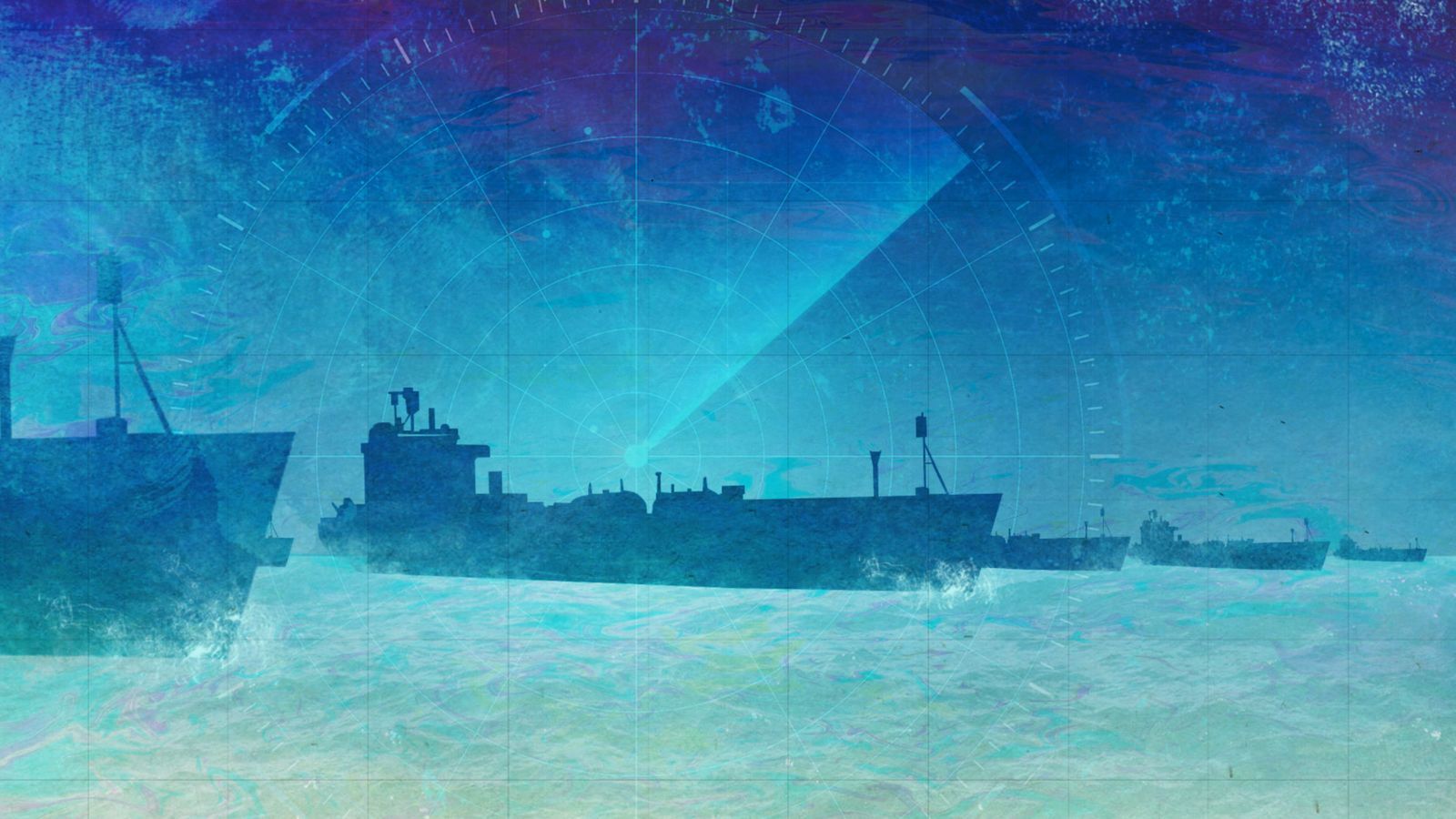
| In recent years, the term "ghost fleet" has been used to describe a large group of older and lightly regulated ships that move Russian oil around the world. These ships often sail under unclear ownership. They use low insurance standards, and little oversight. The fleet grew sharply after sanctions were placed on Russia due to its invasion of Ukraine. By late 2025, it has become one of the world's largest shadow shipping networks. It now plays a central role in how Russia keeps its oil trade alive, even while facing strong limits from Western governments. | Why and how to use such fleets? | At its core, the ghost fleet is a response to pressure. When Europe stopped buying most Russian oil and when the G7 placed a price cap on Russian crude, Russia needed new ways to sell its products. Oil is the main source of income for the Russian state. Losing access to global markets would have caused major harm to its economy. So Russia turned to older tankers that had been retired or pushed out of mainstream shipping. Many of these ships are more than twenty years old. They often lack modern safety tools. Some have unclear maintenance records. But they are cheap to buy and easy to hide behind shell companies. | The fleet uses several tactics to avoid detection. One common method is turning off AIS tracking systems. This makes the ships hard to follow. Another method is ship-to-ship transfers. A ghost tanker will meet another ship in open water and move oil between them. This allows the cargo to be mixed or relabeled. By the time the oil reaches a port, its origin can be harder to prove. In some cases, a tanker will appear on tracking maps only at the start and end of a trip. The rest of the journey stays in the dark. | | | Congress to feature Trump on $100 Bill?
A shocking new plan was just introduced in Washington. The idea is to celebrate Trump's new "golden age" by placing him on the $100 bill.
As you'll see, it has little to do with the new Crypto Reserve…
Or Trump's ambitious plan for Artificial Intelligence…
Former Presidential Advisor, Jim Rickards says, "Trump's crowning achievement will be much, much bigger."
In the months ahead, he predicts, the government will release a massive multi-trillion-dollar asset which it has held back for more than a century. And this will give ordinary investors a chance to strike it rich.
Click here to see the full details. |
|
| | What are the risks associated with them? | These methods create many risks. The most serious is the chance of an oil spill. Old ships break down more often. Poor crews and weak insurance add to the danger. If a spill happens in the Black Sea, the Baltic Sea, or near major shipping lanes, cleanup could be slow. No one would be eager to pay the bill. Local countries might be forced to handle the damage on their own. A single large spill could harm fish stocks, coastal towns, and tourism for many years. | There are also risks to global trade. When ships turn off their tracking tools, they make sea routes less safe. Modern shipping depends on clear navigation. If a ghost vessel drifts or changes course without notice, collisions become more likely. This can disrupt not only oil transport but also container lines and grain shipments. | Avoiding Western control | But the ghost fleet is not only a problem. It also reveals how the world economy adjusts during conflict. Even under heavy sanctions, demand for oil stays high. Many countries need energy and are willing to buy from Russia at a discount. These buyers include nations in Asia, the Middle East, and parts of Africa. For them, cheap oil helps domestic budgets. For Russia, each sale keeps government revenue flowing. So the ghost fleet becomes a bridge between supply and demand. It shows how markets adapt when political forces attempt to restrict them. | Another important point is that the fleet signals a shift in global power. For many decades, Western insurance groups, shipping rules, and maritime courts controlled how oil moved around the world. They decided which ships were safe, which owners were legal, and which waters could be crossed. The ghost fleet works outside that system. It builds a new network of insurers, shippers, and middlemen who do not rely on Western approval. Over time, this may weaken old maritime institutions. It could also give rise to new ones that favor countries outside the G7. | What are the challenges for Russia? | Still, this independence comes with high costs. Russia must sell its oil at lower prices to offset the risk buyers take. Tankers in the ghost fleet are expensive to operate because they are old and fuel-hungry. When something goes wrong, repairs are costly. Russia may also face higher long-term insurance fees, even for ships not in the ghost group. When a country is labeled "high risk," the whole fleet pays more. | There is also the question of what will happen when these ships reach the end of their life. Many are too old to keep moving oil for another decade. Shipbreaking yards may refuse them because they are unsafe or full of toxic materials. If dozens of tankers must be scrapped at once, it could be costly and chaotic. Russia may need to build or buy newer ships, which takes time and money. | Looking ahead, the ghost fleet will likely stay active as long as sanctions remain. But the world is watching more closely now. Satellite systems have improved. Tracking companies follow ship-to-ship transfers with new tools. Ports and insurance firms are sharing more data. These steps may limit the fleet's ability to stay hidden. If stricter rules are enforced, Russia may be pressured to choose between higher transparency and reduced export income. | Decoding geopolitics isn't a job. It's survival. | Joy |
|


Tidak ada komentar:
Posting Komentar