In today's Exponential Investor...- What is this plastic sheet?
- What is this idea?
- What is this new financial system?
|
Go to your money jar and grab a note out of it. Or your piggy bank and grab a pound coin. Just grab some "money" that's lying around somewhere.
Now ask yourself, what is this?
This is money. This is what we believe money to be.
Have you ever stopped to ask the question, why?
Why is that plastic sheet known as "money"? Why is that little mix of metal alloys stamped into a disc used as "money"?
Who decided that would be money? Who decided that in order to receive goods and services, you could hand over those little trinkets and get what you wanted?
Importantly, what makes them qualified in determining these things would be suitable money?
In fact, have you ever questioned what money is, why it exists and its role in society?
Probably not. It's not really a question anyone asks or thinks about.
Until now.
You may be interested in
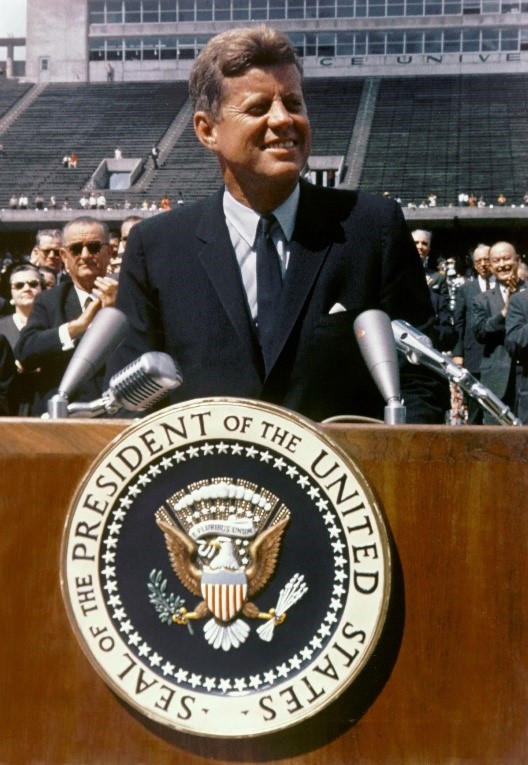
"We choose to go to the moon"
John F. Kennedy, September 12th 1962, Rice University
Just 7 years after JFK's famous, ambitious speech, the Apollo 11 spacecraft landed on the moon...
A dream only made possible by 1.2 million litres of hydrogen fuel.
Now 53 years on from The Moon Landing, British scientists have developed a technology with the power to generate hydrogen fuel from RAIN WATER...
A fuel 3x more powerful than oil and 100% clean.
McKinsey believes this could grow into a $2.5 TRILLION industry.
And our in-house energy expert believes it could ignite Britain's "second coming", a new industrial revolution…
Click here to unlock details about 3 companies with the potential to spearhead the predicted green energy bull market.
Capital at risk |
Money as an idea
We accept money is what it is because we know of no other way. For all of us alive on the earth today, we only know a world where money is… well, just money.
It's a medium of exchange issued by the central bank at the will of the government in order to facilitate a functional economy. Before paper money as we know it, people would exchange any good for a service, or vice versa. A barter system was how the world worked.
But the barter system was always flawed because it was almost always impossible to get a fair trade for a lot of goods and services.
So we turned to a system where another medium of exchange could be used to represent value and enable trade amongst communities.
For a long time the money was underpinned by an asset. Gold was frequently used as the asset that underpinned the money. Then, in early 1970s that "gold standard" was stopped.
And we were left with a monetary system that wasn't underpinned by an asset. A system which became fractional, where there was not actually enough money for everyone if everyone wanted to claim their money in physical nature.
Of course, this 300-word description of the history of money is
overly simplified. It is more complex that what I've just put down, but that's a quick-fire explanation that the "money" you think you hold today is no more than a social construct.
Why is a "fiver" a fiver?
The plastic sheet that is a "fiver" is really no more than a plastic sheet. The real value of that sheet is to facilitate a trade for a defined amount. In the case of a fiver, that means five pounds worth of trade.
Money itself, today, is no more than an idea. An idea that has no physical asset that underpins it. It is as imaginary as the idea of freedom. When you really want it, you realise that it might not actually be what you expected.
And if money is really just an idea, something that society, via influence from central banks and governments determine to have value, then why can't we change our minds and conclude that something else can be a better form of money?
Why can't money be something that
isn't issued and influenced by central banks and government? Why can't money be something new, something that is built and secured in code?
Why can't money be crypto-based?
Well, it can be.
The central banks and governments might not agree with the notion, but that doesn't make them right. In fact, their hostility towards an alternative form of money might even reinforce the point they are wrong and that crypto can and should be money.
While this is all very philosophical today, it is also a thought train that you need to ride. You need to go take the thought train because you will find that over the next few years, crypto will increasingly (and for my mind, correctly) be viewed as money.
We have started to see this play out in the real world too.
Texas is really big
The government of El Salvador has determined that, in that country, bitcoin is equal as legal tender as the US dollar. This week the Communications Ministry of Malaysia came out and said that digital currencies such as bitcoin should be legal tender in Malaysia as well.
It's also rumoured that the government of Honduras is on the verge of announcing that the country will be accepting bitcoin as legal tender also.
And a prospective candidate for the governor of Texas, which is set to be determined in November this year, wants to legalise bitcoin as legal tender in Texas.
It should also be noted that if Texas were an independent country, it would have the ninth biggest economy, above Italy and just behind Brazil.
Then there's Lugano in Switzerland which is adopting bitcoin as legal tender. It will enable people in Lugano to pay for goods and services, including public services and taxes all in bitcoin.
These are movements already in place that prove money as you know it, doesn't have to be money that you've always been used to.
And it proves that if bitcoin is starting now to be looked at and accepted as a form of money, then what kind of systems off the back of that can we look forward to?
These are the signs that an alternative, decentralised financial world is under construction right under our noses. And that people with an open mind and a little bit of foresight can capitalise on this movement and profit from it.
All you have to do to start is just ask yourself, what is money?
Until next time…
Sam Volkering
Editor,
Exponential Investor




Tidak ada komentar:
Posting Komentar