Going All In: How Matt Mooney Turned His Last $50K into an AI BetThe former NBA guard opens up about building a robot, an unexpected pivot to AI, and the messy reality of building a startup from scratch.
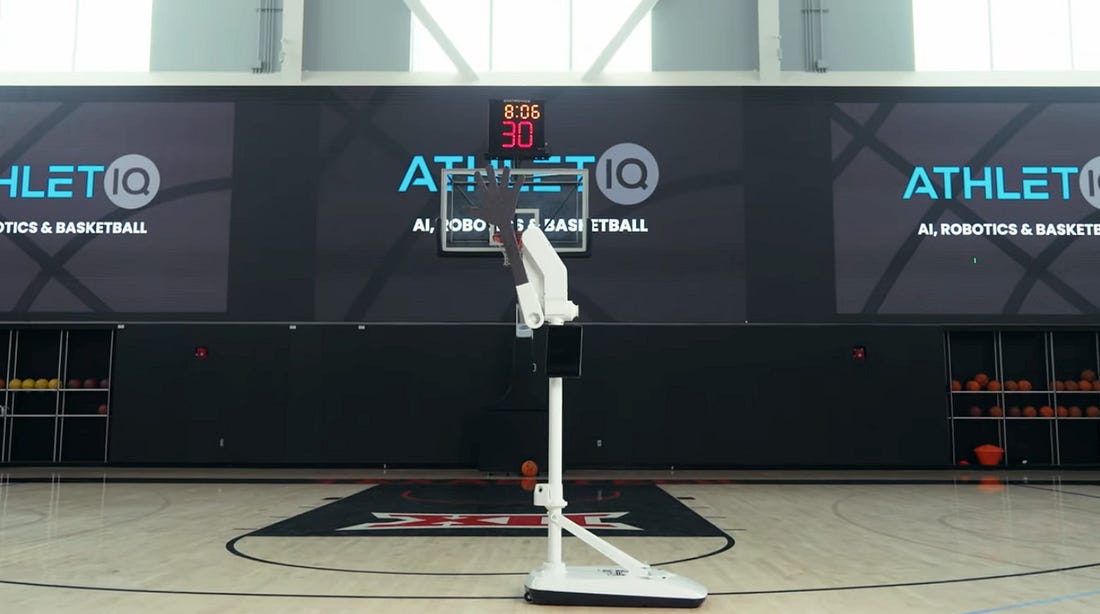
At 28, Matt Mooney had already lived the dream most players spend a lifetime chasing - a professional basketball career spanning the NBA, G League, and top international leagues. But the part of his career that matters most never made the highlight reels. It was a borderline obsessive pursuit of becoming the best shooter he could possibly be. He wasn’t just trying to make shots - he was studying them: the angles, the timing, the mechanics. That fixation followed him everywhere, from practice gyms to hotel rooms to overseas arenas. And over time, it evolved into a simple thesis: the way players learn to shoot is fundamentally broken. Every player practices shooting, but almost no one train with data, feedback, or repeatable systems. To Matt, it was a massive market hiding in plain sight. When his playing career ended, he didn’t drift toward coaching, media, or any of the familiar post-retirement paths. Instead, he stepped straight into the startup world with no tech pedigree, no startup network, and no safety net. In the months since hanging up his jersey, Matt has been channeling the same competitiveness that made him a force on the court into scaling his startup - AthletIQ, an AI-powered training app he’d been quietly building for years while playing professionally. The journey has been anything but linear. There have been pivots that tested his conviction on the market, setbacks that forced him to rethink his product, and long stretches where he was context-switching between two high-pressure arenas - professional basketball and startups. Few founders operate with that level of constraint, and even fewer find a way through it. Today, AthletIQ represents the convergence of everything that makes Matt who he is: the discipline of a pro athlete, the curiosity of a lifelong student, and the conviction of a founder willing to empty his bank account and go all in. In this conversation, he opens up about the psychology behind taking unconventional risks, the identity shift from athlete to founder, and the hard-earned lessons from navigating the 0→1 phase of a startup. This Q&A has been lightly edited for clarity and length. If someone’s hearing about AthletIQ for the first time, how would you explain the problem you’re solving, who you’re solving it for, and why it matters to them?Matt: The origins of AthletIQ go way back. I hit this stretch in my career where I was consumed with perfecting my shot. That obsession pushed me to build something pretty wild: a robotic defender that could contest your jumper and analyze your mechanics in real time. It was my first attempt at solving a problem I lived every day. That prototype became the earliest version of what would eventually turn into AthletIQ.
The tech worked. The business model didn’t. Turns out, the product was too expensive for the people who needed it most - high schools, AAU teams, and everyday hoopers who don’t have the luxury of having trainers with them 24/7. There was real demand, but the willingness to pay just wasn’t there at the price point required to make the margins work. But that experience taught me something important. I realized that the robot itself wasn’t the product. The feedback was. Today, AthletIQ is that same idea, stripped down to its essence. We built an app with three core modules designed to help anyone become a better shooter:
And the timing finally makes sense. AI can now deliver highly personalized feedback without the need for trainers or expensive equipment. With just a phone, players at every level can now access the type of training that used to be reserved for the pros. 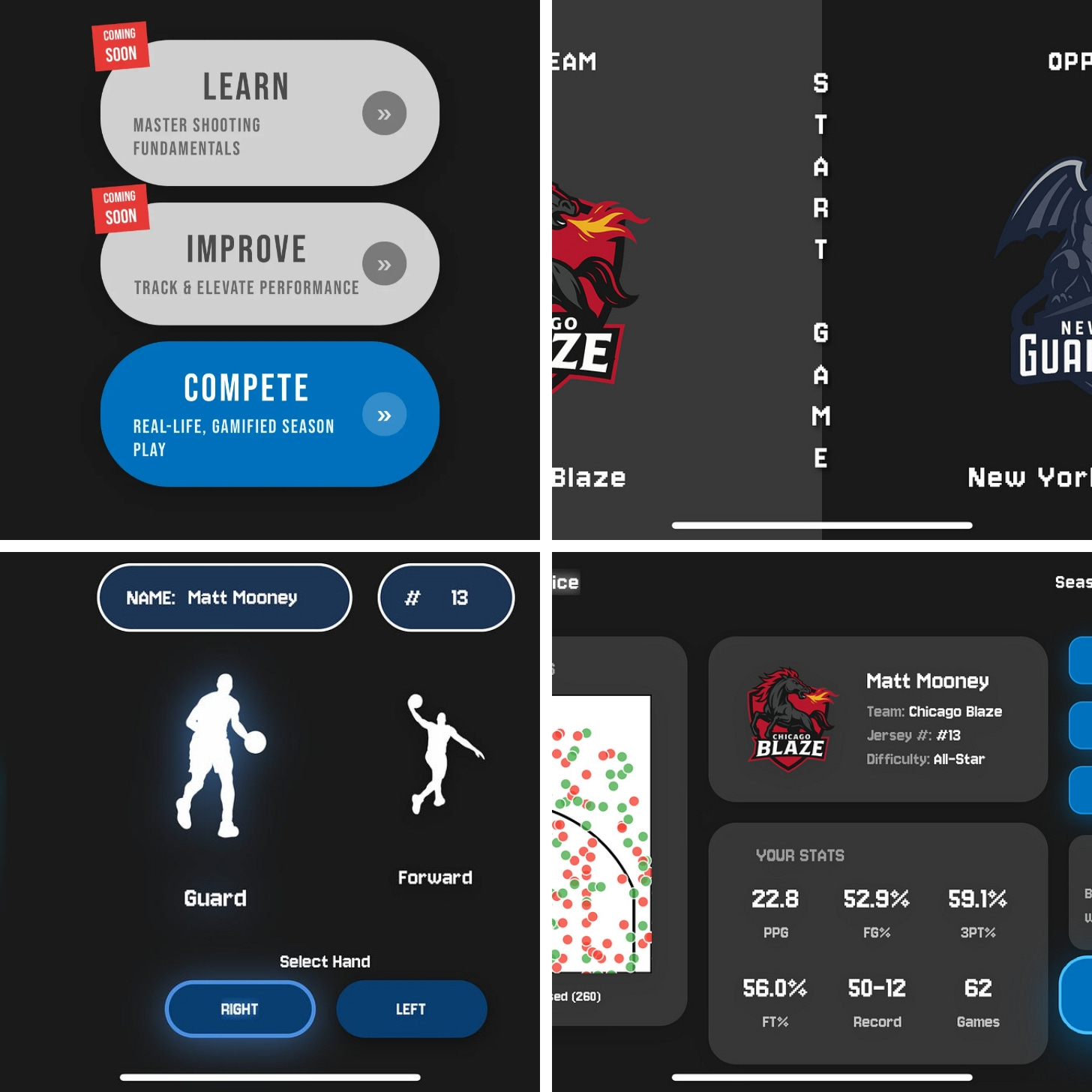 Where AthletIQ is today: powered by computer vision, the app delivers instant shot analysis, personalized corrective feedback, and gamified training loops - all from a single phone At what point did your obsession with perfecting your shot evolve from a personal edge into a vision to transform how players train?It really shifted when I realized I could actually change my shot. For most of my life, I assumed my form was fixed, and I just had to shoot more and get the reps in. But a few years ago, I got injured and had to rethink everything - the way I trained, the way I moved, the way I shot. It forced me to study biomechanics in a deeper way, and I made real improvements. That was a big moment for me. I remember thinking, ‘If I’m in my late 20s and I can still fix this, then younger players definitely can.’ How many players out there never get real feedback on what to work on? How many think they’ve peaked because no one taught them the right way? There’s a huge number of players at every level, all facing the same problem. That’s when I realized this wasn’t just about me. This was a massive opportunity to change how players train. That’s when it all clicked. You could have pursued more predictable and lower-risk opportunities after your playing career. But you chose the founder path. What pulled you towards that direction?“It’s better to fail than to never try at all.” I think it’s who I am at my core. First, I love competition and the pressure that comes with it. It’s part of what I love about the game of basketball. It’s how I’m wired - that competitive mindset doesn’t just turn off when you retire. Second, I’ve always been a risk-taker. I don’t want to live with any regrets. I already carry some from my playing career, and I don’t want to add another. I’d rather go after an opportunity and fail than not take the opportunity in the first place. And honestly, the founder path spoke to a part of me that’s always been there - the entrepreneurial side that loves solving problems and doing the hard things. It’s definitely the tougher road, but it’s a meaningful one. And my faith in God gives me the confidence that things are going to be okay no matter what, so it feels like the right leap to take. Athletes entering tech often feel like outsiders. How did you build the kind of worldview that allowed you to operate on equal footing and compete with the best founders out there?
It starts with knowing my strengths and weaknesses. I understood the problem better than anyone because I lived it. I could speak to players and coaches in a way no one else could. I knew how to sell the vision, pressure-test ideas, and translate feedback into product decisions. At the same time, I had to be honest about what I couldn’t do. I lacked expertise in AI, robotics, fundraising etc, so I surrounded myself with people who could fill those gaps. For example, I brought in a team that knows how to build great products. I also have a number of advisors that help me with things like fundraising. “A basketball team won’t succeed if everyone’s the same type of player. You need guys who complement each other. Startups are the same.” One of the hardest lessons for any founder is learning how to delegate effectively. You can’t do everything yourself. You have to double down on your strengths and trust others to execute on the rest. But I will say this. Recently, I’ve realized that I could stretch myself farther than I thought. I can learn pretty quickly, figure things out, and grow into certain roles. So I’ve been taking on a lot more these days. Some days it’s messy. But I’ve learned that it’s part of the process. And that’s the beauty in being a founder - you just start and you figure it out. Some founders hesitate to go all-in. But not you. You cleared your bank account to get AthletIQ off the ground. What gave you the conviction to take that risk?“There’s never a perfect time to start a company.” That’s true. It was a risky move - clearing my bank account like that. But it didn’t feel reckless at all, because I had conviction: in the problem, in the market, and in myself. I started the company during COVID, right after being called up to play for the Cleveland Cavaliers on a two-way contract. I remember sitting in my apartment, thinking to myself, ‘I’ll make money in life. I’m still young. I believe in this. So I’m going to do it’ I’d been wrestling with this idea for years. It felt like the thing I was meant to build. I even ran it by my financial advisor. Luckily, he gave me his blessing, though honestly, even if he hadn’t, I still would have gone for it. I had nothing to my name but the $50k in my bank account. So I went all in. At the end of the day, I’m a risk-taker. That’s just who I am. I’ll take the shot - because if I don’t, I’ll always wonder, what if? And that doubt, that regret, is far heavier than missing. There’s a perception that athletes have certain advantages - capital, network, distribution. What do people fundamentally misunderstand about the realities of building a startup as an athlete?A lot of people don’t understand what it takes to start a company as an athlete. The stress is real, and obviously, it’s self-imposed because I chose this path. But being an athlete-founder is like juggling a hundred variables at once - product, fundraising, team… all while still playing professional basketball. “The hardest part about being a founder is learning to compartmentalize.” Truth is, I’m thinking about my company 24/7. It’s always on my mind. But I have to compartmentalize. When I’m on the court, my focus is entirely on competing at the highest level - every practice and every game matters. When I’m working on my company, it’s a totally different mindset - strategy, team dynamics, sales meetings, product decisions. And at home, it’s about showing up for my wife, making sure she feels appreciated. Switching between those worlds takes effort. Some days it’s messy, and I don’t do a great job. But learning to be fully present in each moment, without letting one world bleed into the other, that’s the challenge. As for the advantages of being an athlete? They’re not what people think. Discipline, work ethic, competitiveness - those skills definitely translate. But startups is totally different game. You’re basically starting from zero. You have to learn new skills and build new networks. Being an athlete might open doors, but everything else was new to me when I first started. I had to ask a lot of questions, make mistakes, and surround myself with people who knew the game better than I did. Every startup has near-death moments where things almost fall apart. What was that moment for AthletIQ? And how did you overcome it?Oh man, we’ve had some of those moments for sure. The one that really sticks out was our pivot from a robotic defender to a mobile app. Early on, we were laser-focused on building the best robotic defender imaginable. One of our investors even pushed us to double down. But it became pretty expensive to develop. Only NBA teams could afford it, but they already had real players contesting shots in practice. So they didn’t necessarily need it. It was a classic lesson in early-stage startups: the hardest part isn’t just building something cool - it’s building something people need and are willing to pay for. So we pivoted. We started listening to the players we actually wanted to serve. What they cared about most was personalized feedback on their shot. That was the core value in what we had built. It was a tough situation to navigate internally. My co-founder was really attached to the robotics idea, and we clashed on product vision. And that’s when you feel the pressure - not just from investors, but from the team itself. Misalignment in strategic direction can slow everything down. That tension is part of the grind, but it’s also where you learn who’s committed to the mission and how flexible you need to be as a founder. Fast forward to today, we’re seeing real signals from the market that the mobile app resonates. Our beta is about to launch in a few weeks, and every step feels like validation that we’re heading towards the right direction. A huge part of the 0→1 journey is convincing investors to take a bet on you. What have been the most formative lessons there?Fundraising is incredibly hard. It’s a grind, and it rarely goes exactly the way you expect. Consistency is everything. You have to keep showing up, lining up calls, following up. That’s how you build momentum and stack wins over time. “Never get too high. Never get too low.” You can never be sure how any conversation will play out. Warm investors don’t always convert, and cold ones sometimes surprise you with a yes. I had one investor who was kind of dodging me. I hadn’t heard from him in weeks. And then out of nowhere, I get a text: “Hey, I’m wiring the money tomorrow.” I’ve learned to embrace that uncertainty. You never know who will invest, who they know, or what doors a conversation might open. That’s why, in every pitch, you have to be fully present. Treat the investor in front of you like they’re the most important person in the world at that moment. That focus, that energy - investors will notice, and it often makes all the difference. If a young athlete told you they wanted to build a startup, what’s the one piece of advice you’d want them to internalize?Honestly, it starts with relationships. It’s the people you know and the relationships you nurture that really matter. Get to know people outside of sports, ask questions, be genuinely curious, and follow up. “You never know who might be able to help, invest, or open a door when the time comes.” I’ve never used LinkedIn that much, but I’d start there. It’s a great place to connect with people. Being an athlete will also open some doors. Basketball has helped me get into some places because people remember me. So leverage that as well. My advice to young athletes is to start building your network early. Don’t wait until you need something. If you invest in these relationships now, they’ll pay off when the time comes. Between prepping for AthletIQ’s beta launch and fielding investor calls, Matt’s hit that inflection point where things are moving faster than he can plan for. Last week he was halfway across the world in Thailand demoing the product; this week he’s back to the usual chaos of product development and investor meetings. What’s been particularly refreshing? Watching NBA players, coaches, and college athletes explain why they invested. Because when people who’ve lived the problem are willing to bet on a solution, that tells you something. Want to learn more about what Matt’s building? Connect with him on LinkedIn or Instagram. Subscribe to mainstreet media to join 4500+ athlete-investors, founders, and operators for stories on how athletes are building wealth, influence, and legacy after the game. Follow us on LinkedIn and Instagram. Want to be featured on mainstreet media or know someone we should feature? Let’s connect. More stories like this dropping soon. Stay tuned. Check out more stories here:
for your eyes only.
|
Rabu, 21 Januari 2026
Going All In: How Matt Mooney Turned His Last $50K into an AI Bet






Langganan:
Posting Komentar (Atom)
Tidak ada komentar:
Posting Komentar