|
|
There are two ways you end up with my Simple Options Trading For Beginners book.
One: you find it free, like today, and grab it.
Two: you find it later at $29.97 and pay for it.
It's the same book either way. Options explained in plain English, no jargon, real examples you can follow even if you've never placed a single trade.
Most of the year, it's the $29.97 version. I open it up free now and then, let new readers in, and close it again. You happened to show up during an open window.
So the only real question is which version you want to be holding.
If you've ever opened an options chain and felt your eyes glaze over, this is the guide written for exactly that moment - the one that finally makes it click.
Take the free version now, before it's $29.97 again.
Good Trading,
Bill Poulos
P.S. Nothing wrong with paying $29.97 for a good book. It's just a strange thing to do when the free copy's sitting right here today.
Click here to get it.
|
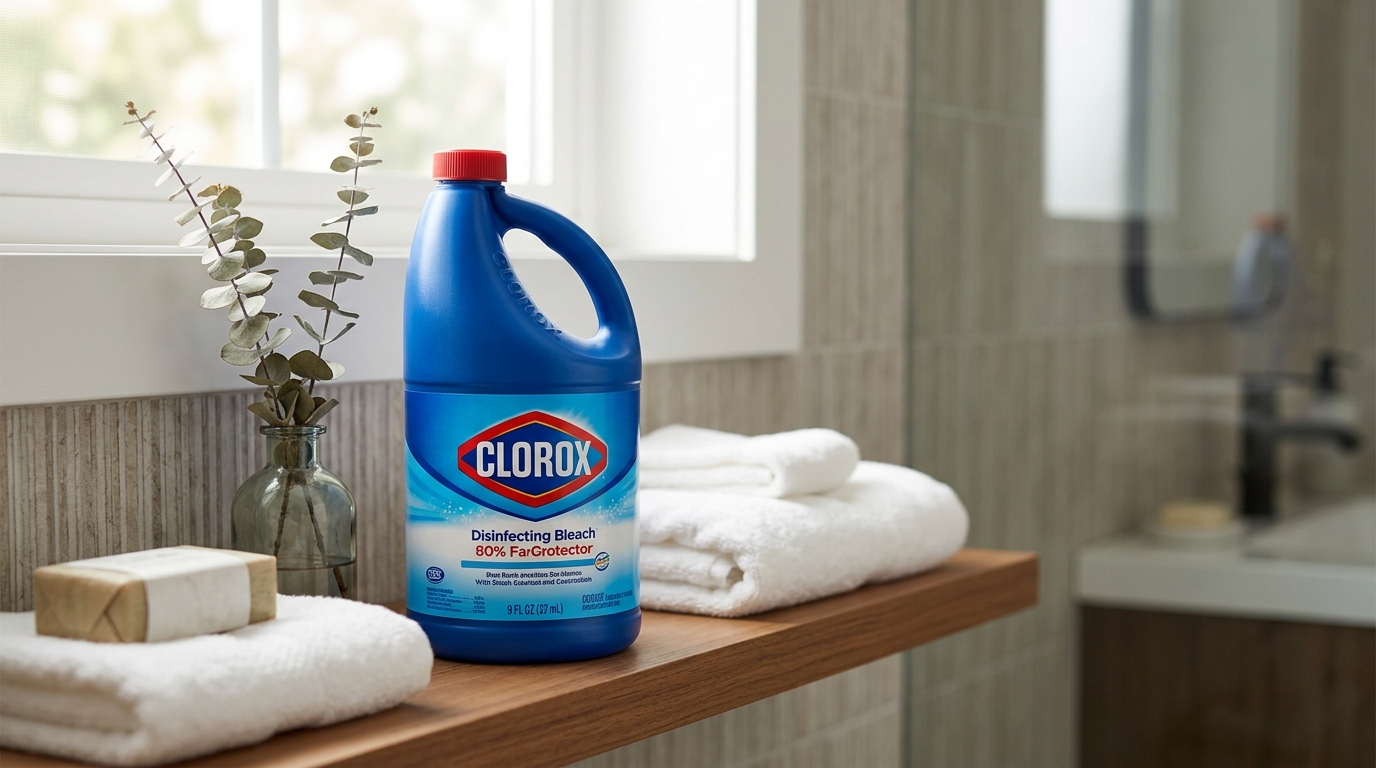
Clorox (CLX): Beaten Down, Still Paying, Worth a Hard Look
Let's get the uncomfortable part out of the way first. The original pitch on Clorox claimed it has heavily outperformed the S&P 500 this year. That is not accurate, and you deserve better than that. CLX has been one of the uglier large-cap consumer staples stories in recent memory. The stock is currently trading near $98, down significantly from its 52-week high of $132. Over the past 12 months it has lost roughly 26% while the S&P 500 gained. That is a real gap, and it matters to the thesis.
So why are we covering it at all?
Because beaten-down and broken are two different things. And right now, Clorox is trading at a yield that income investors have not seen from this name in years. The honest case here is not momentum. It is value and income, with a realistic turnaround arc attached.
What Actually Happened
Clorox reported Q3 fiscal year 2026 results on April 30, 2026. Net sales came in at $1.67 billion, flat versus the year-ago quarter. EPS of $1.64 beat analyst estimates by about 6%. That sounds decent until you look underneath: gross margin dropped 140 basis points to 43.2%, driven by higher manufacturing and logistics costs. Organic sales actually declined 1%. And management cut full-year adjusted EPS guidance to $4.78–$4.98, down from previous guidance of $5.60–$5.95. That is a meaningful reduction.
The problems are layered. A massive ERP upgrade that disrupted operations for over a year. A cyberattack in 2023 that left lasting operational scars. And now a $2.25 billion acquisition of GOJO Industries (the Purell people) that adds revenue but brings near-term gross margin dilution of roughly 50 basis points in year one, plus one-time inventory step-up costs hitting in Q4. The company also just paid $476 million to buy out P&G's 20% stake in the Glad business.
A lot has happened to this company in a short period of time. Most of it expensive.
The Business Itself
Founded in 1913 with a single bleach product, Clorox today operates across four segments: Health and Wellness, Household, Lifestyle, and International. The brand portfolio is genuinely impressive – Clorox bleach and disinfecting wipes, Pine-Sol, Liquid-Plumr, Glad bags, Brita filters, Kingsford charcoal, Hidden Valley dressings, Fresh Step cat litter, and Burt's Bees personal care. More than 80% of sales come from the U.S. The company generates annual revenue of roughly $7 billion and sells through virtually every retail channel that exists – mass, grocery, warehouse clubs, dollar stores, drug stores, and e-commerce.
Here is the thing about this category: it does not really go away. Middle-class households facing fuel inflation and grocery sticker shock do not stop buying bleach or trash bags. They might trade down to private label on some items – that is a real risk here – but the core cleaning and hygiene demand is as close to inelastic as consumer goods gets. These products are purchased on autopilot. That recurring demand is the entire foundation of the income argument.
Slight tangent, but worth knowing: the GOJO acquisition plugs Clorox directly into the professional and healthcare hygiene channel, which is a higher-margin, more defensible segment than retail consumer. Purell is essentially the Clorox bleach of hand sanitizers – trusted by hospitals, schools, and offices. If this integration goes well, it could meaningfully shift Clorox's long-term margin structure. If it goes poorly, it adds debt headache to an already stretched balance sheet.
|
|
Investors are watching this fast-growing tech company No, it's not Nvidia... It's Mode Mobile, 2023's fastest-growing software company according to Deloitte. Their EarnPhone has helped users earn and save over $1B, driving $115M+ in revenue and an eye-popping 32,481% revenue growth. And having secured partnerships with Walmart and Best Buy, Mode's not stopping there... Like Uber turned vehicles into income-generating assets, Mode is turning smartphones into an easy passive income source. The difference is, investors like you still have a chance to invest in Mode's pre-IPO offering at $0.52/share. They've just been granted the stock ticker $MODE by the Nasdaq and over 59,000 investors participated in their previous rounds. $71M+ already invested – claim your stake at $0.52/share and earn up to a 20% bonus Please read the offering circular at invest.modemobile.com. This is a paid advertisement for Mode Mobile's Regulation A Offering. |
The Numbers That Matter
- Q3 FY2026 revenue: $1.67 billion (flat year over year)
- Q3 FY2026 diluted EPS: $1.54 (up 3% year over year)
- Gross margin: 43.2% (down 140 bps from 44.6%)
- Full-year adjusted EPS guidance: $4.78–$4.98 (midpoint ~$4.88)
- Annual dividend: $4.96 per share
- Current dividend yield: approximately 5.3%
- Free cash flow margin: averaged 11.1% over the last two years
- Trailing 12-month net margin: 11.2% (up from 9.9% a year prior)
- Trailing 12-month earnings growth: 8.9%
- FY2025 full-year revenue: $7.10 billion
- Consecutive years of dividend increases: 48 years
That free cash flow margin is real. An 11.1% FCF margin on a consumer staples business means the dividend has actual cash backing it, not just accounting earnings. The payout ratio is high at roughly 80%+, which leaves limited room for error. But with 48 straight years of raises and cash flow that has historically covered the payout, this is not a dividend that looks likely to get cut unless the business deteriorates materially.
Is It Cheap?
At roughly 15–17x forward earnings and a 5.3% yield, CLX is trading well below its historical norms. The current yield sits meaningfully above the 5-year average yield of 3.31%, which is a useful signal for contrarian income investors. That gap between current yield and historical yield reflects how far the stock has fallen, not a change in the underlying dividend.
That said, analysts are split. Goldman Sachs has a Sell with a $83 target. Jefferies has a Buy with a $139 target. The consensus among 19 analysts is Hold, with an average 12-month price target of approximately $105. The wide dispersion on targets tells you this is a genuine debate, not a slam dunk. The bears believe private label growth, retailer leverage, and persistent input cost inflation structurally impair Clorox's margins. The bulls believe the ERP investment, GOJO synergies, and brand pricing power eventually reassert themselves.
Bull / Base / Bear
- Bull case: ERP disruption fades, GOJO integration delivers on synergies, gross margins recover toward 45%+, and the stock re-rates toward $130–$140. You collect 5%+ yield while you wait.
- Base case: Margins stabilize near current levels, organic growth remains low single digits, dividend stays intact, and the stock drifts toward $105–$110 over 12–18 months.
- Bear case: Input cost inflation persists, private label accelerates share losses in litter and bags, GOJO integration disappoints, and the stock tests $80–$83. Goldman's target.
The CEO just announced she is stepping down for health reasons. That introduces a leadership transition risk on top of everything else. Not a dealbreaker for a buy-and-hold income position, but worth watching. The next CEO's capital allocation priorities will matter a lot given the debt load taken on for GOJO.
Action Plan
This is not a buy-the-rip story. It is an income-first, scale-in-slowly situation for patient bargain hunters.
- Income-focused / conservative: A starter position at current levels gives you a 5.3% yield from a 48-year dividend grower. Size it as you would any high-yield staples name with near-term earnings uncertainty – meaning, do not go full position until margin recovery shows up in actual numbers.
- Value-oriented / patient: Consider building toward a full position in two or three tranches. First tranche now, second on a further dip toward $88–$92, third only after Q4 FY2026 results confirm GOJO integration is on track.
- Avoid if: You need near-term capital appreciation, have no tolerance for continued headline risk from the CEO transition, or believe private label will accelerate aggressively in this macro.
The Cheap Investor Scorecard
- Dividend yield above 5%: Yes (5.3%)
- 48 consecutive years of dividend increases: Yes
- Free cash flow margin above 10%: Yes (11.1% average)
- EPS beat in most recent quarter: Yes ($1.64 vs. $1.55 estimate)
- Gross margin recovering: No – down 140 bps in Q3, full-year decline guided at 250–300 bps
- Organic sales growth: No – down 1% in Q3
- Forward P/E below S&P 500 average: Yes – 15–17x vs. S&P at roughly 21–22x
- CEO leadership stability: Uncertain – transition underway
- GOJO integration on track: Early days – accretive long-term, dilutive near-term
- Balance sheet risk: Elevated – $1.59 billion in short-term notes and loans payable as of March 2026
Bottom Line
If margins recover and GOJO integrates cleanly, CLX at $98 with a 5.3% yield will look like an obvious buy in hindsight. If margins keep compressing and private label keeps taking shelf space, the stock has more downside ahead. That is the actual fork in the road here.
What is not in question: the dividend history is real, the brand portfolio is real, and the category demand is as close to recession-proof as it gets. People do not stop cleaning their homes when times get hard. They just stop buying things they do not need.
Watch Q4 FY2026 results closely. That is when the GOJO impact hits the income statement in full. It will tell you a lot about whether management can execute through the noise – or whether the noise is the problem.
– The Cheap Investor



Tidak ada komentar:
Posting Komentar