Dear Reader,
This is Dylan Jovine with Behind the Markets.
Happy Monday. Today is Monday, March 9th.
Today I'd like to talk about the Trump Administration's new rules on AI chips.
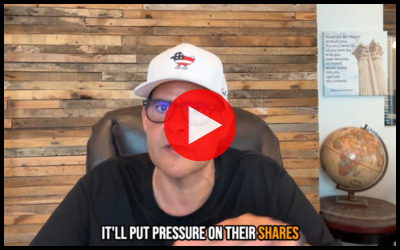
The Commerce Department is writing rules to restrict the sale of AI chips — Nvidia chips, AMD chips, maybe Google chips — to countries that don't meet certain conditions.
This is actually something the Biden administration had been doing for a while. They were restricting AI chip sales all around the globe.
When the Trump administration took office, their argument was to let it flow. So they walked away from Biden's restrictions. And now it looks like they're rethinking that strategy.
You have to imagine that the leverage dynamics on that global chess board we talked about on Friday have shifted a little. Us taking China's energy base — basically in Iran and Venezuela — has given us more leverage to push AI restrictions again. It really does speak to the leverage dynamics in the Great Game. Winston Churchill's Great Game.
So here's what the Commerce Department is now drafting.
Basically, any AI chip shipment anywhere in the world would need American approval. Now, if somebody's looking for a thousand Nvidia chips, that's a simple review. A rubber stamp. But if you're talking about a massive deployment — say 200,000 of Nvidia's newest GPUs going to one company in one country — the host government has to get involved.
And that's not a hypothetical. There's a UK company called Nscale that specializes in renting AI chips to third parties. They're trying to buy 200,000 Nvidia chips to build data center sites across the US and Europe — so that companies like Microsoft have access to fast AI infrastructure in those countries.
What the Trump administration is essentially saying is: we'll let our allies have these chips, no doubt about it. But in exchange, we want you investing in American AI. We want you investing in America. We want the American tech stack driving international AI.
Now, there's a counter-argument. And it's being made by Jensen Huang, the CEO of Nvidia.
His position has been: just let everybody get addicted to our AI. Don't put up barriers. Let them move fast, let them use it, let them build around it. Get them addicted to it. Like a crack dealer on the corner — you want them hooked on your product before anyone else gets a shot.
And you can see the Trump administration wrestling with this in real time. First they pushed away Biden's export restrictions. Then they moved to a freer policy with restrictions only on certain countries. Now they're going back to something more restrictive — where every company in every country needs a review, and big deployments require host government sign-off.
What will the Trump administration ask for in return?
They'll ask for a piece of the build happening in America.
For example, Nscale is planning four sites — three in Europe, one in America.
The Trump administration might come back and say: make it two and two. That's the kind of industrial policy leverage they're looking for.
The positive here is real. You create a security umbrella. You lock in allies. You have leverage because everybody wants these chips. That's a strong hand to play.
The negative is also real. Bureaucracy tends to feed on itself. If this gets too sticky, companies like Nscale start looking for alternatives. And you've just opened the door for other suppliers to walk through.
In the short term, I'd expect this to put pressure on Nvidia and AMD shares until this gets resolved.
And that's exactly why we're not betting on either of them right now.
See, when governments start getting involved in who can buy what chips — the big chip makers are the ones caught in the crossfire.
But there's a tiny company that sits one level below all of that.
Nvidia's "Secret Supplier."
They provide the critical AI components that go into Nvidia's most advanced chips.
Every chip Nvidia sells, these guys get a cut.
And not just Nvidia...
Apple, Amazon, and Google are major partners as well.
So it doesn't matter what the Commerce Department decides.
Doesn't matter what Jensen Huang says.
This supplier wins either way.
And most investors have never heard of them!
Get the ticker here.
One important thing to keep in mind: this is not policy yet. They're drafting regulations. The Commerce Department could change their mind. They're still looking for public feedback.
Anyway, that's all I have for you this Monday.
Have a wonderful day. I'll see you tomorrow.



Tidak ada komentar:
Posting Komentar