Mark my words… | This explosive 93-page file could be the most important thing you read about your bank account this year. | If the Federal Reserve thought they could quietly roll this out without anyone noticing, they are DEAD WRONG. | Because today, a decades-long plan that could control your spending is finally being exposed… | And it could be the nail in the coffin of your financial freedom — unless you act first. | All the proof is right here. | | | | | | | | |  | Fresh Insight for You |
|
|
|
Who Really Benefits from the Iran War? |
|
|
|
What if the enrichment facilities at the center of a modern war were built with Western blueprints, German engineering, and American diplomatic blessing? What if the reactor that launched Iran's nuclear program was a gift from Dwight D. Eisenhower? |
In 1957, the U.S. and Iran signed a civil nuclear cooperation agreement under Eisenhower's "Atoms for Peace" initiative. America supplied Iran's Shah with a 5-megawatt research reactor, delivered to Tehran University in 1967, the very foundation of a program that would consume the next six decades of geopolitics. |
West Germany began construction of the Bushehr nuclear plant in 1975. Then 1979 happened. The Shah fled, Khomeini returned, and the Islamic Revolution swept away the American contracts, but not the knowledge, not the infrastructure, and not the ambitions. |
So the next time someone tells you Iran's nuclear program is purely a rogue state's mad science project, remember who drew the original blueprints. |
|
The War That Shocked the World |
|
On February 28, the United States and Israel launched Operation Epic Fury, nearly 900 coordinated strikes on Iran in the first 12 hours alone. Supreme Leader Ali Khamenei was killed in the opening wave. Iran's air defenses, missile networks, and nuclear infrastructure were targeted across nine cities. Within hours, the debate over why it happened was already louder than the explosions. |
That evening, MSNBC's Rachel Maddow delivered her verdict in a 15-minute monologue titled "Who benefits from Trump's war in Iran? The answer is disturbingly clear." |
Her answer: Arab Gulf states effectively bribed America into fighting their war. But how much of it holds up to scrutiny? |
|
Conspiracy Theories Driving the Narrative |
"The Gulf States Bought This War" |
This is Maddow's central argument, and it rests on three real financial relationships. |
Qatar gifted the U.S. Defense Department a $400 million Boeing 747-8, later earmarked for Trump's presidential library foundation. A UAE-linked investment firm acquired nearly half of the Trump family's crypto company in a deal worth roughly $2 billion. Saudi Arabia's sovereign wealth fund invested $2 billion into Jared Kushner's private equity firm, Affinity Partners, shortly after Kushner left the White House.
|
These transactions are documented. They are ethically troubling. Senate Minority Leader Chuck Schumer called the Qatar jet "a bribe." Republican Sen. Rand Paul said it created "an appearance of impropriety." Legitimate scrutiny is warranted. |
But here is where the theory collapses: if the war was a favor to Qatar, the UAE, and Saudi Arabia, why did Iran's retaliatory strikes target all three countries? Iranian missiles hit Dubai, Abu Dhabi, Doha, and Saudi Arabia. Qatar's Al-Udeid Air Base was struck. These "bribing" nations became frontline targets in the war they supposedly paid to start. A more basic problem: financial relationships between foreign governments and political figures exist constantly, and almost never serve as the sole cause of major military campaigns. |
Citing financial connections is not the same as proving causation. Maddow made that leap without bridging the gap. |
| | Iran Just Changed Everything For Gold | The Iran War didn't just make headlines. | It broke the gold market wide open. | Gold is already above $5,000 and surging. | But the metal isn't where the real money gets made. | There's one tiny company sitting on more gold than France, Italy, and China combined. | It moves 10x faster than the metal. | And right now, it's still trading at a 99% discount to what it's actually worth. | A briefing with the ticker is waiting for you. | Go here for the full gold briefing — including the stock name and buy-up-to price >>> | *ad |
| | |
|
"Iran Posed No Real Threat to America" |
|
To sustain the bribery narrative, Maddow had to argue that the security justification for the strikes was fabricated. She insisted Iran posed no immediate threat to the United States, pointing out that Iran lacks intercontinental ballistic missiles capable of reaching the U.S. mainland. |
That is technically accurate. It is also deeply misleading. |
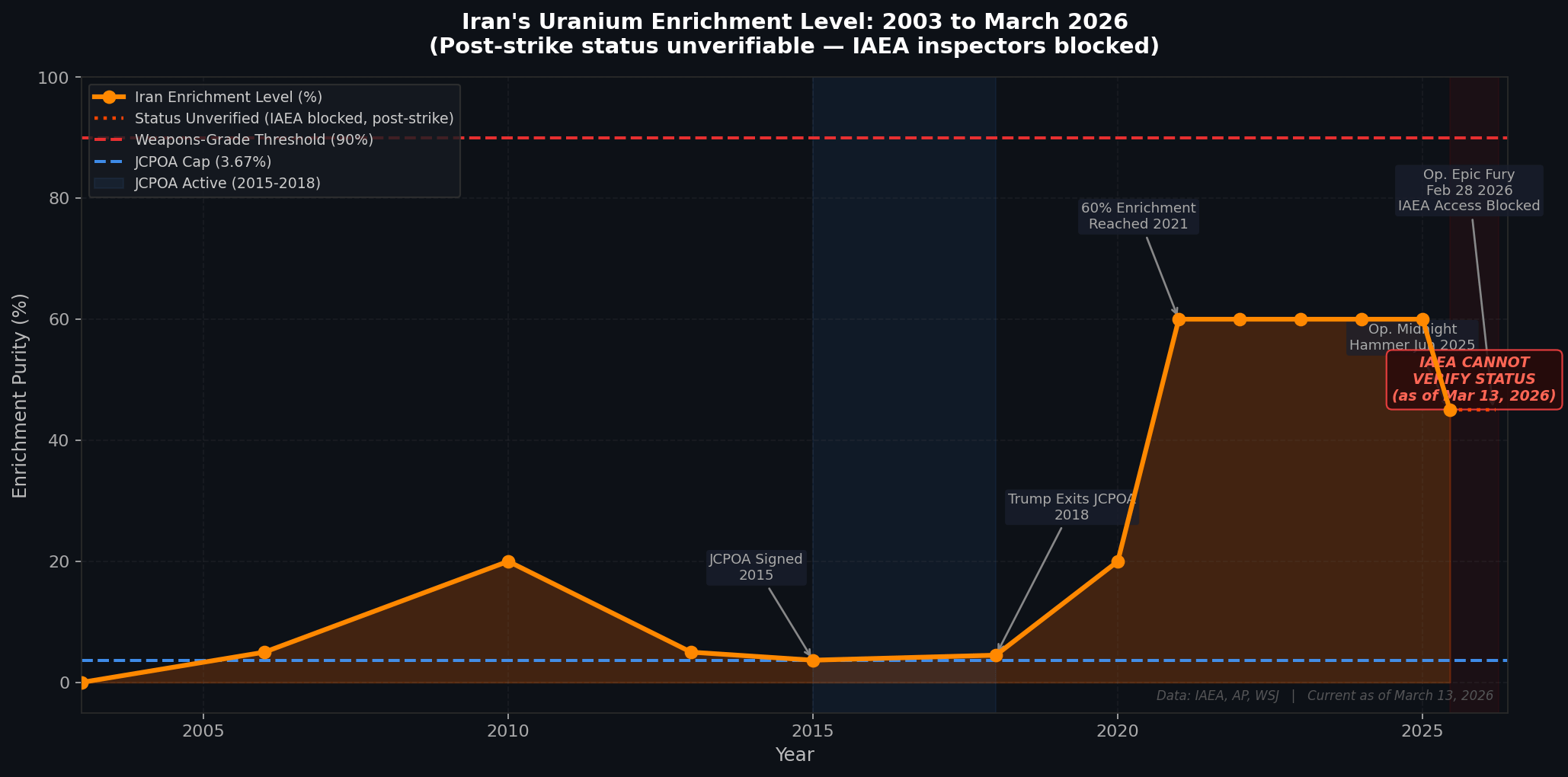
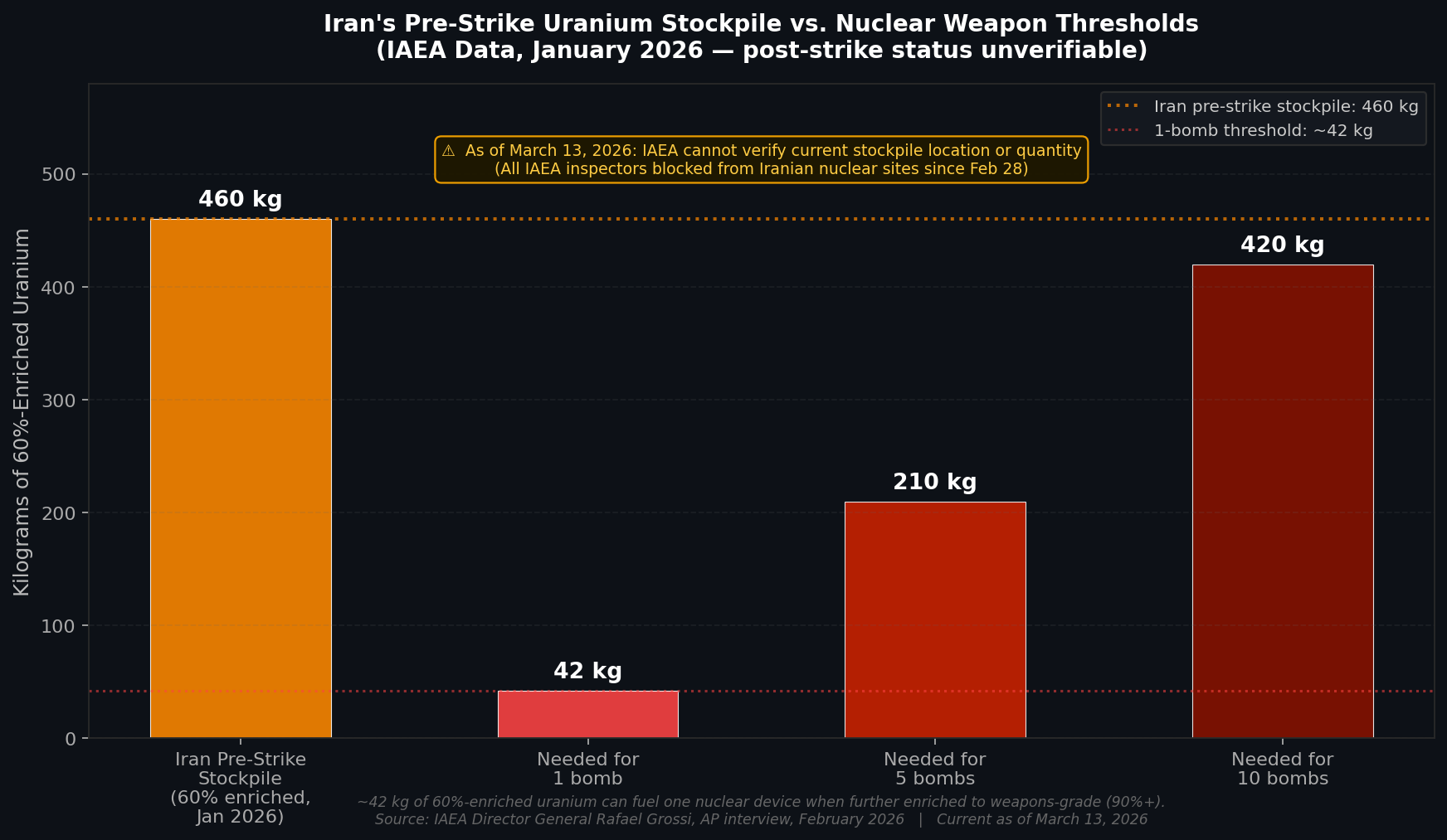
Iran's uranium stockpile at the time of the strikes stood at approximately 460 kilograms enriched to 60% purity. IAEA Director General Rafael Grossi warned in February 2026 that roughly 42 kilograms of that material is sufficient for one nuclear device if enriched further to weapons-grade. Iran's stockpile could theoretically fuel more than 10 nuclear bombs. The IAEA had already noted in 2025 that Iran was "the only non-nuclear-weapon state" producing uranium enriched to near-weapons-grade levels. |
Beyond the nuclear picture, the documented record of Iranian proxy violence against Americans is extensive. The 1983 Beirut barracks bombing killed 241 U.S. Marines. The 1979 Embassy hostage crisis detained 66 Americans for 444 days. The Khobar Towers bombing in 1996 killed 19 U.S. airmen. Iranian-backed militias killed at least 603 U.S. troops in Iraq between 2003 and 2011. Hamas, an Iranian proxy, killed at least 48 Americans on October 7, 2023. Defense Secretary Hegseth later revealed that a covert Iranian unit actively planning to assassinate Trump was killed in the strikes. |
Maddow's evidence that Iran posed no threat? Statements from Iranian regime officials denying nuclear weapons ambitions. These are, to put it charitably, not a reliable source. Iran has a documented history of concealing nuclear activities from IAEA inspectors and filing false declarations with international watchdogs. |
"The Diplomatic Record Was a Performance" |
A third claim circulating online and in progressive media holds that the pre-war diplomatic rounds were theater, staged to give the appearance of good-faith negotiation before a war that was already decided. |
The actual diplomatic record is more complicated. Three rounds of indirect U.S.-Iran talks took place in early 2026, brokered by Oman and held in Muscat and Geneva. The U.S. offered Iran a civilian nuclear program backed by American investment, free nuclear fuel in perpetuity, and in one proposal, the right to retain thousands of advanced centrifuges with enrichment permitted up to 20%, far more generous than the 2015 JCPOA's cap of 3.67%. Iran rejected every proposal. |
Oman's mediator declared peace "within reach" on February 27, the day before the strikes. Yet according to U.S. envoy Steve Witkoff, Iran had opened the final round by asserting its "inalienable right" to enrich uranium, refusing to discuss its ballistic missile program or proxy networks, and boasting that its existing stockpile could already produce 11 nuclear bombs. An Axios analysis published on February 18 found "no signs of a breakthrough," describing war as "the most likely option." |
Trump had also publicly warned Iran multiple times, including during the State of the Union on February 24, that military action would follow a failed deal. |
|
What They Get Right, and Where They Go Wrong |
|
The financial concerns embedded in these theories are legitimate and deserve independent investigation. |
Accepting a $400 million gift from a nation whose ambassador is simultaneously conducting diplomacy is a real ethical problem. The UAE and Kushner-Saudi financial arrangements raise genuine questions about conflicts of interest. |
The error is not in raising these questions. The error is treating them as the complete answer while discarding everything else. |
To accept the "bribery" framework fully, you must also discard: the IAEA's documented alarms about Iran's near-weapons-grade enrichment, NATO's independent designation of the IRGC as a terrorist organization (completed just weeks before the strikes), decades of bipartisan consensus on the Iranian threat, the independent security calculus of Israel (a country that needs no Saudi incentive to view Iran as existential), and the collective judgment of allied nations that pressured Iran, not the U.S., to return to good-faith negotiations after the strikes began. |
That is a great deal of evidence to set aside in favor of a cleaner story. |
|
Bottom Line |
Maddow asked the right question. |
Who benefits from degrading Iran's nuclear and military capabilities? Israelis living under Iranian proxy rockets for two decades. Iranians suppressed by the IRGC, a force Western courts have convicted of assassination plots across Europe. Gulf state civilians whose airports and infrastructure absorbed Iranian retaliatory strikes. American service members stationed at bases Iranian proxies have targeted repeatedly for 40 years. And, arguably, a world that spent two decades watching Iran accelerate toward nuclear capability while diplomacy stalled. |
The financial relationships Maddow cited are worth scrutinizing. The war's constitutional legitimacy is worth debating. The civilian toll demands moral reckoning. |
But "the Gulf states bribed Trump into launching a war" is not a conclusion the evidence supports. It is a conspiracy theory with better production values than most, which makes it more dangerous, not less. |
|
| | | | Quick ratingHow was this one? | |
| |
| | |
|
Disclaimer: This analysis is for educational purposes only and should not be considered investment advice. Always do your own research before making investment decisions. |
Items marked with an asterisk (*) are promotional and help support this newsletter at no cost to readers. |





Tidak ada komentar:
Posting Komentar