| SUNDAY LOOK AHEAD | Last week showed where the pressure lands first. Energy markets tightened, airlines cracked, fertilizer rallied, and private credit started showing stress. The week ahead answers a different question. Does that pressure start showing up in economic data and corporate guidance, or does the economy keep moving around it? | | | | | The market spent last week tracing consequences. | Oil surged, collapsed, and climbed again. Insurance markets effectively shut down commercial shipping through the Strait of Hormuz. Fertilizer stocks exploded higher as traders followed the energy shock into agricultural supply chains. Private credit funds began limiting withdrawals. | Meanwhile other parts of the market behaved almost as if none of that existed. | AI infrastructure companies rallied after strong earnings. Semiconductor stocks found buyers on weak days. Defense contractors traded as if geopolitical risk had simply extended their order books. | Those two worlds collided by Friday. | Energy and credit pressure were building. Technology infrastructure was holding up. Bond yields were rising instead of falling. | That left the market entering the new week without a clear answer to the most important question: does the shock stay contained inside energy and logistics, or does it start spreading into inflation, hiring, and corporate earnings? | The next five trading days offer several ways to find out. |
| |
| | |
| | | | If I Had to Start With $2,000… | I'd focus on one thing: breakout volume. | Big trends begin with unusual volume — especially in dark pools, where institutions place massive orders. | Step 1: Track irregular dark pool activity.
Step 2: Check charts for clean breakouts.
Step 3: Enter high-quality setups. | Follow the money. Ride the momentum. | TradeAlgo's AI sends FREE SMS alerts when unusual dark pool volume hits. | Claim your AI-powered alerts before access closes. |
| |
| | |
| | | | The Fed finally steps into the middle of the story | The week builds toward one event that will dominate the conversation. | Wednesday's Federal Reserve decision. | For months the Fed's job looked straightforward. Inflation was cooling slowly and the market expected rate cuts later in the year. Now policymakers walk into their meeting with oil near $100, shipping disruptions still active, and bond yields drifting higher. | The decision itself is unlikely to surprise anyone. Rates should stay exactly where they are. | The real signal will come from the press conference and the updated projections. | If officials continue to describe inflation as gradually cooling, markets will treat that as confirmation that the energy shock is still viewed as temporary. | If the Fed starts emphasizing energy costs and supply disruptions, investors will assume the path toward rate cuts just became narrower. | The week's economic data will shape that discussion before the meeting even begins. | Monday starts with the New York Empire State manufacturing index and industrial production. Manufacturing surveys have been uneven all year. A sharp slowdown would suggest the global energy shock is already touching industrial demand. | Tuesday adds housing signals through the NAHB homebuilder sentiment survey and pending home sales. Housing reacts quickly to changes in mortgage rates, so the sector often provides one of the earliest economic signals. | But the most important inflation clue arrives before the Fed meeting itself. | Wednesday morning brings the Producer Price Index. | PPI tracks wholesale prices rather than consumer prices, which means it often reflects changes in energy costs faster than CPI. If wholesale inflation jumps, the Fed will face an uncomfortable reality right before its policy announcement. | Investor Signal | Watch the bond market during the PPI release and again during the Fed press conference. If yields climb through both events, the market is telling you the energy shock is bleeding into inflation expectations. |
| |
| | |
| | | | Markets will keep watching the Strait | Even with the economic calendar packed, oil will remain the background driver of the tape. | Last week showed why. | Reserve releases failed to hold prices down for more than a day. Insurance withdrawals kept tankers out of the Strait. Shipping companies began rerouting cargo around Africa. Fertilizer and petrochemical supply chains tightened almost immediately. | Those conditions have not changed yet. | That means every new development tied to shipping insurance, naval escorts, or tanker traffic has the potential to move markets quickly. | The key difference this week is that investors are no longer reacting to the first shock. | They are watching for signs that the system is adapting. | If commercial shipping resumes through Hormuz, oil could fall sharply and many of last week's defensive trades unwind. Airlines would rally first. Energy stocks would likely give back part of their gains. | If insurers continue avoiding the route, the supply disruption persists. Oil volatility remains high and energy-linked sectors continue attracting capital. | Trade Implication | Oil may not move every hour the way it did last week, but the Strait remains the most sensitive trigger for the entire macro environment. |
| |
| | |
| | | | The 2026 IPO calendar is taking shape - and it's unusually concentrated | Instead of a scattershot list of early-stage hopefuls, the pipeline includes a handful of large private companies, each dominating a different segment of the economy. | At one end of the spectrum sits a global connectivity network. At another, the infrastructure powering enterprise AI. | There's a digital finance platform generating margins that resemble software, not banking. And much more. And they all bring unique standout qualities to the table. | All detailed in this new report. Yours FREE. |
| |
| | |
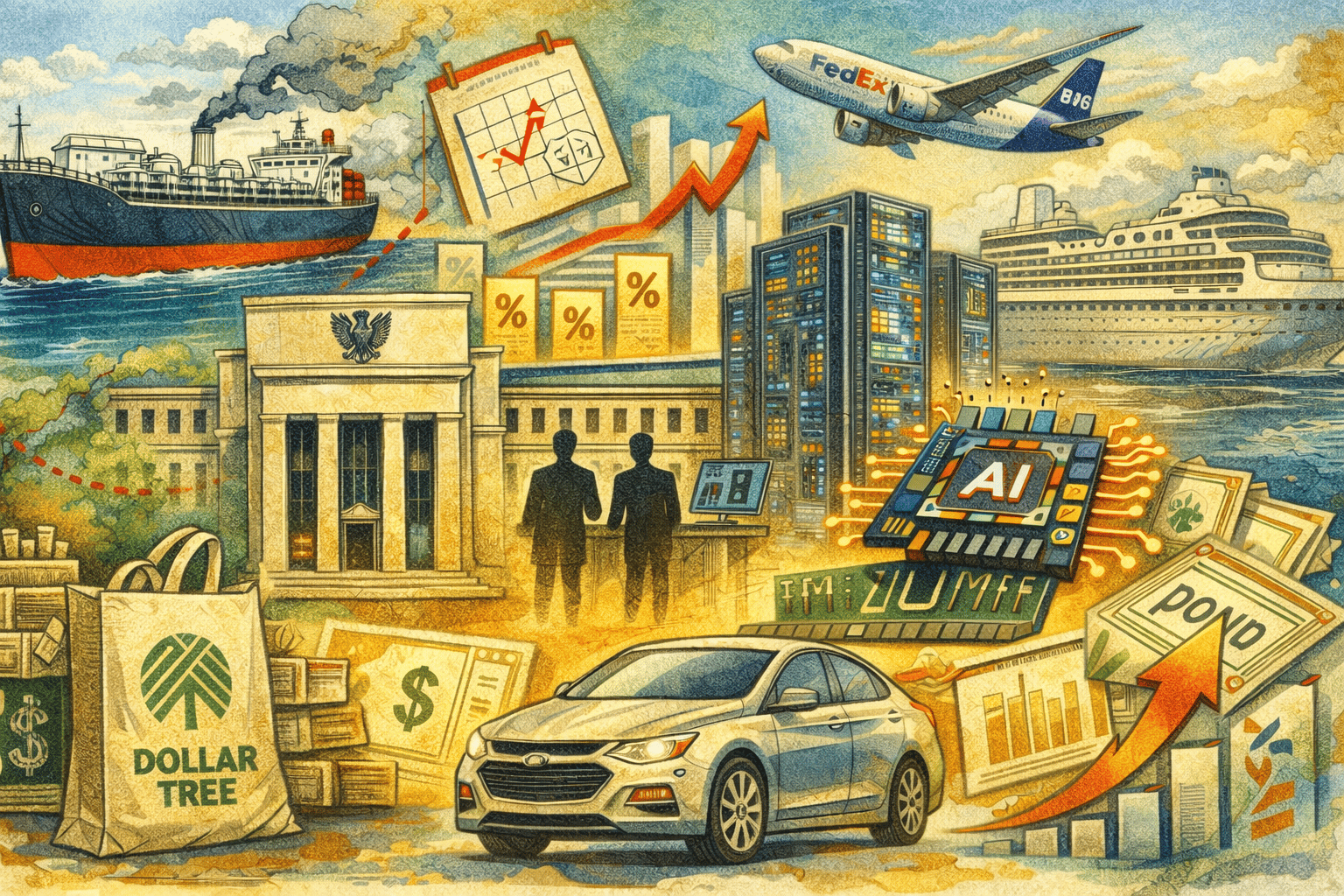
| | | | AI infrastructure faces its next test | Technology spending became one of the more interesting countercurrents last week. | Oracle delivered strong earnings and revealed billions of dollars in signed contracts tied to AI data center construction. That result helped stabilize semiconductor and infrastructure stocks even while energy headlines dominated the tape. | The week ahead brings another important read on enterprise demand. | DocuSign reports earnings and offers insight into corporate software spending. While DocuSign sits far from the data center layer, its results still reflect how willing companies are to invest in digital tools. | More importantly, Micron Technology reports later in the week. | Micron produces memory chips that sit at the center of AI computing systems. Demand for high bandwidth memory has surged as data centers expand. Strong results would reinforce the idea that the AI buildout remains one of the few parts of the economy still accelerating. | Weak guidance would have the opposite effect. | If a company directly tied to AI hardware signals slowing demand, the entire infrastructure trade would need to reassess its assumptions. | Execution Bias | Hardware and semiconductor companies remain the clearest window into whether AI spending is still accelerating. |
| |
| | |
| | | | Retail and travel test household resilience | Several earnings reports next week provide a closer look at the consumer side of the economy. | Dollar Tree reports results early in the week and tends to offer one of the most direct reads on lower income households. Discount retailers often benefit when consumers begin trading down to cheaper options. | Darden Restaurants adds another perspective through its portfolio of casual dining brands. Restaurant spending tends to weaken quickly if fuel prices or borrowing costs begin squeezing household budgets. | Williams Sonoma contributes a higher income consumer signal. The company's customer base typically reflects discretionary spending trends among wealthier households. | Carnival closes the loop on one of last week's most obvious sector stories. | Cruise companies were among the hardest hit names during the oil spike. Higher fuel costs and uncertain travel demand created a difficult combination for the industry. Carnival's guidance will show whether those concerns are starting to affect bookings. | Edge Setup | If discount retailers outperform while travel and dining companies struggle, the market will read that as evidence consumers are becoming more selective with spending. |
| |
| | |
| | | | Buffett, Gates and Bezos Quietly Dumping Stocks—Here's Why | | The world's wealthiest individuals are making huge moves with their money. | Warren Buffett just liquidated billions of shares. Bill Gates sold 500,000 shares of Microsoft. Jeff Bezos filed to sell Amazon shares worth $4.8 billion. | What is going on? One multi-millionaire believes they are preparing for a catastrophic event. But not a crash, bank run, or recession. It's something we haven't seen in America for more than a century. | For the full story, click here. |
|
|
| |
| | |
| | | | Transportation and manufacturing fill in the picture | Two additional companies reporting next week help reveal what is happening deeper in the supply chain. | General Motors provides insight into industrial demand and consumer financing conditions at the same time. Auto sales rely heavily on credit availability and consumer confidence. Any shift in GM's outlook can quickly ripple across the broader manufacturing sector. | FedEx offers one of the clearest snapshots of global commerce. | Because FedEx moves packages across almost every major trade route, its shipping volumes often reflect the health of international supply chains. If shipping disruptions tied to the Middle East conflict begin affecting global trade flows, the company will likely mention it directly. | Those two companies together offer a practical look at how goods are moving through the economy. | Investor Signal | Transportation companies often reveal changes in economic activity before the macro data catches up. |
| |
| | |
| | | | Investors keep an eye on liquidity | One of the quieter but more important developments last week came from private credit. | Several large funds limited investor withdrawals after redemption requests rose. The amounts involved were manageable, but the signal caught attention across financial markets. | Private credit has become a major source of financing for mid sized companies. When redemption pressure appears inside these funds, investors begin questioning how easily borrowers will be able to refinance existing loans. | That story does not resolve overnight. | This week traders will watch bank stocks and credit spreads for signs that the pressure is spreading. Any additional redemption restrictions or loan write downs could quickly reignite the conversation. | Trade Implication | Credit stress rarely arrives in a single event. It builds slowly through small signals before becoming obvious. |
| |
| | |
| | | | 20 Crypto Hedge Funds Are Revealing Their 2026 Playbook | On March 18th, twenty top crypto hedge funds are doing the unthinkable… | For two days, they're sharing their research, strategies, and exact positioning for 2026 — the same intel wealthy clients pay fortunes to access. | Billion-dollar firms are opening the books. | And I'm streaming every session free. | Claim your spot at the Crypto Hedge Fund Summit. | © 2026 Boardwalk Flock LLC. All Rights Reserved. 2382 Camino Vida Roble, Suite I Carlsbad, CA 92011, United States. The advice and strategies contained herein may not be suitable for your situation. You should consult with a professional where appropriate. Readers acknowledge that the authors are not engaging in the rendering of legal, financial, medical, or professional advice. The reader agrees that under no circumstances Boardwalk Flock, LLC is responsible for any losses, direct or indirect, which are incurred as a result of the use of the information contained within this, including, but not limited to, errors, omissions, or inaccuracies. Results may not be typical and may vary from person to person. Making money trading digital currencies takes time and hard work. There are inherent risks involved with investing, including the loss of your investment. Past performance in the market is not indicative of future results. Any investment is at your own risk. |
| |
| | |
| | | | The week ahead brings several different pieces of the same puzzle together. | Energy markets remain unstable. Shipping routes through the Strait have not normalized. Inflation indicators arrive while oil prices remain elevated. The Federal Reserve must respond to those conditions in real time. | At the same time, corporate earnings from technology, retail, travel, and manufacturing companies provide ground level evidence about how businesses are handling the environment. | If the economic data stays stable and corporate guidance remains constructive, the market may conclude the energy shock is disruptive but manageable. | If inflation rises, hiring slows, and companies begin lowering forecasts, the narrative changes quickly. |
| |
| | |
| | | | Last week showed how the system reacts to a sudden disruption. | Energy producers gained pricing power. Fertilizer and chemical companies benefited from tighter supply chains. Airlines and travel stocks absorbed the cost shock immediately. AI infrastructure companies continued attracting capital because demand remains visible. | The coming week tests whether that sorting process continues. | Economic data will reveal whether inflation and employment are starting to respond to higher energy costs. Corporate earnings will show whether companies are adjusting investment plans or consumer pricing. | The market does not need perfect answers yet. | It only needs enough evidence to decide whether last week's disruption was temporary turbulence or the beginning of something more persistent. | If the data stays calm and earnings hold up, investors may return to broader risk. | If the numbers begin reflecting the same pressures already visible in energy, shipping, and credit markets, the market becomes more selective again. | Last week revealed where the pressure first appeared. | This week shows whether it spreads. |
| |
| | |
|
|





Tidak ada komentar:
Posting Komentar