On September 15, 2008, Lehman Brothers went from being the fourth-largest U.S. investment bank to filing the largest bankruptcy in American history. |
Overnight, roughly $639 billion in assets imploded. The collapse triggered a panic that nearly brought down the entire global financial system. |
What triggered it? |
Massive losses tied to subprime mortgages sparked a chain reaction that froze the global lending system. Credit – the lifeblood of financial markets – simply dried up. |
Banks stopped trusting each other… Businesses couldn't roll over loans… The gears of finance ground to a halt. |
Governments and central banks had to intervene with emergency lending facilities just to keep the system breathing. Treasury Secretary Henry Paulson even proposed $1 trillion to buy toxic debt and prevent a complete meltdown. |
Meanwhile, ordinary Americans paid the price. Nearly 4 million homes were foreclosed between 2007 and 2010 as housing prices collapsed and unemployment surged. |
While banks were collapsing from reckless mortgage bets, they were also secretly rigging the interest rate that priced trillions in loans. |
I'm not talking about cartoon villains in a smoke-filled room. I'm talking about a small group of traders at major global banks simply typing numbers into a screen. |
In a moment, you'll see why the story I'm sharing today matters for bitcoin… |
|
| | | | Big T's $5 Million AI Bet | | Big T is going all in on what he believes will be the hottest trend in 2026. | With this strategy… | He believes you'll have the chance to capture massive gains while protecting your money against any AI bubble risk. | He's so confident, he's put over $5 million of his own money into it. | |
| |
| | |
|
|
The Game Was Rigged |
The numbers I referred to above determined the London Interbank Offered Rate (LIBOR). It's the benchmark interest rate underpinning more than $400 trillion in loans worldwide. |
These rates affect everything from mortgages and student loans… to corporate debt and complex derivatives. It's the heartbeat of global finance. |
And it was being rigged. |
Traders at Barclays, UBS, Royal Bank of Scotland, and Deutsche Bank were caught red-handed coordinating LIBOR submissions. |
Investigators found emails revealing phrases like: "If it comes in unchanged, I'm a dead man…" "We'll push it lower tomorrow…" and "Dude, I owe you big time." |
The changes the traders made were small. A basis point here. A fraction there. But across trillions of dollars' worth of loans, each basis point (0.01%) could net millions of dollars in profits. |
Regulators eventually uncovered the scheme, and the fallout was severe. |
Authorities in the U.S., UK and European Union fined banks more than $9 billion for manipulating LIBOR rates. The chairman and CEO of Barclays both resigned. |
The short version is this: A tiny circle of institutions controlled the reference rate for the global financial system… simply by agreeing on what number to type in. |
Let that sink in. |
Now fast forward to today. The same banking system that rigged LIBOR now runs crypto trading desks. |
Daily editor Teeka Tiwari has called this dynamic The Great Crypto Conspiracy. As he laid out last month, the incentives are obvious. |
If institutions could coordinate interest rates tied to $300 trillion in loans… What makes you think they wouldn't try to influence a $1.5 trillion bitcoin market? |
"The 10 a.m. Dump" |
Jane Street isn't a meme trader. It's one of the most sophisticated quantitative trading firms in the world. |
In 2024, the firm averaged roughly $2.4 trillion in equity trading volume per month. That's more than a 10% share of the North American equity market. |
As a market maker, its specialty is lubricating trading in exchange-traded funds (ETFs), which traded nearly $4 trillion in volume last year, according to data provider Pyth. |
Jane Street traders make a fortune by exploiting tiny price discrepancies (called arbitrage). I'm talking about fractions of pennies multiplied millions of times. |
And now they're at the center of crypto controversy. |
The bankruptcy estate of Terraform Labs has filed a lawsuit alleging Jane Street used inside knowledge during its 2022 meltdown. You may recall Terraform as the firm behind the TerraUSD and LUNA stablecoins. |
According to the complaint, minutes after Terraform pulled hundreds of millions in liquidity from a key trading pool, a wallet linked to Jane Street made a massive withdrawal from that same pool. |
The lawsuit alleges that this trade could only have been executed with advance knowledge – and that it accelerated a collapse that ultimately wiped out roughly $40 billion in value. |
Jane Street denies wrongdoing and calls the claims baseless. The case will play out in court. |
Now, here's where we connect the dots… |
In recent weeks, traders started noticing a strange pattern in bitcoin: Repeated selling pressure right after the U.S. stock market opened. Conspiracy theorists began calling it the "10 a.m. dump." |
The allegation floating around crypto circles is that repeated "dumps" created downward pressure on bitcoin's price. |
Jane Street is one of the largest market makers for bitcoin ETFs. That means when big institutions buy or sell ETF shares at market open, Jane Street often stands in the middle of the trade. |
If there's heavy selling in those first 30-60 minutes, Jane Street may hedge its exposure by shorting bitcoin futures or selling spot BTC. Now, this isn't emotion trading. It involves sophisticated algorithms. There's no single person pushing a button. |
But here's what crypto social media sniffed out: After news of the Jane Street lawsuit broke last month, bitcoin rallied as much as 11%, and those patterns seemed to disappear. |
Does that prove anything? I don't know. |
Is it possible that large trading firms influence short-term price action? Absolutely. We saw it with the LIBOR scandal. |
That's exactly what Big T means by The Great Crypto Conspiracy. |
When volatility hits, retail investors panic sell. Institutions buy the dip… Repackage the product… And sell it back to you for a profit. |
They want the FUD to shake you out of your positions. Don't give them that satisfaction. |
|
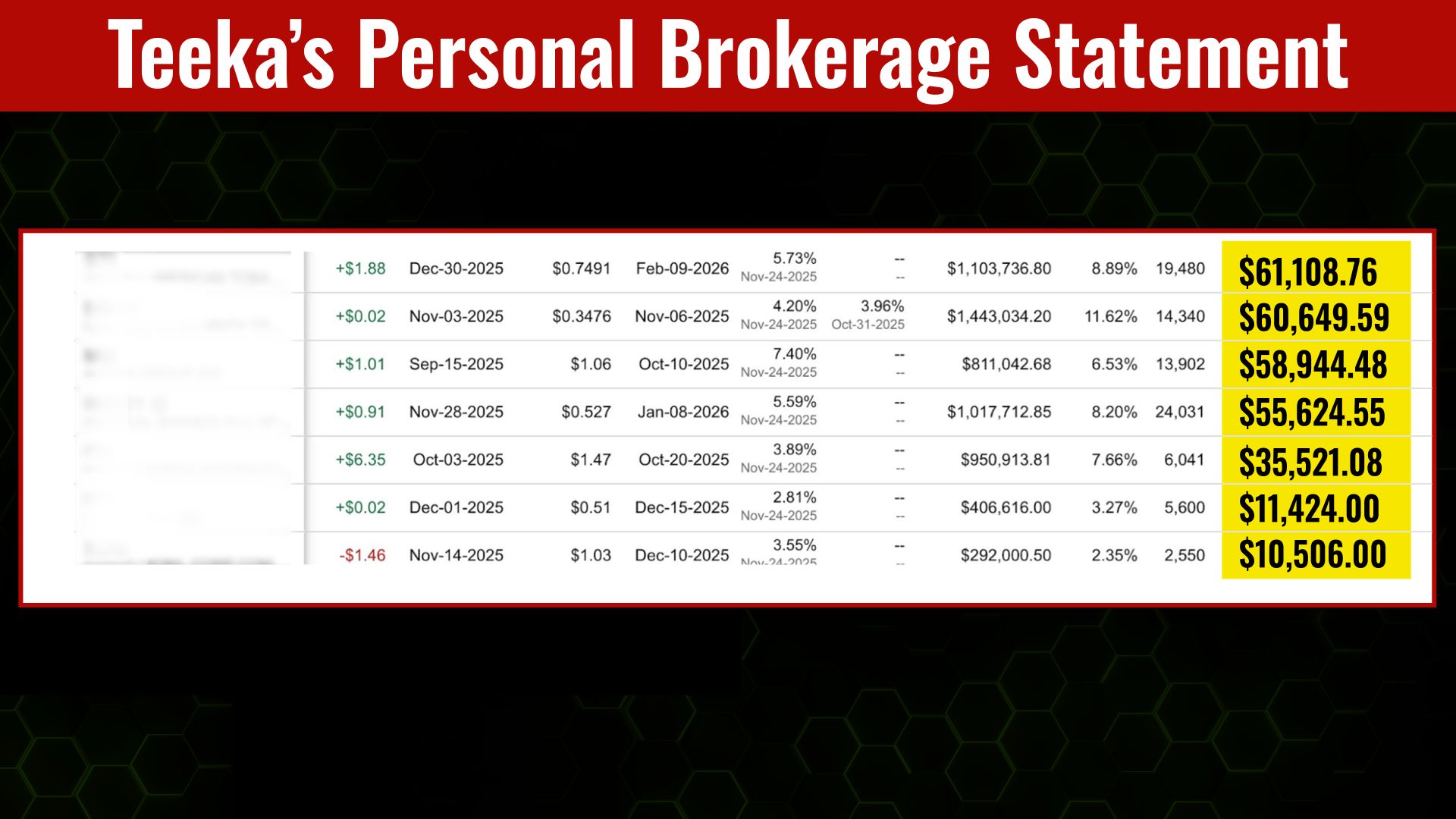
| | | | Nvidia's $16 Trillion Paycheck Program | | This might sound crazy... | But Nvidia could help fund your entire retirement… | Without having to buy a single share. | Big T has personally made hundreds of thousands of dollars in the last 12 months. | He reveals everything here, and he believes these payouts are about to balloon like we've never seen before. | In fact, according to Morgan Stanley, there's $16 trillion on the line. | And if you follow Big T's blueprint… | Some of that money could flow straight into your pocket… | Starting on April 8th. | |
| |
| | |
|
What Does This Mean for Bitcoin?
|
In the short term, don't be surprised if you see more negative press as this lawsuit plays out. Just don't let it scare you out of your bitcoin. |
Meanwhile, the war in the Middle East will create more broad market volatility, which affects crypto, too. We're seeing that already, with assets across the board selling off further on Tuesday as missiles and drones hit Qatar, Kuwait, Bahrain, Oman, and the UAE. |
The market was still struggling to make sense of the conflict in early trading today. So expect this volatility to continue for the next few weeks. |
As someone who values every human life, it's tough to watch the situation in the Middle East. But my responsibility here as an analyst is to guide you through every kind of market, good or bad. I'll leave the geopolitics to the experts. |
And from a market perspective, bitcoin looks attractive here. |
If you're looking to add exposure, I'm eyeing two levels. You can separate your buys into two orders to hedge your risk. |
For the first entry, a move back to the 200-week moving average range near $60,000 is a good "toe dip" spot (think 10-15% of what you want to allocate). |
The second entry point I'm eyeing up is in the $40,000 range. Anything with a "4" in front of the price will prove to be an amazing entry price two years from now. Using past cycles as a guide, a move into the forty thousands could be a low for the current bear market. |
That'd be roughly a 65-70% drop from the highs marked last October, which falls in line with historical pullbacks. On top of this, the $40,000 range has served as support in the past. |
Remember, the long-term driver of bitcoin isn't one firm. It's adoption. And, over the past two weeks, we've shown you how the adoption trend is still intact. |
LIBOR was rigged because it was centralized and based on trust in a few banks' submissions. |
Bitcoin is different. Its supply schedule can't be typed into a terminal and adjusted by committee. No trader can change the 21 million supply cap. |
That's the real difference. |
So when you hear about Jane Street, understand that it's short-term noise. Most importantly: Don't let it shake you out of your stack. |
Don't Watch the Future Happen. Own It! |
Houston Molnar |
P.S. While we wait for this latest chapter of The Great Crypto Conspiracy to play out, another area of the market is signaling danger. |
One day, tech giants like Nvidia, AMD, and Meta are getting clobbered on AI disruption fears... The next day, they're benefiting from a relief rally. |
But just like we have a playbook for sidestepping the uncertainty in the crypto market, we have a plan to capture AI profits without the violent swings. |
Big T believes the biggest beneficiaries from AI technology won't be the big tech names. Instead, the real gains will come from blue-chip companies leveraging AI technology to boost productivity, cut costs, and increase shareholder profits. |
These companies pay out reliable dividends year after year… And give you plenty of dry powder to use for asymmetric bets when crypto comes soaring back. |
Teeka calls it "Nvidia's $16 Trillion Paycheck Program." And it doesn't involve buying a single share of Nvidia or any other high-flying AI stock. |
The next scheduled payout is April 8. Learn more about it here before that deadline. |
|
|
|




Tidak ada komentar:
Posting Komentar