[URGENT!] SpaceX Going Public! – Pre-IPO Action! (From Paradigm Press)
Key Takeaways
- Smithfield is funding the entire acquisition of Nathan's Famous with cash on hand to avoid high interest rates and deliver immediate earnings growth for shareholders.
- The deal transforms Smithfield from a manufacturer into a brand owner, eliminating licensing fees and capturing the full profit margin on retail products.
- Acquiring a premium beef brand allows the company to diversify its protein portfolio and utilize its massive scale to better manage input costs.
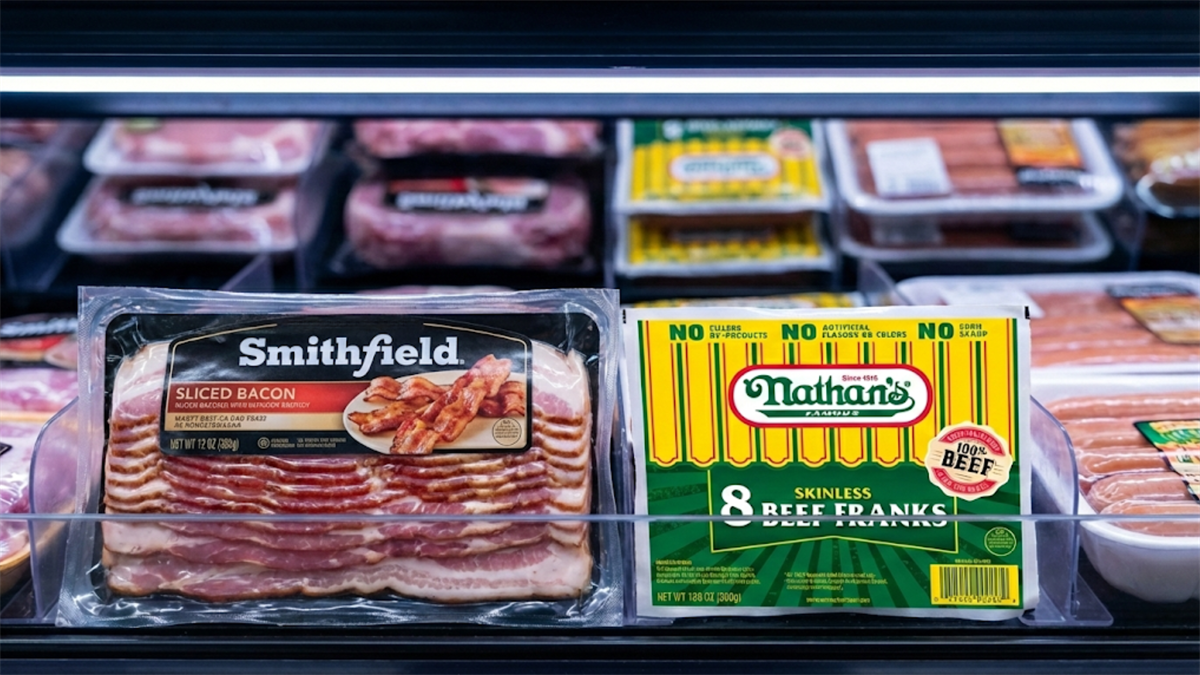
For companies that have recently returned to the public markets, the first major acquisition is a defining moment. It signals to investors exactly how management intends to use its capital to generate growth. Smithfield Foods (NASDAQ: SFD), which completed its Initial Public Offering (IPO) in January 2025, has wasted little time in making its move. The pork industry giant has entered into a definitive agreement to acquire Nathan’s Famous (NASDAQ: NATH) for $102 per share.
While the headlines focus on the union of two iconic American food brands, the deal represents much more than a simple product line expansion. It is a calculated financial maneuver designed to convert perpetual royalty payments into immediate earnings growth. By leveraging its massive operational scale, Smithfield aims to optimize a legendary brand it already knows intimately. For shareholders, this looks less like a gamble and more like a mathematical certainty.
Everyone's buying Nvidia. The financial media can't stop talking about it. Your neighbor probably owns it.
That's exactly why I'm looking elsewhere.
See, when everyone piles into the same trade, the easy money is already gone. The real profits come from finding what the crowd is missing.
Click here to get your free copy of this report
A Cash Deal in a Debt World
The financial terms of the acquisition reveal a disciplined, conservative approach to growth. Smithfield has agreed to pay $102 per share in an all-cash transaction. This values the total enterprise at approximately $450 million. For investors analyzing the deal, the most critical detail is not the price tag itself, but how the bill is being paid. Smithfield is funding the purchase entirely with cash on hand.
In the current economic environment, interest rates can make borrowing money expensive. Many corporate acquisitions require the buyer to take on new loans, which adds interest payments that eat into future profits. Smithfield’s ability to finance this deal without issuing new debt is a significant sign of balance sheet strength. The company ended the third quarter of fiscal 2025 with over $3 billion in available funds. Furthermore, its leverage ratio sits at a healthy 0.8x net debt to adjusted EBITDA, indicating the company is not overextended.
Using idle cash to acquire a profitable asset is a strategy often viewed favorably by the market. Cash sitting in a bank account earns interest, but inflation can erode its value over time. By deploying that cash to buy an operating business, Smithfield expects the transaction to be immediately accretive to its adjusted earnings per share (EPS).
This means the deal should start adding to Smithfield’s bottom line as soon as it closes, rather than requiring a long turnaround period to become profitable. Additionally, Smithfield pays a dividend yield of roughly 4.32%, and this acquisition supports that payout by securing reliable future cash flows. This fiscal discipline suggests that Smithfield is prioritizing high-probability returns over speculative gambling.
From Renter to Owner: A $9 Million Opportunity
The primary financial driver behind this acquisition is the elimination of rent. For over a decade, Smithfield Foods has acted as the manufacturer and distributor for Nathan’s Famous retail products. Every time a consumer bought a pack of Nathan’s hot dogs at a grocery store, Smithfield did the hard work of making, packaging, and shipping the product. However, because they didn’t own the brand, they had to pay a high-margin licensing fee back to Nathan’s corporate entity for the right to put the name on the package.
By acquiring the company, Smithfield effectively stops writing those checks. The company projects $9 million in annual run-rate cost savings by the second anniversary of the closing. A large portion of this savings comes simply from extinguishing that licensing obligation. This transaction transforms Smithfield from a brand renter to a brand owner, allowing it to capture the full profit margin on every package sold.
Operational risks in mergers are usually high because combining factories, workforces, and supply chains can be messy and expensive. However, this deal carries virtually no integration risk. Smithfield is already the supply chain for Nathan’s retail business. The factories making the hot dogs today are the same ones that will make them tomorrow. There are no new computer systems to merge or factories to close. This transaction is purely a change in financial ownership structure, allowing Smithfield to streamline its most profitable segment, Packaged Meats, without the friction of merging disparate operations.
In a quiet move few people noticed...
President Trump just green-lit what could become the biggest AI budget in history.
Click here now to discover the name and ticker before this story hits the mainstream >>>
Beef vs. Pork: The Inflation Hedge
To understand why this deal makes sense right now, investors must look at the commodities market. Nathan’s Famous creates products that are 100% beef. Recently, the company struggled with a 16-20% surge in the cost of beef and beef trimmings. As a standalone entity heavily dependent on a single protein source, Nathan’s had limited tools to fight this inflation. When the cost of cattle goes up, their margins go down.
Smithfield Foods operates in a different reality. It is the world’s largest pork processor and hog producer. Currently, the pork industry is benefiting from lower grain and feed costs, boosting Smithfield’s core profitability. By acquiring Nathan’s, Smithfield diversifies its protein portfolio, adding a premium beef brand to its pork-dominant lineup.
This diversification acts as a hedge. When pork margins are tight, beef might perform well, and vice versa. More importantly, Smithfield brings massive procurement scale to the table. As a global food giant, Smithfield has hedging capabilities and buying power that a smaller company like Nathan’s could never match. Smithfield can manage volatile beef input costs more effectively, stabilizing the margins of the Nathan’s brand.
Furthermore, consumer behavior plays a role here. In times of inflation, shoppers often trade down from expensive cuts like steak to more affordable options like hot dogs and sausages. By owning a premium hot dog brand, Smithfield captures this volume. This secures a premium beef asset at a time when smaller operators are struggling with costs, positioning Smithfield to dominate the processed meat aisle across both pork and beef categories.
Disciplined Growth: A Strategic Base Hit
This acquisition is best characterized as a high-probability base hit rather than a risky home run swing. It does not fundamentally alter the size of Smithfield Foods, but it secures a vital asset in perpetuity. Previously, Smithfield’s rights to the Nathan’s brand were set to expire in 2032. This deal removes that expiration date, ensuring that the cash flows from this premium brand remain with Smithfield forever.
The deal is expected to close in the first half of 2026, pending standard regulatory reviews, including the Committee on Foreign Investment in the United States (CFIUS). Given the consumer nature of the product, the parties have signaled confidence in the timeline by including specific termination fees and closing conditions.
For stockholders, this move reinforces the Moderate Buy consensus surrounding the stock. It supports the bull case that Smithfield is a disciplined capital compounder, willing to use its strong balance sheet to lock in long-term value. By removing the licensor from the equation, Smithfield has streamlined its operations and set the stage for sustained margin growth in its Packaged Meats segment. Investors now have a clear catalyst to watch as Smithfield integrates this iconic brand into its financial portfolio, turning a long-standing partnership into permanent ownership.
Read this article online ›


Tidak ada komentar:
Posting Komentar