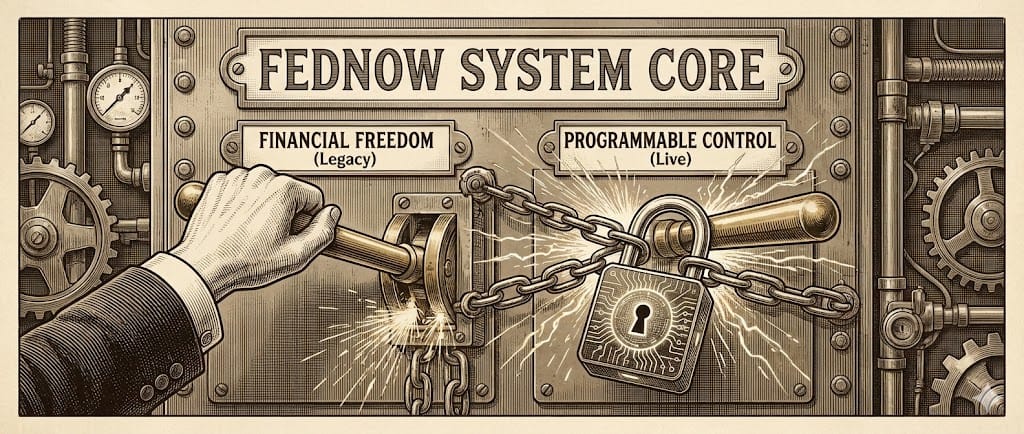
FedNow is live - and infrastructure shapes what money can become.
In partnership with Allegiance Gold | The Digital Dollar Is No Longer a Theory - | It's Already Here... | While America's distracted, the Fed quietly launched FedNow - a 24/7 instant payment system that's laying the foundation for a U.S. Central Bank Digital Currency (CBDC). | They claim it's about speed and convenience... | But beneath the surface, a system of surveillance and control is being built impacting our financial privacy and freedom. | Ask yourself: | If every transaction becomes digital, what happens to your privacy? Could "programmable money" be used to limit how - or where - you spend? Could access to your savings or retirement be limited by someone else's rules?
| This isn't hypothetical. | FedNow is already live. The rails are in place. | And even Trump - who once criticized digital currencies - is now supporting a national crypto reserve... and has adopted projects like Trump-themed tokens. | The writing is on the wall. Once this system is fully operational, opting out may no longer be an option. If adoption becomes widespread, preserving financial alternatives could become impossible. | That's why this free guide is so urgent. It reveals the real risks - and what you can do right now to protect your financial freedom before it's too late. | Get the guide now. While you still can. | | |
|
| | | While markets argue about tariffs, earnings, and the next Fed move, something far more structural is already in place. The United States now operates a 24/7 instant payment rail. FedNow is live. Banks can settle transactions in seconds, any day of the year. No batch windows. No overnight delays. | Officially, this is about speed and efficiency. That's true — and still not the whole story. | Payment systems don't change how money looks. They change how money behaves. | Infrastructure Always Comes First | FedNow is not a digital dollar. The Federal Reserve has been clear about that. There is no retail CBDC in the U.S. today. But infrastructure precedes policy. Always. | Before online trading reshaped markets, the networks had to exist. Before mobile payments spread globally, smartphones had to become ubiquitous.
| Instant settlement is the same kind of shift. Once money moves in real time, the system gains new capabilities — visibility, conditionality, and control — even if none of those are being actively used today. | That's not ideology. It's systems design. | Why This Matters Now | The year opened with a familiar pattern: volatility without collapse. Markets are uneasy. Gold prices are elevated. The dollar remains strong, but confidence is selective. | In that environment, payment rails quietly become strategic assets. Not because of conspiracy — but because governments care about: | Settlement certainty. Liquidity visibility. System stability during stress.
| FedNow checks all three boxes. | The Real Question: Optionality | The most important issue isn't whether a U.S. CBDC launches this year or five years from now. It's whether individuals retain meaningful choice. | Historically, financial resilience has favored systems with redundancy: | | When one layer becomes dominant, alternatives don't disappear overnight. They erode slowly — through convenience, incentives, and neglect. Instant payments accelerate that process by default. | What FedNow Quietly Signals | FedNow doesn't tell us what policy will be. It tells us what policy can become. | It enables real-time settlement, continuous monitoring, and conditional transaction logic. None of those require a new law to exist. Only to be used. | | | | A Calm Conclusion | There is no switch being flipped tomorrow. There is no overnight loss of financial freedom. But the architecture is changing — and architecture shapes outcomes. | People who understand systems early don't panic. They prepare. They maintain flexibility. They avoid assuming that defaults will always favor the individual. | The digital dollar didn't arrive with a headline. It arrived with plumbing. And in finance, plumbing is where the real power tends to settle. | That is why preserving optionality is the single most important wealth preservation strategy for 2026. |
|
| | How did you find today's briefing? | |
|
| | Written by Deniss Slinkins
Global Financial Journal |
|
|
|
| | | | Update your email preferences or unsubscribe here © 2026 Global Financial Journal 200 E Grayson St, Suite 210
San Antonio, TX 78215, United States of America | | Terms of Service | |
|
|
|
|
|




Tidak ada komentar:
Posting Komentar