Lux Capital's $7 Billion Shadow.Though few Americans know his name, Josh Wolfe is one of the most influential men in the deeptech economy.
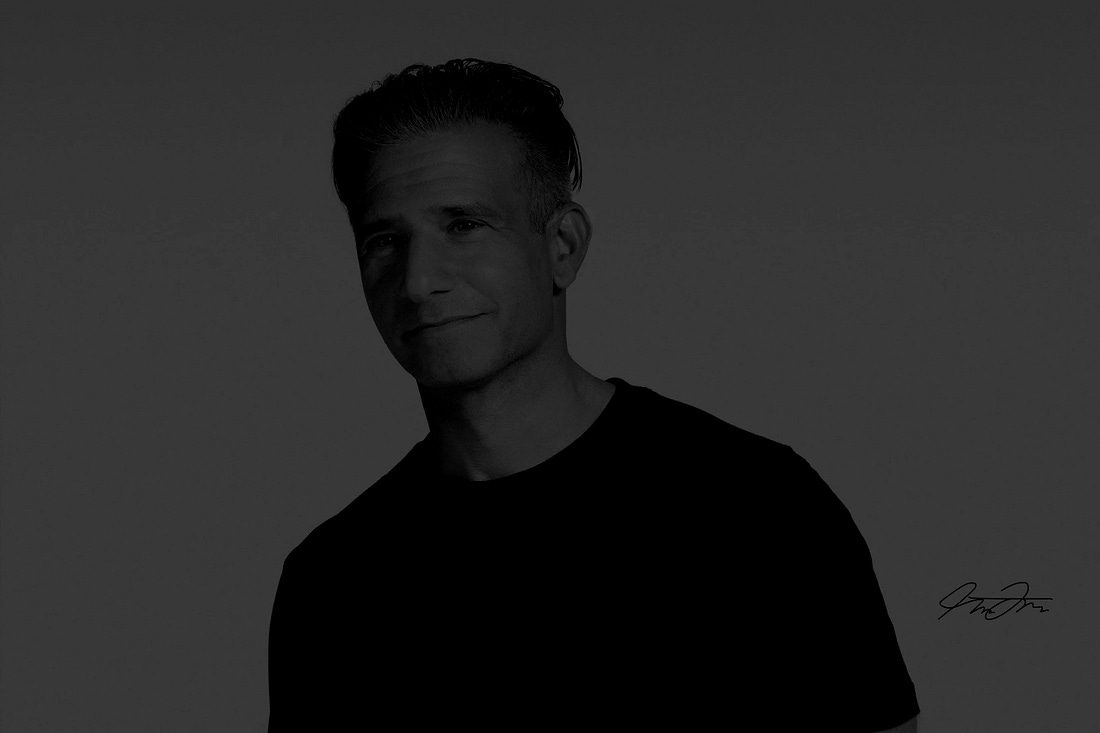
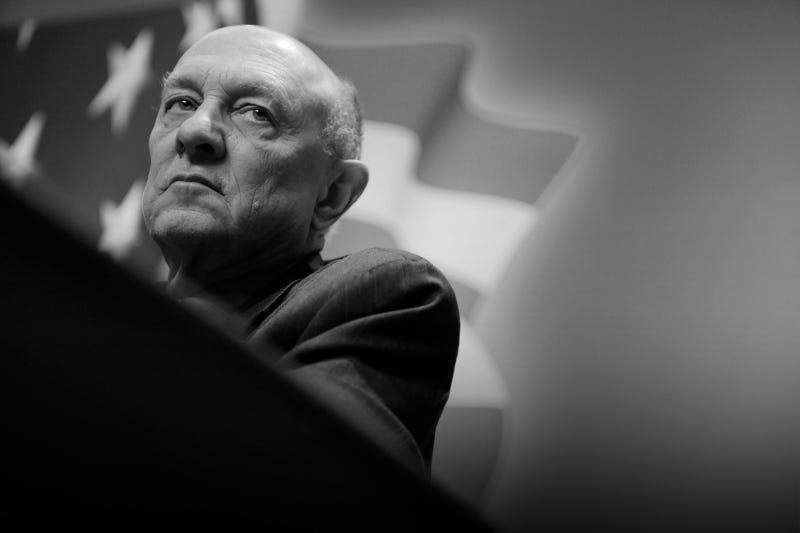
Considering the enormous power he is believed to wield, it’s remarkable how few people have heard about Josh Wolfe. In technology investment circles, Wolfe, the managing partner and co-founder of Lux Capital, is one of the most important men alive. But mention his name to the everyday American and they will wonder whether or not you’re talking about his more famous namesake, Josh Wolf the comedian. Among the power players that pump capital through the market’s myocardium, Josh Wolfe’s name is met with unbridled admiration and respect. In May 2025, as the government slashed funding for science, Lux Capital committed $100 million to support promising early stage research with commercial potential. Over the course of twenty years, Lux has expanded from New York City to Silicon Valley, amassed more than $7 billion assets under management, written checks ranging from $100,000 to $100 million, and made boatloads of money for the college endowments, scientific research foundations, and medical systems that actively invest into the firm’s vehicles. Lux’s reach in private capital is not its only source of sway. $7 billion is impressive, but perhaps equally as impressive are their government ties. James Woolsey was the CIA’s 16th Director of Central Intelligence, from 1993 to 1995 under President Bill Clinton. A Stanford grad, Yale Law School grad, and Rhodes Scholar, Woolsey’s intellectual curiosity led him to the most vaunted rooms in government, and he served as a delegate at large to the U.S. - Soviet negotiations in the 1980s. In 2011, Woolsey joined Lux Capital as a venture partner and advisor.
Through a combination of expertise, capital, and government affiliations, Lux Capital has become the silent kingmaker of our nation’s most technically complicated startups, often funding products with national security implications. The firm was an early investor in Anduril Industries, the $30B defense tech outfit led by former Oculus VR founder Palmer Luckey. Anduril builds autonomous systems capable of monitoring all realms of war - air, space, land, sea - and sells them to entities such as the Department of Defense and U.S. Special Operations Command. Lux tapped Brett McGurk, a former Biden advisor and Middle East diplomat, to join the fund as a venture partner last year. The fund also collaborates with U.S. national laboratories in discrete pockets like Los Alamos, New Mexico, to commercialize the technologies that emerge from research. On September 29, 2025, Wolfe met with Israel’s Prime Minister Benjamin Netanyahu to discuss the use of artificial intelligence to boost Israel’s military strength. If Josh Wolfe is currently at the forefront of deeptech venture capital, he has achieved this position largely in the shadows. His public persona is dwarfed by other giants of industry such as Marc Andreessen, who recently raised $15 billion for a16z, or Josh Kushner, who announced a $10 billion raise for Thrive earlier today. When examined closely, Wolfe’s presence can most accurately be compared to Alfred Borden in Christopher Nolan’s The Prestige: always behind the curtain.
The truth often hides in plain sight, but people walk by it without any acknowledgement. Or in today’s world, scroll by it. Josh Wolfe is working on creating superheroes: designer humans who are able to go without sleep, withstand injury and disease, think faster than quantum computers, and possess alien body strength. In a 2022 article with Institutional Investor, Wolfe says that the X-Men movies were a point of inspiration for him: “It got me thinking: If there’s a one-in-a-billion chance in real life that somebody has a special trait, with seven and a half billion people on earth, there should be seven or eight people walking around that have the ability…” He then wondered if these mutant genetic traits could lead to biological breakthroughs in disease treatment. While the article is from 2022, the anecdote dates back to 2018. After pondering the possibilities, Wolfe went through his network of builders in science, government intelligence, and finance, then assembled a team to work on “developing lifesaving therapies by studying the genetics of diverse populations that are outliers for health-related traits.” The company was named Variant Bio, and Lux Capital invested $1 million in 2018. Variant Bio has gone on to raise $130M+ through the Series B stage and boasts strategic partnerships with Novo Nordisk and The Bill & Melinda Gates Foundation. Technically speaking, Lux’s portfolio company, Variant Bio, is not building designer humans. But if you stand outside Lux offices and listen closely enough, whispers of transhumanist fantasies will buzz around your myringa like bees looking for honey. We turn sci-fi into sci-fact. What’s more science fiction than billionaires running around like Batman and Ironman, with superhuman recovery times, the inability to feel stress, and mind control? The total addressable market would be huge…
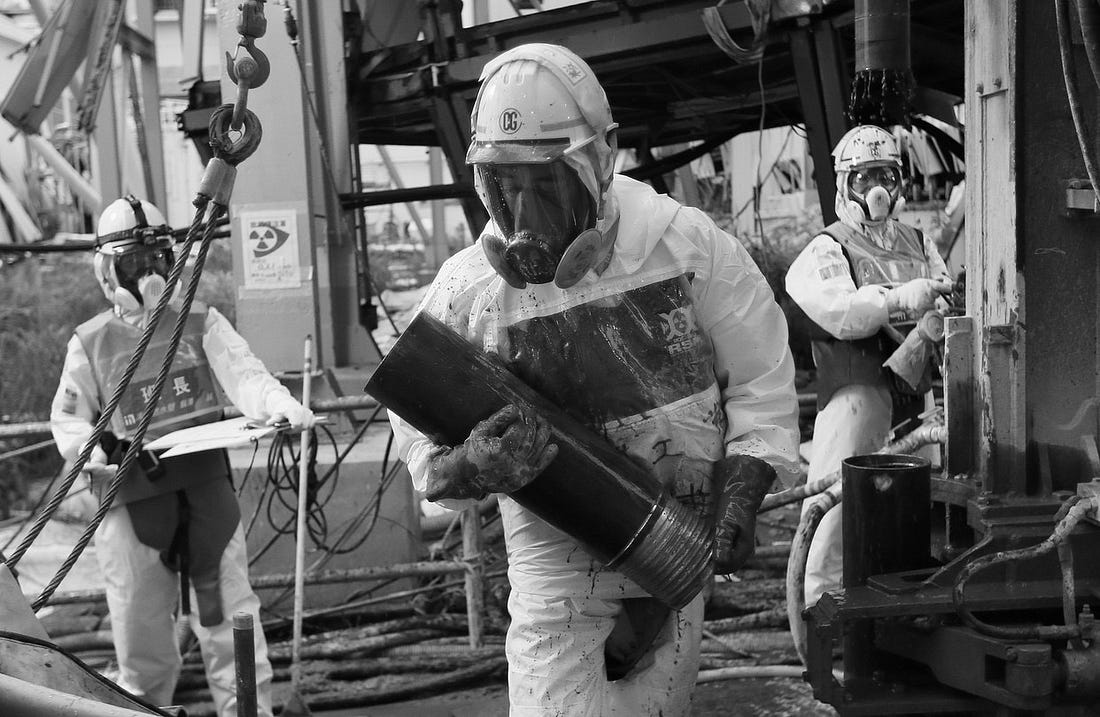
For now, the firm has to settle for more realistic endeavors. Like turning $3 million into $300 million. In 2008, Wolfe went down the rabbit hole of finding solutions to nuclear energy generation. He employed first principles to deduct that the world was reeling from incredible energy consumption coupled with a limited supply of fossil fuel. The best alternative energy solution was nuclear, which, considering the externalities, was not a great option. Wolfe wondered if there was a way to limit the downsides associated with nuclear waste. After interviewing 300 experts in the industry, it became clear just how expensive nuclear waste was: the Department of Energy spent upwards of $6 billion a year on nuclear waste cleanup. In a similar process to Variant Bio, Wolfe tenaciously recruited a ton of experts in the field - Jacques Besnainou was the former CEO of AREVA Inc., the French nuclear giant, former White House official Jon Foster joined Wolfe’s company as CFO, Gaetan Bonhomme was an MIT PhD in materials science, Aris Candris, former CEO of Westinghouse, joined as well. The company was named Kurion. On March 11, 2011, Japan’s largest earthquake ever (9.0 magnitude) unleashed a tsunami that wiped out power at the Fukushima Daiichi nuclear power plant. The aftermath was an environmental hazard of epic proportions. Kurion was one of the few companies in the world that could assist with damage control. The team designed, built, and delivered a system to treat the 68 million gallons of radioactive waste at Fukushima, and loaded it onto a Russian military cargo plane to get it to Japan as soon as possible. Kurion workers suited up in full body suits and masks to prevent radioactive exposure, and even then, they could only be on site for a few minutes at a time before retreating to safety. All signs of life around the disaster were gone; even the birds didn’t sing. The team successfully removed all radioactive isotopes from the site and made their way back to the states to continue growing operations quickly. Josh Wolfe and Kurion CEO Bill Gallo hired aggressively, made a few acquisitions, and opened offices in other countries. Four years later, Veolia, a public French energy company, reached out with an acquisition offer. Veolia bought Kurion for $365 million in 2016. Lux Capital owned around 30% of the company at acquisition, which meant a roughly $110 million windfall for a $100 million fund.
Wolfe’s life was anything but a straight path; it was filled with twists and turns; the bumps left brutal bruises which taught him how to survive. He grew up in Coney Island, the only child of divorced parents, raised in a two bedroom apartment with his grandparents and his mother. His early upbringing was simultaneously dysfunctional and instrumental to shaping his later success. He didn’t have an active relationship with his father. Wolfe directed his energy into academia, and as a teenager, won multiple awards for his scientific prowess, including reaching semifinalist status in the Westinghouse Science Talent Search. He ended up attending Cornell University with hopes of securing a degree in biology. During a summer internship at Merrill Lynch, Wolfe and his fellow interns spent a day at a Merrill executive’s residence, a Greenwich, Connecticut mansion with decadent displays of wealth throughout. This moment changed his life for good; from that day forward, he vowed to use his intelligence to secure riches for himself. Wolfe would go on to change his major from biology to economics and finance. He lasted in investment banking for just a year before teaming up with Peter Hebert, a young banker at Lehman Brothers, to launch a venture capital fund together. The year was 2000, the dot-com bubble was bursting, and two half baked investment bankers in their early twenties wanted to launch a venture firm; sounds good, doesn’t work. If you recall from The USV Story, even seasoned venture capitalists were dropping like flies during this dry spell. But the macroeconomic environment was of little concern to Wolfe. The two newcomers pestered one of their college friend’s parents for an introduction to the Carlyle Group’s Bill Conway, and when they met Bill, he gave them $10 million to get started. Wolfe was so excited he quit his investment banking job immediately and forgot to collect his bonus. On January 7th, 2026, Lux closed on a $1.5 billion Fund IX, its largest fund ever, bringing assets under management from more than $5 billion to $7 billion. Part of the explanation for such a massive fund relative to total AUM is Lux’s recent shift away from companion funds earmarked for growth companies. All investments, early stage and growth, are being made from their flagship as of Fund VIII, which raised $1.15B in 2023. Nonetheless, having the latest fund account for 22% of assets under management is a sign of legitimate pull in a tough market. The fund aims to make 40 - 50 core investments with a median check size of $25 million. In addition to Anduril, Lux has participated in defense tech funding for companies like Hadrian, an autonomous manufacturing company for aerospace and defense production, Saildrone, a developer of autonomous maritime systems, and Terra Industries, a Nigerian defense tech company founded by 22-year-old Nathan Nwachuku and 24-year-old Maxwell Maduka. Terra Industries designs autonomous systems to help governments monitor and respond to threats. Their $11.75 million seed round was led by former Palantir executive Jon Lonsdale, now founding investor at 8VC. Lux participated in the seed round as well. Just yesterday, Terra Industries raised an additional $22 million of funding, led by, you guessed it, Lux Capital. The company has generated $2.5 million in commercial revenue and is protecting assets valued at around $11 billion. Lux’s AI bets are also starting to pay off. Hugging Face is valued at upwards of $4 billion, Runway AI is valued at upwards of $3 billion, and Mosaic ML was acquired by Databricks for $1.3 billion in a cash and stock deal. It would be wise to keep both eyes on Wolfe, lest he vanish into the shadows for his next trick. for your eyes only.
|
Selasa, 17 Februari 2026
Lux Capital's $7 Billion Shadow.







Langganan:
Posting Komentar (Atom)
Tidak ada komentar:
Posting Komentar