This Fascinating Emerging Tech Could Solve the World’s Food Crisis While many of us may be worried about crashing stocks on Wall Street these days (although some stocks have soared more than 20% recently), perhaps our concerns should actually be on something much scarier: empty food shelves.
Believe it or not, we’re living in the middle of the biggest food crisis the world has seen since The Great Depression of the 1930s.
In short, a confluence of headwinds has all converged at once to create a “nightmare scenario” for the food industry. The Russian invasion of Ukraine has cut grain exports from two major wheat exporters. Incredibly hot and dry weather has resulted in very poor crop yields in North America. Sporadic COVID-19 lockdowns in China have disrupted global food supply chains. Even a deadly bird flu wave has emerged across the Midwest which has forced farmers to euthanize tens of millions of chickens.
Today, the world’s food supply is low, and food supply chains are broken. As a result, food prices are soaring, and billions of people across the globe do not have food security. 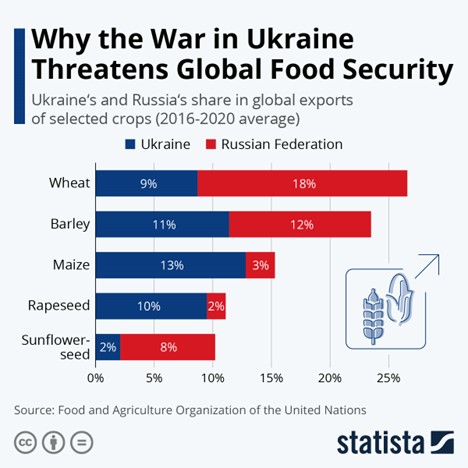
This is a global food crisis. And it is the most important crisis in the world today. Forget the stock market crash. Forget soaring bond yields or mortgage rates. Not all of us invest. Not all of us own a home. But we all have to eat food. Therefore, a global food crisis impacts the world’s 7.7 billion people.. This is a big problem that requires a big solution. Big solutions generate massive economic value. Consequently, whoever solves today’s food crisis, will generate enormous economic value over the next decade – and all that wealth generation will start in 2022. Well, folks, we think we’ve identified the “fix.” That fix is an emerging technology that you’ve probably never heard of. But over the next few years, it could ensure everyone everywhere has more than enough food. It’s called vertical farming. And it is the panacea for the world’s food crisis. We Don’t Have Enough Food Long before Russia ever invaded Ukraine and even before the COVID-19 pandemic emerged and thrust global supply chains into disarray, the world was flirting with an enormous food problem. We may not have enough food by 2050. Follow me here… There will be nearly 10 BILLION people on Earth by 2050. To feed all those people, the United Nations estimates that global food production will need to increase by at least 50% over the next 30 years. But foods need water in order to grow; and already, 70% of the world’s freshwater supply is dedicated to agriculture. Plus, due to climate change, the amount of rain that falls each year is steadily decreasing.. Foods also need the “right” temperatures to grow, and steadily rising temperatures across the globe are significantly and adversely impacting crop yields. And, lastly, foods need land to grow. But, due to climate change, the rate of agricultural soil erosion is up to 100X higher than the rate of agricultural soil formation these days, and 23% of land areas have become less productive farmland because of land degradation. 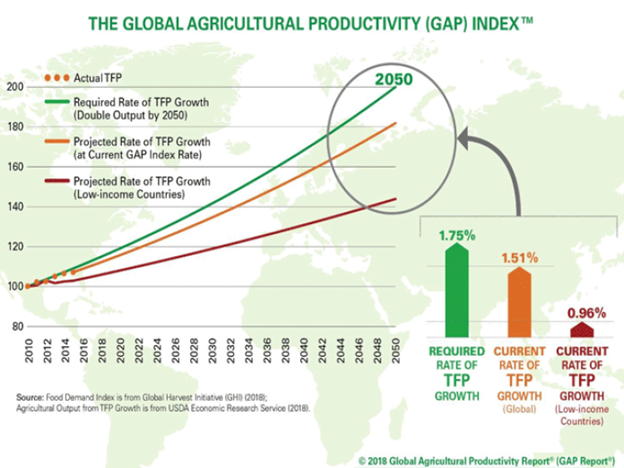
Folks… long before COVID-19 showed up to the scene and Russia decided to invade Ukraine, the world’s farming industry was on the cusp of an apocalyptic crisis. Now, COVID-19 and Russia’s invasion have only exacerbated the problem. egacy farming is now in a “now or never” situation. Change isn’t an option here – it is the only way forward. Farming must evolve. Fortunately, the next evolution is already here… The Farm of the Future My family is from Montana, so when someone tells me to think of a “farm,” I think of the big open ranges and fields of Big Sky Country. But that’s the farm of the past. The farm of the future is one built in man-made warehouses. I’m talking about high-tech vertical farming. In high-tech vertical farming, companies leverage a series of light, temperature, and humidity technologies to grow foods in indoor settings. Sometimes those settings are massive warehouses. Sometimes they are high-rises. Sometimes they are small apartments. The locations vary, but the common thread is using technologies to create optimal growing conditions in a controlled, indoor setting. The biggest upside of vertical farming, of course, is that you remove extraneous variables from the farming equation. You remove weather. You remove pests. You remove natural sunlight. In their place, you create consistently optimal growing conditions so that crop yields are always high. You also use much less water, because the growing conditions are always optimized; and you can grow much more food per square foot because you can build “fields” on top of each other, much in the same way skyrises stack living spaces on top of each other.herefore, a skyrise can house more people than a home on the same plot of land. 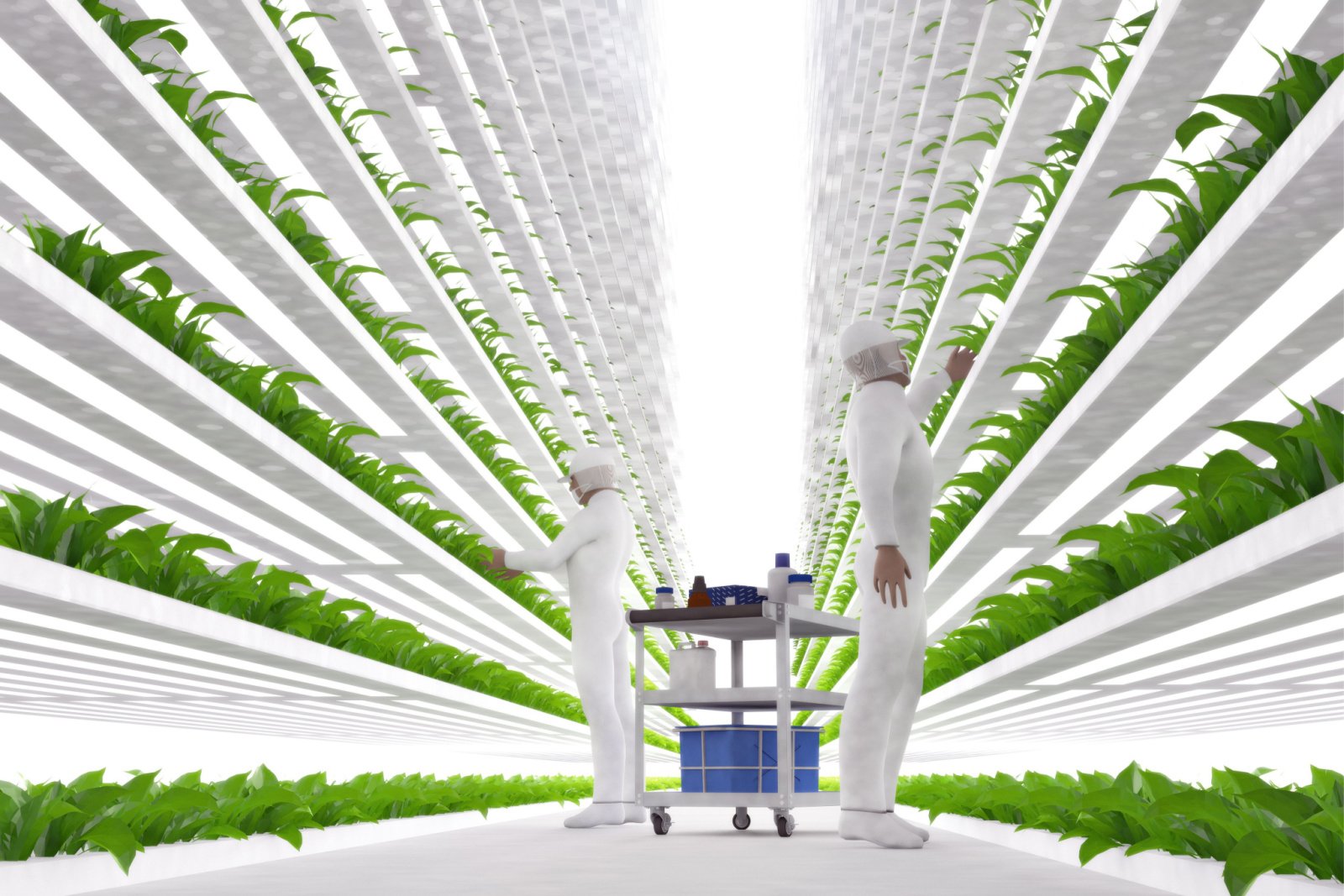
To that end, vertical farming solves all of the problems of legacy farming. Better yields. Less water. More output. We can solve the world’s food crisis using vertical farming technologies. Importantly, vertical farming is finally ready to deliver. You have to understand: Vertical farming is nothing new. Growing plants, fruits, and veggies indoors is as old as time itself. But thanks to technological advancements in AI, lighting, hydroponics, and automation (as well as falling LED costs) we can create large-scale, high-tech greenhouses. These high-tech facilities could reliably, effectively, and cheaply feed the planet. That time has finally arrived. AgTech startups like Square Roots, Plenty, and AeroFarms are all creating large-scale indoor farming facilities across America to help proactively solve the coming food shortage crisis. These companies are building on the back of other exponential technologies to create active vertical farms. THIS is the next big industry. And yet, no one is talking about it today… which means that you have a unique opportunity to invest in this burgeoning industry first… | 






Tidak ada komentar:
Posting Komentar