Did you know there's an IRS loophole—408(m)—that lets you pull monthly or weekly income from your 401(k), IRA, TSP or 403(b) completely tax-free? Most Americans have never even heard of it. Yet the wealthy use it to shield gains, avoid penalties and stay fully invested—while everyone else sits exposed. This isn't a theory. It's a legal, IRS-approved strategy that can put a second, tax-free paycheck in your pocket—no cash conversion, no red tape, no catching penalties. Grab your FREE 408(m) Guide now | | | | Ad by Allegiance Gold |
|
|
|
| Hey there! You're reading The Budget Analyst — a calm space in the noise of markets.
Here we collect signals, patterns, and quiet insights that help you see the bigger picture.
No rush, no hype — just clarity for your financial journey. |
|
|
|
| | | | | | The market feels expensive. That's the consensus right now — a quiet fatigue that sets in when indexes reach new highs and valuations stretch. Most people assume the best gains are behind us, already claimed by those who got in early or stayed in longer. | But that assumption conflates sentiment with signal. And signals, when read correctly, have always mattered more than how the market feels. | As of late October 2025, corporate earnings are defying expectations. An impressive 85% of S&P 500 companies that have reported Q3 results beat their earnings forecasts — the highest positive surprise rate in approximately four years. Around 70% also surpassed revenue estimates, indicating broad-based strength across sectors including manufacturing, construction equipment, and transportation. The S&P 500 has climbed roughly 40% since its early April low and posted a 15% year-to-date gain, hitting new record highs 28 times in 2025. The Nasdaq and Dow Jones have followed suit, all three benchmark indices closing at all-time highs in October. | Yet consumer confidence tells a different story. The Conference Board Consumer Confidence Index slipped to 94.6 in October, down from 95.6 in September, as households worried about job availability and persistent inflation expectations hovering near 5.9%. The Expectations Index has remained below 80 — a threshold that typically signals recession risk — since February 2025. This disconnect between corporate performance and consumer sentiment creates noise. And in that noise, most investors hesitate. | This is where data-driven systems earn their value. Market timing isn't about predicting the future. It's about recognizing patterns in data that most people overlook because they're too focused on headlines. Signals from earnings quality, balance sheet strength, valuation metrics, and competitive positioning often identify opportunities long before they become obvious. Behavioral and macroeconomic indicators — sentiment measures, yield curves, credit spreads — can reveal turning points that traditional valuation models miss. The investors who profit aren't the ones chasing momentum. They're the ones who follow signals when everyone else is chasing stories. |
| |
| | |
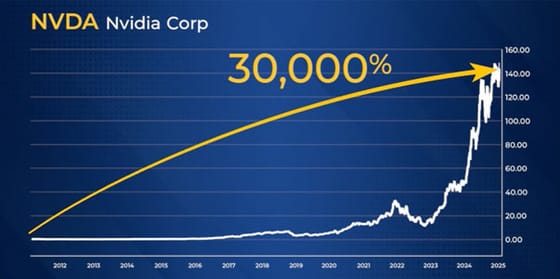
| | | | | Weiss Ratings has built its reputation on this principle. Founded in 1971, Weiss operates independently — it accepts no compensation from issuers or sponsors, no advertising from rated entities, and relies solely on revenue from consumers and investors. This structural independence has allowed it to warn of financial dangers ahead of time. The New York Times noted that Weiss was "the first to warn of the dangers and say so unambiguously," and Barron's reported that Weiss is the "leader in identifying vulnerable companies". In 2005, the SEC awarded Weiss the most contracts in the Meritocracy program as part of a global settlement requiring major firms to provide independent equity research. The Wall Street Journal reported that Weiss stock ratings ranked #1 in profit performance, outperforming ratings from Goldman Sachs, JPMorgan, Merrill Lynch, Morgan Stanley, and 14 other firms. | The track record speaks for itself. Weiss identified Apple when it traded around 50 cents per share on a split-adjusted basis in the early 2000s. Apple closed 2000 at roughly $21.75 before splits, or about $0.78 after accounting for multiple stock splits over the years. Today, Apple trades above $190 per share, representing gains exceeding 45,000% from those early levels. Weiss also flagged Nvidia at approximately 40 cents per share in the late 1990s or early 2000s. Nvidia's split-adjusted price in early 2000 was around $0.07 to $0.16, and it now trades above $200, reflecting gains exceeding 30,000%. Netflix was identified at $3.70 per share on a split-adjusted basis following its 2002 IPO. Netflix initially priced at $15 and closed its first day at $16.75, or $1.20 after splits. It has since reached highs above $1,300, representing gains exceeding 27,000%. | These aren't cherry-picked examples. For over 20 years, Weiss Ratings' stock picks have averaged a 303% gain — including the losers. That consistency comes from objectivity. All ratings are generated by computer models driven by complex algorithms processing large volumes of data, excluding personal analyst bias. The models prioritize both profit potential and risk avoidance, examining financial strength, earnings quality, performance relative to peers, risk across multiple categories, valuation, and management quality. Stocks receive letter grades from A (strong buy) to D (sell), with modifiers for precision. |
| |
| | |
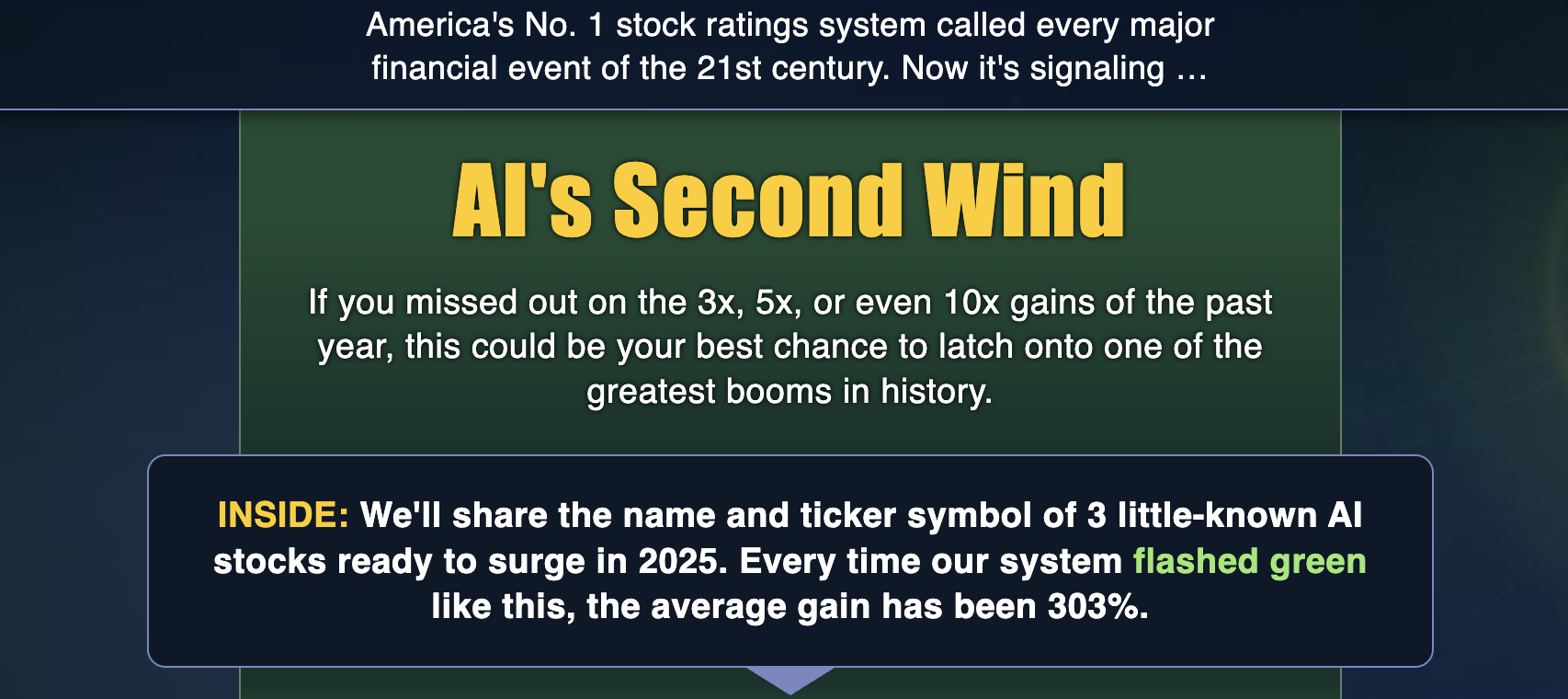
| | | | | *Ad by Weiss Ratings | Can you still profit from the current stock market? | According to Weiss Ratings, the answer is yes … | IF you invest in the right stocks. | Keep in mind, Weiss Ratings was ranked #1 by both the SEC — the authority that regulates the stock market — and the Wall Street Journal, the world's foremost stock market publication … | And for good reason … | Because when it comes to profits for investors, nobody can beat the Weiss Ratings track record: | | It identified Apple at 50 cents — it's up over 45,000% since … | | Nvidia at 40 cents — up 30,000% today … | | And Netflix at $3.70 — now up more than 27,000% … | But this is just a small sample … | For over 20 years, Weiss Ratings' picks have made an average gain of 303% — including the losers. | And now, this eerily accurate system is flashing green on a new set of stocks … | Specifically, it identified three under-the-radar picks that could thrive in 2025 and beyond … | And we're giving away their names and ticker symbols — FOR FREE . | That's right, if you missed out on the 3x … 5x … or even 10x gains of the past years … | This could be your best chance to make it right. | Make sure you don't miss it. | | |
| |
| | |
| | | | | The broader lesson isn't about Weiss specifically. It's about conviction in the face of uncertainty. Financial opportunity rarely looks obvious in real time. When Apple traded below a dollar in the early 2000s, the company had just survived near-bankruptcy and was experimenting with colorful desktop computers. Nvidia was a niche graphics card maker serving gamers and had not yet discovered its future in AI and cryptocurrency mining. Netflix was a DVD-rental company pivoting to an unproven streaming model with no clear path to profitability. | None of these investments felt safe. They required ignoring sentiment and trusting data. Hindsight always rewards discipline. But discipline in the moment feels like risk. That's the paradox. The stocks that deliver life-changing returns are almost never the ones that feel comfortable to buy. | Today's market presents similar conditions. Valuations are stretched according to some metrics, with institutional equity allocations at levels last seen before the 2008 financial crisis. Geopolitical tensions persist. The Federal Reserve faces constraints given inflation still above target and interest rates elevated. Yet corporate earnings are strong, surprise rates are high, and sectors are demonstrating resilience. Small-cap indices like the Russell 2000 and S&P MidCap 400 are outperforming large-cap peers, suggesting broader participation in market gains. |
| |
| | |
| | | | | | | | | | | The investors who benefit from this environment won't be the ones waiting for certainty. They'll be the ones following systems that have proven, over decades, to identify value before it becomes consensus. Signals don't care about sentiment. They measure fundamentals, risk, and valuation with precision. And when those signals align, history suggests the market rewards those who act on data rather than emotion. | The opportunity exists. The question is whether you're looking at the right signals. | Warmly,
Claire West
|
| |
| | |
| ✳️ A Note from ClaireI've been leaning into longer essays lately — exploring data, context, and the quiet patterns behind markets in more depth. I'd love to know how that feels for you: | |
|
|  | | | Weiss Ratings | |
|
|
|
|
|
| |
|




Tidak ada komentar:
Posting Komentar